Table of Contents
- How to Trust Yourself – Building Self-Trust – Teal Swan
- What Is Self-Trust?
- How Imposter Syndrome Undermines Self-Trust
- Why Building Self-Trust Feels Hard with Imposter Syndrome
- How to Build Self-Trust When You Have Imposter Syndrome
- Why Self-Trust Is the Antidote to Imposter Syndrome
- When to Seek Support
- Conclusion: Self-Trust Is Built, Not Given
- Sources & Further Reading
- About the Author
- Book a Free Consultation
Imposter syndrome can quietly erode your confidence and make it difficult to trust yourself—your decisions, your abilities, and even your past successes. When you feel like a fraud despite evidence of competence, self-trust becomes fragile. You may second-guess choices, seek constant validation, or feel anxious about being “found out.”
The good news is this: self-trust is not something you’re born with—it’s something you build. Even if you struggle with imposter syndrome, you can learn to trust yourself again. This article explores why imposter syndrome damages self-trust and how to rebuild it step by step.
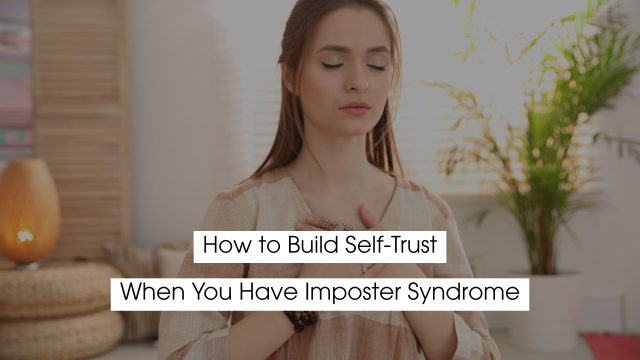
How to Trust Yourself – Building Self-Trust – Teal Swan
What Is Self-Trust?
Self-trust is the belief that you can rely on yourself to make decisions, handle challenges, and learn from mistakes. It doesn’t mean you always feel confident or certain—it means you believe you can cope, adapt, and grow even when things are uncomfortable.
When self-trust is strong, you:
- Make decisions without excessive overthinking
- Recover more quickly from setbacks
- Feel grounded in your abilities
- Rely less on external validation
Imposter syndrome disrupts this foundation.
How Imposter Syndrome Undermines Self-Trust
Imposter syndrome creates a disconnect between evidence and belief. Even when you succeed, your mind explains it away as luck, timing, or deception. Over time, this teaches your brain not to trust your own experiences.
Common ways imposter syndrome weakens self-trust include:
- Constantly questioning your decisions
- Assuming others know more than you
- Ignoring or minimizing achievements
- Believing mistakes prove incompetence
- Seeking reassurance before taking action
This pattern keeps you stuck in doubt—even as you grow.
Why Building Self-Trust Feels Hard with Imposter Syndrome
Self-trust requires internal validation. Imposter syndrome trains you to look outside yourself for approval or certainty. The more you rely on external reassurance, the less confidence you have in your own judgment.
Additionally, many people with imposter syndrome are high achievers or perfectionists. They believe trust must be “earned” through flawless performance—an impossible standard that keeps self-trust out of reach.
How to Build Self-Trust When You Have Imposter Syndrome
1. Separate Feelings from Facts
Imposter syndrome feels convincing, but feelings are not facts. Start noticing when self-doubt appears and ask:
- What evidence supports this thought?
- What evidence contradicts it?
This simple practice helps retrain your mind to trust reality rather than fear-based assumptions.
2. Keep Promises to Yourself
Self-trust grows through consistency. Start small by keeping manageable promises:
- Finish what you start
- Honor boundaries you set
- Follow through on commitments
Each follow-through sends your brain the message: I can rely on myself.
3. Track Proof of Competence
Imposter syndrome thrives on selective memory—remembering mistakes while forgetting wins. Counter this by documenting:
- Achievements
- Positive feedback
- Problems you solved
- Skills you’ve developed
Revisit this record when doubt arises. Evidence rebuilds trust.
4. Redefine What Confidence Means
Confidence is not certainty—it’s willingness to act without guarantees. Self-trust means trusting your ability to handle outcomes, not predicting them perfectly.
Instead of asking, “What if I fail?”, ask:
“Can I trust myself to learn and adapt?”
5. Stop Outsourcing Your Authority
Seeking advice is healthy—but constantly deferring decisions to others weakens self-trust. Before asking for input, decide what you think first. Then use feedback as information, not permission.
6. Allow Mistakes Without Self-Punishment
Mistakes do not break self-trust—self-criticism does. When you treat mistakes as proof of incompetence, your mind learns that taking risks is unsafe.
Reframe mistakes as:
- Data, not identity
- Feedback, not failure
- Part of growth, not evidence of fraud
7. Practice Self-Compassion
Self-trust cannot grow in an environment of self-attack. Research shows self-compassion increases resilience, confidence, and emotional regulation.
Speak to yourself the way you would to someone you respect:
- “It’s okay to not know everything.”
- “I’m learning.”
- “This doesn’t define me.”
Why Self-Trust Is the Antidote to Imposter Syndrome
Imposter syndrome feeds on fear and uncertainty. Self-trust provides stability. When you trust yourself, imposter thoughts lose their power because you no longer need to prove your worth.
You stop asking:
“Am I good enough?”
And start asking:
“Do I trust myself to grow?”
When to Seek Support
If imposter syndrome deeply affects your mental health, decision-making, or sense of self-worth, working with a coach or therapist can help. Support provides tools to rewire thought patterns and rebuild trust safely and sustainably.
Conclusion: Self-Trust Is Built, Not Given
You don’t overcome imposter syndrome by becoming perfect or eliminating doubt. You overcome it by building self-trust—one decision, one boundary, one follow-through at a time.
You don’t need more proof.
You don’t need more validation.
You need a relationship with yourself that says: I’ve got my own back.
And that relationship can be rebuilt—starting now.
Sources & Further Reading
Imposter Syndrome & Self-Doubt
- American Psychological Association (APA) – Impostor Phenomenon
https://www.apa.org/monitor/nov01/imposter
Explains the origins of imposter syndrome and how it impacts confidence and self-belief. - Psychology Today – Imposter Syndrome
https://www.psychologytoday.com/us/basics/imposter-syndrome
Offers insights into imposter thoughts, behaviors, and emotional patterns. - Verywell Mind – What Is Imposter Syndrome?
https://www.verywellmind.com/what-is-imposter-syndrome-2795042
A clear overview of imposter syndrome symptoms and coping strategies.
Self-Trust, Confidence & Mindset
- Greater Good Science Center (UC Berkeley) – Self-Compassion
https://greatergood.berkeley.edu/topic/self_compassion/definition
Research-backed explanations on how self-compassion strengthens resilience and self-trust. - MindTools – Overcoming Limiting Beliefs
https://www.mindtools.com/pages/article/limiting-beliefs.htm
Practical tools for challenging negative self-beliefs and rebuilding confidence. - James Clear – Identity-Based Habits
https://jamesclear.com/identity-based-habits
Explores how identity and small actions reinforce self-trust over time.
Anxiety, Emotional Regulation & Growth
- Anxiety & Depression Association of America (ADAA) – Understanding Anxiety
https://adaa.org/understanding-anxiety
Explains how anxiety develops and how to manage stress responses. - Harvard Health Publishing – Building Confidence and Emotional Resilience
https://www.health.harvard.edu/mind-and-mood
Evidence-based guidance on emotional regulation and mental well-being.
About the Author
David A. Caren is the creator of Emotional Optimization™ – helping high-performing professionals rewire emotional patterns for clarity, calm, and success.
Book a Free Consultation
What is self-trust and why is it important?
Self-trust is the belief that you can rely on yourself to make decisions, handle challenges, and learn from mistakes. It’s essential for confidence, emotional stability, and growth—especially when dealing with imposter syndrome.
How does imposter syndrome affect self-trust?
Imposter syndrome undermines self-trust by causing you to doubt your abilities and dismiss your achievements. Over time, this creates a pattern of second-guessing decisions and relying on external validation instead of your own judgment.
Can you build self-trust even if you have imposter syndrome?
Yes. Self-trust is a skill that can be developed. By practicing awareness, following through on commitments, and reframing negative thoughts, you can strengthen self-trust even while imposter syndrome is present.
How long does it take to rebuild self-trust?
Rebuilding self-trust is a gradual process. Small, consistent actions—like keeping promises to yourself and acknowledging progress—can lead to noticeable improvements within weeks, with deeper change over time.
Is self-trust the same as confidence?
Not exactly. Confidence is about how you feel, while self-trust is about reliability. You can feel uncertain or nervous and still trust yourself to handle outcomes and grow from experiences.
Mental Toughness: How to Build Resilience in Tough Times (Proven Strategies to Stay Strong)
Mental toughness is the ability to stay strong and resilient during difficult times. By building discipline, managing thoughts, and taking…


How to Stay Motivated Even When You Feel Like Giving Up (Proven Strategies That Work)
Staying motivated when you feel like giving up requires persistence, small actions, and a strong mindset. By focusing on progress…
How to Train Your Brain for Discipline and Focus (Science-Backed Strategies That Work)
Training your brain for discipline and focus requires consistent practice, strong habits, and the right environment. By building routines and…
The Power of Consistency: Why Small Actions Matter More Than Big Efforts
Consistency is the key to long-term success. Small actions repeated daily may seem insignificant, but over time, they create powerful…
Why Discipline Beats Motivation Every Time (The Real Key to Long-Term Success)
Discipline beats motivation because it creates consistency. While motivation fades, discipline ensures daily action, helping individuals build habits, stay productive,…
Atomic Habits Explained: Small Changes That Lead to Big Results (A Complete Guide to Lasting Change)
Atomic Habits shows that small, consistent actions can lead to significant long-term results. By focusing on simple habits and applying…