Table of Contents
- How to stay calm under pressure – Noa Kageyama and Pen-Pen Chen
- Why Emotions Feel Strong Under Pressure
- The Cost of Poor Emotional Control
- What Emotional Control Really Means
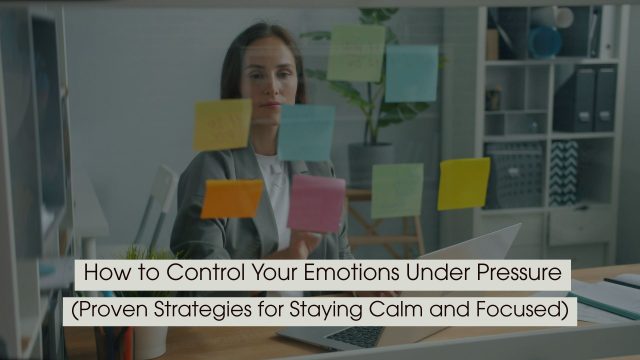
- How to Control Your Emotions Under Pressure
- 1. Pause Before You React
- 2. Focus on Your Breathing
- 3. Identify What You’re Feeling
- 4. Reframe the Situation
- 5. Focus on What You Can Control
- 6. Practice Emotional Detachment
- 7. Build Emotional Awareness Daily
- The Emotional Control Loop
- Long-Term Strategies to Improve Emotional Control
- Common Mistakes to Avoid
- Why Emotional Control Leads to Success
- Conclusion
- Sources and Further Reading
Pressure is unavoidable.
Deadlines, conflicts, unexpected problems, these moments test how well you can manage your emotions.
Some people react impulsively. Others stay calm and focused.
The difference is emotional control.
Controlling your emotions doesn’t mean suppressing them. It means understanding them and responding in a way that helps, not harms, you.
Psychologist Daniel Goleman explains that emotional intelligence is a key factor in how people handle stress and make decisions.
In this article, you’ll learn how to control your emotions under pressure using practical, science-backed strategies.
How to stay calm under pressure – Noa Kageyama and Pen-Pen Chen
Why Emotions Feel Strong Under Pressure
When you’re under stress, your brain reacts quickly.
The emotional part of your brain activates before logic, which can lead to:
- Impulsive reactions
- Anxiety
- Poor decisions
Psychologist Daniel Kahneman explains that fast, emotional thinking often takes over during stressful situations.
Learning to manage this response is key.
The Cost of Poor Emotional Control
Without emotional control, you may:
- Say things you regret
- Make rushed decisions
- Damage relationships
- Increase stress levels
Emotional reactions can create bigger problems than the situation itself.
What Emotional Control Really Means
Emotional control is the ability to:
- Recognize your emotions
- Pause before reacting
- Choose a thoughtful response
It is a skill, not a personality trait.
How to Control Your Emotions Under Pressure
1. Pause Before You React
The first step is simple: Pause.
Even a few seconds can help you avoid impulsive reactions.
2. Focus on Your Breathing
Deep breathing calms your nervous system.
Try this:
- Inhale slowly
- Hold for a few seconds
- Exhale slowly
This reduces stress instantly.
3. Identify What You’re Feeling
Ask yourself:
- What am I feeling right now?
- Why do I feel this way?
Awareness helps you gain control.
4. Reframe the Situation
Change your perspective.
Instead of:
- “This is overwhelming”
Think:
- “I can handle this step by step”
Your thoughts influence your emotions.
5. Focus on What You Can Control
You can’t control everything, but you can control your response.
This reduces anxiety and improves clarity.
6. Practice Emotional Detachment
Separate your emotions from the situation.
Observe what’s happening without reacting immediately.
7. Build Emotional Awareness Daily
Emotional control improves with practice.
Pay attention to your emotions in everyday situations.
The Emotional Control Loop
Trigger → Awareness → Pause → Response
This loop helps you manage emotions effectively.
Long-Term Strategies to Improve Emotional Control
Practice Mindfulness
Mindfulness increases awareness and reduces reactivity.
Improve Stress Management
Exercise, rest, and relaxation help regulate emotions.
Develop Emotional Intelligence
According to Daniel Goleman, self-awareness and self-regulation are key components of emotional intelligence.
Reflect on Your Reactions
Learn from past situations and improve.
Common Mistakes to Avoid
Reacting Immediately
Impulsive reactions often lead to regret.
Ignoring Emotions
Suppressing emotions can make them stronger.
Overthinking
Too much thinking increases stress.
Avoiding Difficult Situations
Growth requires facing challenges.
Why Emotional Control Leads to Success
When you control your emotions, you can:
- Make better decisions
- Handle stress effectively
- Build stronger relationships
- Stay focused under pressure
It is one of the most valuable skills in personal development
Conclusion
Controlling your emotions under pressure is not about eliminating stress, it’s about managing your response to it.
By pausing, becoming aware, and choosing your actions carefully, you can stay calm and focused in any situation.
Personal development is not about avoiding pressure, it’s about learning to handle it.
Because when you control your emotions, you control your outcomes.
Sources and Further Reading
- Daniel Goleman – Emotional intelligence
- Daniel Kahneman – Decision-making psychology
- Goleman, D. (1995). Emotional Intelligence
About the Author
David A. Caren is the creator of Emotional Optimization™ – helping high-performing professionals rewire emotional patterns for clarity, calm, and success.
Book a Free Consultation
How do I stay calm under pressure?
Pause, breathe, and focus on what you can control.
Can emotional control be learned?
Yes. It improves with practice and awareness.
Why do I react emotionally?
Because the brain responds quickly to stress.
How can I improve emotional intelligence?
Increase awareness and practice self-regulation.
Is it bad to feel emotions under pressure?
No. The key is how you respond to them.

What Successful People Do Differently Every Day (Daily Habits That Drive Success)
Successful people achieve more by focusing on consistent daily habits rather than relying on motivation. Through discipline, planning, and continuous…

How to Stop Procrastination and Take Action Immediately (Proven Strategies That Work)
Procrastination is driven by avoidance and fear, not laziness. By breaking tasks into small steps, taking immediate action, and removing…
What Is Self-Discipline and Why It Matters: The Foundation of Success and Personal Growth
Self-discipline is the ability to stay committed to your goals, even when motivation fades. By developing consistent habits, strengthening self-control,…

How to Transform Your Life One Day at a Time: Small Daily Changes That Lead to Extraordinary Results
Transform Your Life One Day at a Time: Transforming your life doesn’t happen overnight, it happens one day at a…

How to Develop Unbreakable Self-Discipline: The Ultimate Guide to Building Mental Strength and Consistency
Developing unbreakable self-discipline isn’t about relying on endless motivation or willpower. It’s about building consistent habits, keeping promises to yourself,…
How to Strengthen Your Willpower Every Day: Practical Strategies for Better Self-Control
Strengthening your willpower starts with small, intentional decisions. By reducing distractions, practicing delayed gratification, building supportive routines, and keeping promises…