Table of Contents
- What Is Emotional Optimization?
- Why Emotional Optimization Matters
- 10 Practical Ways to Optimize Your Emotions
- 1. Develop Emotional Awareness
- 2. Identify Your Emotional Triggers
- 3. Learn to Separate Emotions From Actions
- 4. Practice Cognitive Reappraisal
- 5. Manage Emotional Energy Throughout the Day
- 6. Create a Personal Emotional Reset Routine
- 7. Reduce Unnecessary Emotional Overload
- 8. Use Emotions as Information
- 9. Build Emotional Flexibility
- 10. Conduct a Daily Emotional Review
- Emotional Optimization vs Emotional Suppression
- How Emotional Optimization Improves Productivity
- A Simple Emotional Optimization Routine
- Common Emotional Optimization Mistakes
- How to Measure Emotional Progress
- Conclusion
- Sources and Further Reading
Have you ever noticed how the same task can feel completely different depending on your emotional state?
On some days, you approach challenges with clarity and confidence. On others, even simple responsibilities feel overwhelming.
Your skills haven’t necessarily changed. Your emotional state has.
Emotions influence how you interpret situations, communicate, make decisions, and direct your attention. Yet many people spend considerable time optimizing their schedules, productivity systems, and physical routines while overlooking their emotional well-being.
This is where emotional optimization becomes valuable.
Emotional optimization is the intentional practice of understanding, regulating, and responding to your emotions in ways that support your well-being and goals.
It isn’t about eliminating negative emotions or forcing yourself to feel positive all the time.
It’s about learning how to work with your emotions rather than constantly reacting to them.
In this article, we’ll explore how emotional optimization works, why it matters, and 10 practical strategies for developing a healthier relationship with your emotional experiences.
What Is Emotional Optimization?
Emotional optimization is a practical approach to improving how you recognize, interpret, manage, and respond to emotional experiences.
Rather than allowing emotions to automatically determine your behavior, you develop the awareness and flexibility to respond according to the situation.
For example:
- Recognizing frustration before responding to a colleague.
- Understanding when anxiety is affecting your decisions.
- Identifying emotional exhaustion before taking on another responsibility.
- Using excitement to support meaningful action.
- Knowing when to pause instead of forcing yourself to continue.
The objective isn’t emotional perfection.
It’s emotional effectiveness.
An optimized emotional response is one that acknowledges what you’re feeling while helping you respond appropriately to what matters.
Emotional optimization is a useful personal development concept rather than a formal psychological diagnosis or universally standardized scientific framework. It draws on established research in emotional regulation, emotional intelligence, stress management, and psychological flexibility.
Why Emotional Optimization Matters
Your emotional state can influence several important areas of daily life.
Better Decision-Making
Strong emotions can affect how you evaluate risks, interpret information, and consider consequences.
Emotional awareness helps you recognize when your current state may be influencing an important decision.
Improved Productivity
Stress, frustration, and emotional overload can make concentration more difficult.
Learning to regulate these experiences can help you return your attention to meaningful tasks.
Healthier Relationships
Recognizing your emotional reactions gives you more opportunities to communicate thoughtfully instead of responding impulsively.
Greater Adaptability
Unexpected situations become easier to navigate when you can acknowledge emotional discomfort without allowing it to dictate every action.
Sustainable Performance
Emotional optimization encourages you to consider recovery, boundaries, and emotional needs alongside achievement.
10 Practical Ways to Optimize Your Emotions
1. Develop Emotional Awareness
You cannot effectively manage an emotional experience you haven’t recognized.
Start by paying attention to how you feel throughout the day.
Instead of automatically describing your state as good or bad, become more specific.
Are you:
- Frustrated?
- Disappointed?
- Overwhelmed?
- Anxious?
- Excited?
- Restless?
- Mentally exhausted?
- Content?
Emotional awareness gives you information about what you’re experiencing.
Try this exercise:
Pause three times throughout the day and complete the sentence:
Right now, I’m feeling ______ because ______.
You don’t need to immediately change the emotion.
Begin by understanding it.
2. Identify Your Emotional Triggers
Certain situations consistently produce emotional reactions.
For example, you may become frustrated when plans change unexpectedly or anxious when responsibilities accumulate.
These recurring situations are useful to recognize.
Create a simple emotional trigger journal.
Record:
- What happened?
- What emotion did I experience?
- What was my immediate reaction?
- What did I need in that moment?
- How could I respond differently next time?
Over time, patterns may become visible.
Understanding your triggers allows you to prepare rather than repeatedly reacting without awareness.
3. Learn to Separate Emotions From Actions
Feeling something doesn’t mean you must immediately act on it.
You can feel angry without sending an angry message.
You can feel nervous without abandoning an opportunity.
You can feel disappointed without deciding that your efforts were meaningless.
This distinction is essential to emotional optimization.
When you experience a strong emotion, ask:
“What am I feeling, and what response would actually help this situation?”
Your emotions deserve acknowledgment, but they don’t need to make every decision for you.
4. Practice Cognitive Reappraisal
Cognitive reappraisal involves changing how you interpret a situation to influence your emotional response.
For example:
Initial interpretation:
“My manager criticized my work. I must be terrible at my job.”
Alternative interpretation:
“My manager identified areas that need improvement. I can use this feedback to improve the next version.”
The situation hasn’t changed.
Your interpretation has.
Research by psychologist James Gross identifies cognitive reappraisal as an important emotional regulation strategy.
However, reappraisal shouldn’t mean inventing positive explanations or dismissing legitimate problems.
The goal is to consider a more balanced interpretation.
5. Manage Emotional Energy Throughout the Day
Different activities place different demands on your emotional resources.
A difficult meeting, conflict, demanding project, or stressful commute may leave you feeling drained.
Instead of ignoring these effects, consider how your schedule influences your emotional state.
For example:
- Avoid scheduling several emotionally demanding conversations consecutively when possible.
- Take short breaks after stressful activities.
- Protect time for uninterrupted work.
- Recognize when you need recovery before accepting additional responsibilities.
Emotional optimization involves understanding not only what you do, but also how your activities affect you.
6. Create a Personal Emotional Reset Routine
You won’t always be able to prevent stress or frustration.
But you can develop a routine that helps you respond constructively.
Your emotional reset might include:
- Stepping away from the situation briefly.
- Taking several slow breaths.
- Drinking water.
- Going for a short walk.
- Writing down what’s bothering you.
- Talking to someone you trust.
- Returning to the situation with a clearer perspective.
The best reset routine is one you can realistically use.
You don’t need an elaborate ritual.
Sometimes a brief pause is enough to prevent an unhelpful reaction.
7. Reduce Unnecessary Emotional Overload
Your attention is constantly exposed to information.
Messages, notifications, news, social media, responsibilities, and other people’s expectations can all compete for mental space.
While not every demand is avoidable, some can be managed.
Consider:
- Setting boundaries around nonurgent messages.
- Reducing excessive news consumption.
- Taking intentional breaks from social media.
- Limiting unnecessary commitments.
- Creating periods without digital interruptions.
Protecting your emotional well-being doesn’t require withdrawing from life.
It means becoming more selective about what receives your attention.
8. Use Emotions as Information
Emotions can reveal something about your needs, priorities, or environment.
For example:
Frustration may indicate that something isn’t working as expected.
Anxiety may draw attention to uncertainty or perceived risk.
Disappointment may reveal that an outcome mattered to you.
Excitement may signal interest or anticipation.
However, emotions aren’t always accurate assessments of reality.
Treat them as information worth examining rather than unquestionable instructions.
Ask yourself:
What might this emotion be telling me, and what additional information do I need?
9. Build Emotional Flexibility
Emotional flexibility is the ability to adapt your response according to the situation rather than relying on one strategy for every emotional experience.
Sometimes you need to solve a problem.
Sometimes you need to accept uncertainty.
Sometimes you need to communicate.
Sometimes you need rest.
And sometimes you need to continue with an important responsibility even while experiencing uncomfortable emotions.
For example, when facing an approaching deadline, you might initially use breathing exercises to reduce overwhelming anxiety, then create a practical plan to address the actual workload.
Emotional flexibility means choosing the response that fits the situation.
10. Conduct a Daily Emotional Review
Reflection can help you understand how emotional experiences influence your behavior.
At the end of the day, ask yourself:
- Which emotion appeared most frequently today?
- What situation affected me the most?
- Did my emotional state influence an important decision?
- How did I respond?
- What helped me feel more balanced?
- What would I approach differently tomorrow?
Keep the review brief.
Five minutes is enough to identify useful patterns.
The objective isn’t to judge every emotion you experienced.
It’s to understand yourself more clearly.
Emotional Optimization vs Emotional Suppression
One important distinction is that managing emotions doesn’t mean hiding them.
| Emotional Optimization | Emotional Suppression |
|---|---|
| Recognizes emotions | Attempts to hide emotional expression |
| Examines emotional triggers | May leave underlying triggers unaddressed |
| Encourages flexible responses | Can become a habitual avoidance strategy |
| Supports appropriate communication | May discourage emotional expression |
| Considers emotional needs | May overlook emotional needs |
Suppressing emotional expression can sometimes be appropriate in specific situations, but relying on suppression alone may not address the source of distress.
Healthy emotional optimization creates room for emotions without allowing every emotion to control your actions.
How Emotional Optimization Improves Productivity
Productivity isn’t determined only by time management.
Your emotional state can influence your ability to begin, sustain, and complete meaningful work.
Imagine two scenarios.
Scenario A
You receive unexpected criticism and immediately begin another demanding task while feeling frustrated.
You repeatedly think about the criticism, lose concentration, and struggle to make progress.
Scenario B
You recognize your frustration, take a short break, identify what needs attention, and return to work with a clearer plan.
The difference isn’t necessarily greater intelligence or skill.
It’s how the emotional experience was handled.
Emotional optimization can support productivity by helping you recognize when emotional regulation is needed before returning to a task.
A Simple Emotional Optimization Routine
You can incorporate emotional optimization into your existing schedule without creating another complicated system.
Morning: Establish Awareness
Before beginning your responsibilities, ask:
How am I feeling today?
What might affect my emotional state?
What would help me approach the day constructively?
Afternoon: Check Your Emotional Energy
Pause briefly.
Notice whether you’re focused, overwhelmed, frustrated, or fatigued.
If necessary, adjust your approach or take a short recovery break.
Evening: Reflect and Reset
Identify one emotional response you handled well and one situation you would approach differently.
Use that information to prepare for tomorrow.
Common Emotional Optimization Mistakes
Trying to Feel Positive All the Time
Negative emotions are normal and can serve useful functions.
The goal is appropriate regulation, not constant happiness.
Overanalyzing Every Feeling
Emotional awareness is helpful, but excessive monitoring can become counterproductive.
Recognize your emotions without making every minor fluctuation a major event.
Ignoring Physical Needs
Sleep, physical activity, nutrition, and recovery can influence emotional well-being.
Emotional management shouldn’t be separated entirely from physical health.
Expecting Immediate Emotional Control
Emotional regulation develops through learning, experimentation, and practice.
You won’t respond perfectly in every situation.
Treating Every Problem as an Internal Issue
Sometimes emotional distress reflects a genuine external problem, such as unreasonable demands, unhealthy boundaries, or unresolved conflict.
Regulation should help you address those situations, not simply tolerate them indefinitely.
How to Measure Emotional Progress
Unlike productivity, emotional well-being isn’t always easy to measure numerically.
Instead of attempting to eliminate uncomfortable emotions, observe changes in how you respond.
Signs of progress may include:
- Recognizing emotional triggers earlier.
- Recovering more effectively after stressful situations.
- Communicating needs more clearly.
- Making fewer impulsive decisions.
- Responding more flexibly to unexpected changes.
- Knowing when to rest or seek support.
- Feeling less controlled by temporary emotional states.
Progress doesn’t necessarily mean experiencing fewer difficult emotions.
It can mean developing a healthier response when those emotions appear.
Conclusion
Emotional optimization isn’t about becoming perfectly calm, constantly positive, or unaffected by difficult experiences.
It’s about developing a better understanding of your emotional life and using that awareness to make more intentional decisions.
When you recognize your triggers, manage emotional energy, practice cognitive reappraisal, establish boundaries, and develop flexible responses, you create a healthier foundation for personal and professional growth.
You don’t need to control every emotion.
You need to become better at understanding what you’re experiencing and choosing what to do next.
The goal of emotional optimization isn’t to feel good every moment. It’s to respond effectively to whatever the moment requires.
Sources and Further Reading
- James J. Gross. The Emerging Field of Emotion Regulation: An Integrative Review (1998).
- James J. Gross. Emotion Regulation: Current Status and Future Prospects (2015).
- Daniel Goleman. Emotional Intelligence: Why It Can Matter More Than IQ (1995).
- Susan David. Emotional Agility: Get Unstuck, Embrace Change, and Thrive in Work and Life (2016).
- Lisa Feldman Barrett. How Emotions Are Made: The Secret Life of the Brain (2017).
- Richard J. Davidson and Sharon Begley. The Emotional Life of Your Brain (2012).
About the Author
David A. Caren is the creator of Emotional Optimization™ – helping high-performing professionals rewire emotional patterns for clarity, calm, and success.
Book a Free Consultation
What is emotional optimization?
Emotional optimization is the intentional practice of understanding, regulating, and responding to emotions in ways that support well-being, decision-making, relationships, and meaningful goals.
How can I optimize my emotions daily?
Begin with emotional awareness, identify recurring triggers, practice appropriate regulation techniques, manage unnecessary stressors, and reflect briefly on your emotional responses.
Is emotional optimization the same as emotional intelligence?
Not exactly. Emotional intelligence refers broadly to abilities involving the recognition, understanding, and management of emotions. Emotional optimization is a practical way of applying related skills to everyday functioning and performance.
Can emotional optimization improve productivity?
It may support productivity by helping you manage stress, recognize emotional distractions, maintain attention, and respond constructively to challenging situations.

Burnout and Personal Growth: How Burnout Can Become a Turning Point for Positive Change
Burnout can feel overwhelming, but it can also become a turning point for personal growth. By reassessing priorities, building resilience,…


Personal Development: How to Train Your Brain to Think Positively and Stay Motivated
Training your brain to think positively can improve motivation, resilience, and overall personal development. By practicing self-awareness, gratitude, and constructive…
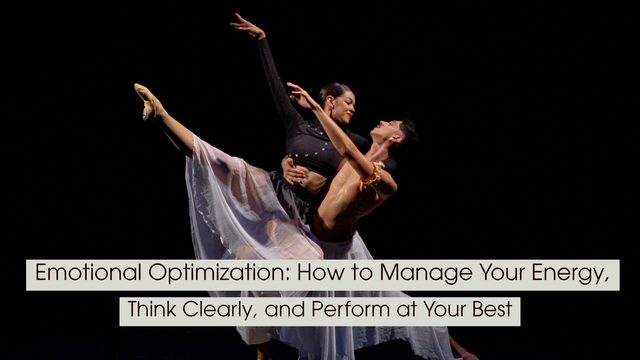
Emotional Optimization: How to Manage Your Energy, Think Clearly, and Perform at Your Best
Have you ever noticed how the same task can feel completely different depending on your emotional state? On some days, you…
How to Train Your Brain for Discipline and Focus (Science-Backed Strategies That Work)
Training your brain for discipline and focus requires consistent practice, strong habits, and the right environment. By building routines and…

How to Prevent Burnout Before It Starts (Proven Strategies to Protect Your Energy and Well-Being)
Burnout doesn’t happen overnight. It builds slowly, through stress, overwork, lack of rest, and constant pressure, until your energy is drained…
Why You Keep Losing Discipline and How to Get It Back
If you keep losing discipline, the problem may not be a lack of willpower. Unrealistic routines, unclear priorities, distractions, and…