Many high achievers struggle with negative thoughts that can hinder their success and wellbeing. It’s crucial for those striving for greatness to challenge these negative thoughts and replace them with positive affirmations that can help them thrive. In this blog post, we will explore the power of positive affirmations for high achievers and how they can transform mindset and outcomes in both personal and professional endeavors.

Key Takeaways:

  • Challenge negative thoughts: High achievers are not immune to negative thoughts, but they actively challenge and reframe them to maintain a positive mindset.
  • Use positive affirmations: Incorporating positive affirmations into daily routines can help high achievers boost their confidence, motivation, and resilience.
  • Focus on self-talk: Pay attention to the way you talk to yourself and replace self-critical thoughts with affirmations that reinforce your worth and capabilities.

The Psychology of High Achievers

Little is known about the inner workings of high achievers, those individuals who seem to have a natural knack for success. Understanding the psychology behind high achievers can provide valuable insights into their mindset and behavior, offering key lessons for those aspiring to reach similar heights.

Traits of High Achievers

On the surface, high achievers may appear to have it all together – they are driven, goal-oriented, and persistent in the pursuit of their ambitions. They possess an unwavering belief in their abilities and are willing to put in the hard work necessary to achieve their goals. High achievers are resilient in the face of obstacles and setbacks, viewing challenges as opportunities for growth rather than roadblocks to success.

Negative Thought Patterns in High Achievers

Thought patterns play a crucial role in shaping the mindset of high achievers. While their determination and focus are admirable, high achievers may also be prone to negative thought patterns that can hinder their success. It is crucial to recognize these patterns, such as self-doubt, fear of failure, or perfectionism, and address them effectively to prevent them from impeding progress.

It is important to note that negative thought patterns, if left unchecked, can undermine even the most talented individuals, leading to self-sabotage and missed opportunities.

Crafting Effective Positive Affirmations

Principles of Effective Affirmations

Some principles should be followed to craft effective positive affirmations. It is crucial to use present tense statements, as if the desired outcome is already a reality. Affirmations should also be framed in a positive light, focusing on what you want to achieve rather than what you want to avoid. Additionally, using specific and realistic language can make the affirmations more impactful and believable.

Tailoring Affirmations for Personal Success

Any successful individual knows the importance of tailoring affirmations for personal success. Affirmations should be customized to align with your specific goals, values, and beliefs. By incorporating personal details and emotionally resonant language, you can create affirmations that truly resonate with you and fuel your motivation to strive for success.

Another critical aspect of tailoring affirmations for personal success is to consider any limiting beliefs that may be holding you back. By addressing and reframing these negative thoughts into positive affirmations, you can overcome self-doubt and unlock your full potential. Be mindful of, the power of positive affirmations lies in their ability to rewire your mindset and empower you to achieve your goals.

Integrating Affirmations into Daily Routine

Once again, we are reminded of the power of positive affirmations in reshaping our thoughts and habits. To truly harness the potential of affirmations, it is crucial to integrate them into our daily routines.

Practical Techniques for Daily Practice

An effective way to incorporate affirmations into your daily routine is by setting aside dedicated time each day to recite them. This could be in the morning as soon as you wake up, during your lunch break, or just before bed. Write down your affirmations and place them where you will see them frequently, such as on your mirror, computer screen, or car dashboard.

Overcoming Challenges in Maintaining Consistency

One common challenge in maintaining consistency with affirmations is forgetting to practice them regularly. To combat this, consider setting reminders on your phone or computer to prompt you to recite your affirmations. Additionally, you can enlist the support of a friend or family member to hold you accountable and encourage you to stay on track.

Daily practice of positive affirmations is crucial to reprogramming your mindset and achieving your goals. By consistently reinforcing positive beliefs and empowering statements, you can overcome self-doubt and cultivate a success-driven mentality.

Measuring the Impact of Positive Affirmations

Tracking Progress and Success

Keep a journal or use a tracking tool to monitor your progress and success when using positive affirmations. Note down any changes in your mindset, behavior, and achievements. Reflect on how your affirmations have influenced your thoughts and actions towards your goals.

Adjusting Affirmations for Continuous Improvement

Progress with positive affirmations may require adjustments over time to ensure they remain effective. Evaluate the impact of your current affirmations regularly and be open to tweaking them for better results. Modify affirmations that no longer resonate or set new ones that align with your evolving goals.

Improvement: Continuous improvement in your affirmations is crucial for enhancing their effectiveness in shaping your mindset and behaviors. By staying flexible and willing to make changes, you can ensure that your affirmations consistently support your growth and success.

To wrap up

Now that you have learned about the power of challenging negative thoughts and using positive affirmations for high achievers, it is important to remember that your mindset is a powerful tool in achieving your goals. By replacing self-doubt with self-belief and negativity with positivity, you can set yourself up for success and reach new heights in your personal and professional life. Embrace the practice of positive affirmations, and watch as your mindset transforms to one of confidence, motivation, and resilience. Be mindful of, you have the ability to shape your thoughts and create the life you desire. Keep challenging those negative thoughts and repeating those positive affirmations, and you will see the incredible impact they can have on your success.

FAQ

Q: What is the importance of challenging negative thoughts?

A: Challenging negative thoughts is crucial for high achievers as it helps in promoting a positive mindset, boosting self-confidence, and increasing motivation. By reframing negative thoughts into positive affirmations, you can overcome obstacles and reach your full potential.

Q: How can positive affirmations benefit high achievers?

A: Positive affirmations can benefit high achievers by reprogramming their subconscious mind, improving their self-belief, reducing stress and anxiety, enhancing focus and concentration, and increasing resilience in the face of challenges. They serve as powerful tools for personal growth and success.

Q: How to effectively use positive affirmations for high achievers?

A: To effectively use positive affirmations, high achievers should identify their negative thought patterns, create personalized affirmations that counteract those thoughts, repeat them consistently with conviction and belief, visualize their goals while reciting affirmations, and practice gratitude to cultivate a positive mindset. Consistency and dedication are key to harnessing the full potential of positive affirmations.


Tap Into Your Emotional Superpowers:

Reclaim Your Mental & Emotional Resources To Do More, Be More, & LIVE More Fully

The Desire: Reclaim Your Joy, Purpose & Inner Peace with Emotional Optimization

In the hustle and bustle of today's world, do you feel like your emotions are on a rollercoaster with no brakes? Caught in a relentless storm of stress, anxiety, and uncertainty; it's all too easy to feel lost, disconnected from your true self, and powerless in steering the course of your own life.

In the bustling rhythm of modern life, where achievements are often measured in milestones and material success, it's easy to overlook the silent whispers of our inner selves. Like a ship navigating a vast, unpredictable ocean, we often find ourselves lost in the storms of overwhelm, stress, anxiety, and unfulfilled desires. This is the journey of every single soul searching for a ray of light in the darkness - a calm, peaceful, fulfilled life with emotional serenity, inner confidence and strength. Emotional Optimization is a way to navigate your inner world, to release the energy you've been wasting on old triggers and buttons, and to reclaim your mental and emotional resources so you can do more in life, create a bigger impact on the world, and live life more fully on your terms as you continue your journey to emotional mastery.

The Challenge: Emotional Triggers & Unresolved Traumas

Pause for a moment and imagine the heavy toll those unchecked emotions are having on your life. Relationships strained to their breaking points, opportunities slipping like sand through your fingers, and a constant, gnawing sense of not living up to your full potential. This isn't just about facing daily hurdles; it's about the very essence of your happiness and fulfillment being eroded away, day after draining day, WASTING your precious life REACTING to unresolved emotional triggers and old traumas.

Imagine walking through a labyrinth, where each turn represents a challenge, a moment of doubt, or a trigger of unresolved emotion. This is the odyssey of the modern high achiever. Despite the outward success, there always seems to be an underlying struggle - a battle with emotions that feel like uncharted waters. In an age where the pursuit of happiness often leads to more questions than answers, many find themselves adrift, caught in a cycle of emotional highs and lows, constantly looking for a safe place where they can achieve balance, peace, and genuine fulfillment.


The Solution: Emotional Optimization

This is where Emotional Optimization comes in. David's highly personalized coaching program is designed to equip you with the tools and strategies you need to understand, manage, and transform your emotions. By mastering emotional intelligence, you unlock the door to improved communication, stronger relationships, and heightened self-awareness. It's time to reclaim all the mental and emotional resources you've been wasting in the background on the subconscious emotional triggers from past traumas and unresolved emotions. You deserve to live FREE from the emotional baggage and burdens of your past. It's time to step into peace, confidence, and clarity, so you can be more present, have deeper relationships, and feel more fulfilled in life.

Benefits:

  • Enhanced Emotional Intelligence: Elevate your ability to understand, process, use, & manage your emotions in positive ways to relieve stress, communicate effectively, empathize with others, overcome challenges, & make choices that align with your deepest values & aspirations.
  • Improved Relationships: Transform your personal and professional relationships through self-reflection, better communication, empathy, and emotional understanding.
  • Increased Emotional Resilience: Build a robust emotional foundation that enables you to navigate life's ups & downs with grace & poise, turning potential setbacks into opportunities for growth. Arm yourself with resilience that turns life's fiercest storms into moments of strength & empowerment.
  • Personal and Professional Growth: Unlock your full potential by harnessing the power of emotional optimization to achieve your goals, boost productivity, and amplify a sense of accomplishment, satisfaction, and fulfillment in all areas of life.

About The Author

David A. Caren

Author, Hypnotherapist, Emotional Optimization Coach™‌
& Founder of The Emotional Optimization™ Academy

Master of The Mind, Solver Of Problems,
Wizard of Emotions & Creator Of Solutions!

Tens of thousands of hours with thousands of clients all over the world solving life's greatest challenges.

The Numbers: 10,000+ Sessions with 2,000+ Clients & 500+ 5-Star Client Reviews
As Seen On: Authority Magazine, Entrepreneur, Inc, Forbes, Huffington Post, MTV, CBS, USA Today, NBC

Let's Connect!

Leave a comment

Your email address will not be published. Required fields are marked

{"email":"Email address invalid","url":"Website address invalid","required":"Required field missing"}
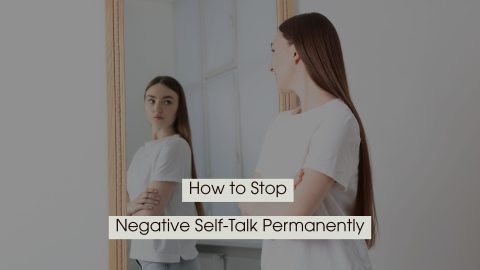
Young woman standing with arms crossed while looking at her reflection in a mirror, with the text “How to Stop Negative Self-Talk Permanently” displayed across the image.

How Stop Negative Self-Talk Permanently

Negative self-talk is not permanent, it is a learned pattern that can be rewired. Through awareness, cognitive restructuring, and self-compassion, you can transform your inner dialogue and strengthen your personal development journey. Change the way you speak to yourself, and you change the way you show up in the world.

Read More
Silhouette of a confident person standing with arms raised against a cloudy sky, symbolizing overcoming imposter syndrome, fear of failure, and reclaiming self-confidence.

Imposter Syndrome and the Fear of Failure: How to Break the Cycle and Reclaim Your Confidence

Imposter syndrome and the fear of failure often go hand in hand, quietly undermining confidence and holding people back from reaching their full potential. Even high achievers can feel like they don’t truly deserve their success, constantly worrying they’ll be “found out.” In this article, we explore how imposter syndrome develops, why fear of failure keeps it alive, and practical strategies to break the cycle—so you can build self-trust, embrace growth, and move forward with confidence.

Read More
Group of professionals standing side by side holding cards with question marks over their faces, symbolizing self-doubt and identity confusion, with text reading “Imposter Syndrome and Identity: Who You Think You Are vs. Who You Really Are.

Imposter Syndrome and Identity: Who You Think You Are vs. Who You Really Are

Imposter syndrome often creates a painful gap between who you believe you are and who you truly are beneath the doubt. It convinces capable, accomplished people that their success is accidental and that they’re only one mistake away from being “found out.” In this article, we explore how imposter syndrome shapes identity, why it distorts self-perception, and how reconnecting with your authentic self can help you reclaim confidence, clarity, and inner stability.

Read More
Man sitting on a couch with head in hands, appearing stressed and overwhelmed, representing imposter syndrome in men and the silent struggle behind success.

Imposter Syndrome in Men: The Silent Struggle Behind Success

Imposter syndrome in men often goes unnoticed, hidden behind confidence, achievement, and the pressure to appear strong. Many men silently battle self-doubt, fear of failure, and the belief that their success is undeserved—despite clear evidence of their competence. This article explores how imposter syndrome uniquely affects men, why it’s so difficult to talk about, and practical ways to break free from the cycle of self-sabotage and reclaim authentic confidence.

Read More
A woman standing indoors looking upward thoughtfully, representing personal growth through setbacks and turning challenges into powerful opportunities for self-improvement.

Personal Growth Through Setbacks: How to Turn Challenges Into Powerful Growth Opportunities

Setbacks are an inevitable part of life, but they don’t have to define your future. In fact, some of the most powerful personal growth happens in moments of challenge, failure, and uncertainty. When viewed through the right lens, obstacles become opportunities to build resilience, gain clarity, and develop emotional strength. This article explores how embracing setbacks can help you grow stronger, wiser, and more confident, turning life’s challenges into meaningful stepping stones toward lasting personal growth.

Read More
Woman embracing freedom and confidence, representing personal growth through letting go of fear and self-sabotaging thoughts.

Personal Growth Through Letting Go of Fear and Self-Sabotage

Personal growth often begins when we confront the fears and self-sabotaging patterns that quietly hold us back. Letting go of fear isn’t about eliminating doubt entirely—it’s about learning to move forward despite it. When you release limiting beliefs, perfectionism, and the need for control, you create space for clarity, confidence, and authentic progress. This article explores how letting go of fear and self-sabotage can unlock emotional freedom, improve decision-making, and help you step into the version of yourself you’re meant to become.

Read More