Table of Contents
- 10 Personal Development Tips That Actually Work
- Why Small Changes Matter More Than Big Ones
- Small Habits, Big Results | How Tiny Changes Create Lasting Change
- Small Changes, Big Results: Personal Development Tips That Actually Work
- 1. Start Your Day With One Intentional Habit
- 2. Reduce Mental Clutter With a 5-Minute Daily Reset
- 3. Replace Negative Self-Talk With One Better Thought
- 4. Learn Something Small Every Day
- 5. Set Micro-Goals Instead of Overwhelming Ones
- 6. Practice 2-Minute Gratitude Every Night
- 7. Reduce One Energy Drain Each Week
- 8. Schedule 10 Minutes of Movement Daily
- 9. Protect Your Focus With Mini Boundaries
- 10. End Your Day With a Quick Reflection
- The Truth About Personal Growth: Small Steps Build Big Lives
- Sources & Further Reading
- About the Author
- Book a Free Consultation
- Why do small habits create bigger results than major lifestyle changes?
- How long does it take for a small habit to become automatic?
- What personal development habits are most effective for beginners?
- Can small habits really improve confidence and mental health?
- What if I struggle with consistency?
- Do I need a full morning routine to see personal development results?
- How can I stay motivated when progress feels slow?
- What’s the biggest mistake people make with personal development?
- Can personal development work for people with busy schedules?
- How do I know if my personal development habits are working?
Do you ever feel like no matter how hard you try, your life isn’t improving fast enough? You read self-help books, watch motivational videos, and make big plans, but the progress never matches the effort. It’s frustrating, and it can make you feel stuck, overwhelmed, or even convinced that meaningful change requires massive willpower or a perfect version of yourself.
The truth? Real transformation rarely comes from dramatic overhauls, it comes from small, simple habits done consistently. Psychology shows that tiny, manageable shifts in your daily behavior create compound effects over time, leading to big and lasting results without burnout. And that’s where most people get it wrong: they focus on intensity, not consistency.
This article breaks down 10 personal development tips that actually work, backed by behavioral science, habit psychology, and real-world application. These are practical, doable, and designed to fit into your life even if you’re busy, tired, or starting from scratch. Small steps can change your entire direction, and today, you start taking them.
10 Personal Development Tips That Actually Work
Personal development doesn’t always require massive breakthroughs or dramatic lifestyle changes. More often, lasting growth comes from small, consistent habits compounded over time. These tiny shifts, barely noticeable at first, build the foundation for better mindset, stronger habits, improved emotional health, and long-term success.
If you’ve ever felt overwhelmed by the idea of “starting over” or reinventing yourself, this article will show you something powerful:
You don’t need to overhaul your life to create meaningful transformation. You just need to start with small changes that build big results.
Why Small Changes Matter More Than Big Ones
Big goals often lead to big pressure. When you try to change too much at once, motivation fades and habits collapse quickly. But small habits bypass resistance. They feel doable, sustainable, and almost friction-free.
That’s why tiny improvements: reading one page, doing a 5-minute routine, writing down one intention, can spark remarkable long-term transformation. They rewire your identity slowly, safely, and effectively.
Small Habits, Big Results | How Tiny Changes Create Lasting Change
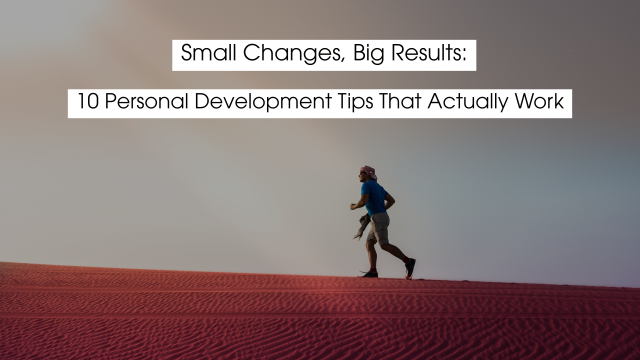
Small Changes, Big Results: Personal Development Tips That Actually Work
Personal development doesn’t have to feel overwhelming. You don’t need to wake up at 5 AM, meditate for an hour, or completely reinvent your life to feel more grounded, confident, or productive. Real growth happens through small, repeatable actions, the tiny habits that seem insignificant at first but quietly compound into massive transformation over time. These small changes reduce resistance, build consistency, and help you evolve in a way that feels natural and sustainable.
What makes small habits so powerful is how they influence your identity. Every tiny action is a vote for the kind of person you are becoming, someone who prioritizes growth, self-awareness, and emotional well-being. Over weeks and months, these votes add up. They shape your mindset, your confidence, your choices, and ultimately, your life. Here are ten personal development tips that prove small changes truly lead to big results.
1. Start Your Day With One Intentional Habit
Beginning your day with a single intentional action creates a sense of control and calm before life’s demands kick in. It doesn’t have to be anything complicated, five minutes of stretching, a short gratitude note, a moment of deep breathing, or simply drinking water before checking your phone. This small ritual signals to your brain that you’re entering the day with purpose rather than chaos, setting a tone of clarity and focus.
Over time, this single habit builds internal stability. While the rest of your day may be unpredictable, this one anchor grounds you. It’s not about having a perfect morning routine; it’s about having one consistent moment that brings you back to yourself. This tiny shift can improve mood regulation, energy levels, and productivity throughout the day.
2. Reduce Mental Clutter With a 5-Minute Daily Reset
Mental clutter is one of the biggest barriers to productivity and emotional calm. A quick daily reset, like clearing your workspace, closing old tabs, or jotting down lingering thoughts, helps your brain release tension and regain focus. You don’t need a full cleaning session; just five minutes can reduce overwhelm and make your environment feel more supportive.
This small habit also trains your mind to pause instead of pushing through stress. Over time, these micro-pauses help prevent burnout by creating mental space and emotional breathing room. Think of this reset as your way of honoring your energy, checking in, reorganizing, and starting fresh whenever life feels mentally heavy.
3. Replace Negative Self-Talk With One Better Thought
You don’t have to silence your inner critic completely; you just need to interrupt it. When a self-limiting thought arises, like “I can’t do this,” “I’m behind,” or “I’m not good enough”, swap it for a slightly more empowering alternative. Even a small upgrade like “I can try,” “I’m learning,” or “This is uncomfortable, but doable” can shift your emotional response.
Over time, this simple swap rewires your self-dialogue. Instead of spiraling into self-doubt, your brain becomes more open to possibility and growth. This habit builds resilience and reduces anxiety, because you’re training your mind to become a supportive coach rather than a harsh critic. Small improvements in your inner language create big changes in your emotional strength.
4. Learn Something Small Every Day
Personal growth doesn’t require hours of studying. Reading one page, watching a 10-minute educational video, or listening to a short podcast episode is enough to stimulate your curiosity and expand your knowledge. These tiny doses of learning help you stay mentally sharp and engaged with the world around you.
Most importantly, small learning habits build identity-based confidence: you start to see yourself as someone who grows daily. You collect small insights, skills, and lessons that compound over time. Even if you forget details, the act of learning keeps your brain adaptable, open-minded, and forward-focused, traits essential for long-term personal development.
5. Set Micro-Goals Instead of Overwhelming Ones
Big goals can feel exciting… until it’s time to start. Micro-goals, on the other hand, make progress feel effortless. Instead of committing to “finish the entire project,” choose the first tiny step: outline the first idea, write the opening sentence, or brainstorm for five minutes. These small steps reduce pressure and lower the mental barrier to getting started.
As you complete these micro-goals, you naturally build momentum. Small wins activate motivation chemicals in the brain, making you more eager to continue. This creates a feedback loop where progress fuels more progress. Over time, micro-goals lead to massive outcomes, without the stress and overwhelm of chasing perfection.
6. Practice 2-Minute Gratitude Every Night
Gratitude shifts your focus from what’s missing to what’s meaningful. Taking just two minutes each night to write down one thing you’re grateful for and one thing you’re proud of helps rewire your brain toward positivity and self-recognition. It’s a simple habit that strengthens emotional resilience.
This practice also supports better mental health by training your mind to notice progress rather than flaws. When repeated consistently, it reduces overthinking, anxious thoughts, and the pressure to constantly improve. You begin to see patterns of growth, small successes, and everyday blessings that may otherwise go unnoticed.
7. Reduce One Energy Drain Each Week
Energy drains like clutter, unmade decisions, overdue tasks, or toxic interactions, chip away at your emotional bandwidth. Choosing just one to eliminate every week keeps your environment and mind cleaner without overwhelming you. You might cancel a subscription, throw away unused items, or finally complete a small but lingering task.
As these drains disappear, you’ll notice more mental clarity and emotional spaciousness. You stop leaking energy into things that don’t matter and begin directing your focus toward what does. Over time, this single weekly habit transforms your environment, your productivity, and your sense of peace.
8. Schedule 10 Minutes of Movement Daily
Movement is one of the quickest ways to improve mood, energy, and emotional regulation. Committing to just 10 minutes a day walking, stretching, dancing, or doing light exercises, activates feel-good chemicals in the brain. It relieves tension and gives you a natural boost without requiring a full workout routine.
These short bursts of movement also make your body feel more alive and connected. As your stamina increases, you may naturally feel inspired to move more. But even if 10 minutes is all you ever commit to, the benefits still compound: better sleep, reduced stress, more focus, and increased overall well-being.
9. Protect Your Focus With Mini Boundaries
Focus is one of your most valuable resources, and small boundaries protect it better than rigid rules. Try turning off notifications for one hour, setting a brief no-interruption window, or checking emails only twice a day. These small boundaries reduce digital noise and give your brain room to concentrate.
Over time, these mini boundaries strengthen your ability to stay present and reduce mental fatigue. Instead of feeling pulled in every direction, you reclaim control of your attention. This habit not only helps you be more productive but also helps you feel calmer and more intentional with your time.
10. End Your Day With a Quick Reflection
A simple reflection routine, thinking about what went well and what you want to improve, helps you close the day with awareness rather than autopilot. This gives your mind space to process the day’s events and release lingering thoughts before sleep.
Reflection also builds emotional intelligence and self-awareness. By recognizing your progress and identifying areas for improvement, you strengthen your ability to respond to challenges instead of reacting to them. Over time, this habit helps you grow into a more mindful, grounded, and confident version of yourself.
The Truth About Personal Growth: Small Steps Build Big Lives
You don’t transform overnight. You transform through daily choices, tiny shifts in identity, and consistent commitments to becoming just a bit better every day.
Small changes may feel insignificant at first…
But over weeks, months, and years, they shape the strongest, most resilient version of you.
Start small. Stay steady. Grow big.
Sources & Further Reading
- “Making health habitual: the psychology of ‘habit-formation’” — B. Gardner, 2012: https://pmc.ncbi.nlm.nih.gov/articles/PMC3505409/ PMC
- “How we form habits, change existing ones” — summary of psychological findings on habit formation timelines: https://www.sciencedaily.com/releases/2014/08/140808111931.htm ScienceDaily
- “How Long Does It Really Take to Form a Habit?” — overview of habit-formation research, including typical 66-day average: https://www.scientificamerican.com/article/how-long-does-it-really-take-to-form-a-habit/ Scientific American
- Review on strengthening behavior change through evidence-based practice + habit science: https://pmc.ncbi.nlm.nih.gov/articles/PMC12318445/
- Atomic Habits: Small Changes, Big Results– A clear and concise video explaining why small habits matter more than drastic changes, and how daily micro-actions add up over time. Excellent match for the core message of your article.
- Small Habits, Big Results | How Tiny Changes Create Lasting Change — Breaks down how tiny, consistent habits lead to lasting life changes. It mirrors the structure of your 10-tip system and reinforces the effectiveness of incremental growth.
- The Power of Habit: Small Changes That Make a Big Impact — Focused on how habit formation shapes behavior and outcomes. Useful for readers who want a deeper dive into the psychology behind habit-driven change.
- 10 Habits for Self Improvement (Life Changing & Motivating) — A practical, motivational list of daily habits for personal growth. Complementary to your article, especially for readers starting out or looking for tangible routines.
- How to motivate yourself to change your behavior | Tali Sharot | TEDx– Offers insight from neuroscience and psychology about what really helps us change behavior. Good for readers interested in science-backed motivation and sustainable change.
About the Author
David A. Caren is the creator of Emotional Optimization™ – helping high-performing professionals rewire emotional patterns for clarity, calm, and success.
Book a Free Consultation
Why do small habits create bigger results than major lifestyle changes?
Small habits are easier for the brain to accept, repeat, and automate. When a habit feels effortless, you’re more likely to stay consistent—and consistency is what creates lasting transformation. Big, dramatic changes often trigger overwhelm and burnout, causing people to quit quickly.
How long does it take for a small habit to become automatic?
Research shows that habits take an average of 66 days to become automatic, but the timeline depends on the habit’s difficulty and consistency. Smaller habits usually stick faster because they require less mental effort and resistance.
What personal development habits are most effective for beginners?
Start with easy, low-pressure habits such as a 5-minute morning routine, daily gratitude reflections, short bursts of learning, or brief mindfulness practices. These simple habits create early wins, which motivate you to keep going and gradually increase your commitment.
Can small habits really improve confidence and mental health?
Yes. Small wins boost dopamine—the brain’s reward chemical—which reinforces confidence and reduces stress. Over time, these small successes reshape your identity, helping you see yourself as capable, disciplined, and growing.
What if I struggle with consistency?
Focus on reducing friction. Make the habit easier, shorter, or more enjoyable. Attach it to something you already do (e.g., gratitude after brushing your teeth). Consistency isn’t about perfection—it’s about returning to the habit even after you miss a day.
Do I need a full morning routine to see personal development results?
No. You only need one intentional habit to set the tone for your day. A full 1-hour routine is optional. What matters is choosing something grounding—like stretching, journaling, or meditation—that signals clarity and focus.
How can I stay motivated when progress feels slow?
Track your small wins. Use a habit tracker, journal, or daily reflection. Progress often feels invisible, but when you see your wins compiled over weeks, motivation naturally grows. Remember: personal development is a compound effect.
What’s the biggest mistake people make with personal development?
Trying to change everything at once. Taking on too much leads to overwhelm and inconsistency. Sustainable transformation comes from small, intentional actions—not from pushing yourself into unrealistic routines.
Can personal development work for people with busy schedules?
Absolutely. The beauty of small habits is that they fit into any lifestyle. Many effective personal development habits take 2–5 minutes and can be integrated into daily routines without requiring extra time.
How do I know if my personal development habits are working?
Look for subtle signs: less stress, clearer thinking, improved mood, increased focus, better decisions, or feeling more grounded. Growth doesn’t always feel dramatic—it often appears as small shifts that compound into big change.

How to Transform Your Life One Day at a Time: Small Daily Changes That Lead to Extraordinary Results
Transform Your Life One Day at a Time: Transforming your life doesn’t happen overnight, it happens one day at a…


How to Develop Unbreakable Self-Discipline: The Ultimate Guide to Building Mental Strength and Consistency
Developing unbreakable self-discipline isn’t about relying on endless motivation or willpower. It’s about building consistent habits, keeping promises to yourself,…
How to Strengthen Your Willpower Every Day: Practical Strategies for Better Self-Control
Strengthening your willpower starts with small, intentional decisions. By reducing distractions, practicing delayed gratification, building supportive routines, and keeping promises…

Personal Development: The Growth Mindset Formula, How to Rewire Your Brain for Success
Personal development begins with one powerful belief: you can improve. The growth mindset formula teaches you how to rewire your…
Personal Development: Why Overthinking Is Holding You Back (And How to Stop)
Overthinking feels safe, but it quietly steals your momentum, confidence, and clarity. The more you analyze, the less you act….
How Stop Negative Self-Talk Permanently
Negative self-talk is not permanent, it is a learned pattern that can be rewired. Through awareness, cognitive restructuring, and self-compassion,…