Table of Contents
- Limiting Beliefs: What they are, how we get them, and signs that you have them.
- What Are Limiting Beliefs?
- How Limiting Beliefs Affect Your Life
- What Is an Online Life Coach?
- How an Online Life Coach Helps You Break Limiting Beliefs
- Why Online Life Coaching Is Effective for Mindset Work
- Who Benefits Most From Online Life Coaching?
- Online Life Coach vs Therapy for Limiting Beliefs
- How Long Does It Take to Break Limiting Beliefs?
- Final Thoughts: You’re Not Broken, You’re Conditioned
- Sources & Further Reading
- About the Author
- Book a Free Consultation
Limiting beliefs are the invisible barriers that quietly shape your decisions, confidence, and results. They sound like “I’m not good enough,” “It’s too late for me,” or “I always mess things up.”
The challenge? Most people don’t even realize these beliefs are running their lives.
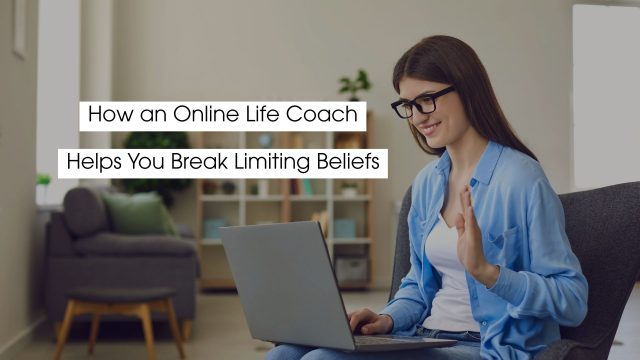
This is where an online life coach plays a powerful role. Through awareness, mindset work, and intentional action, online life coaching helps you identify, challenge, and release limiting beliefs, so you can grow without being held back by outdated stories.
Limiting Beliefs: What they are, how we get them, and signs that you have them.
What Are Limiting Beliefs?
Limiting beliefs are deeply ingrained thoughts or assumptions about yourself, others, or the world that restrict your potential.
They often develop from:
- Childhood experiences
- Past failures or criticism
- Cultural or family conditioning
- Emotional trauma or repeated patterns
Over time, these beliefs become subconscious rules that dictate what you believe is possible for you.
How Limiting Beliefs Affect Your Life
Unchecked limiting beliefs can impact:
- Confidence and self-worth
- Career growth and income potential
- Relationships and communication
- Decision-making and risk-taking
- Emotional well-being and motivation
Even highly capable, successful individuals can feel stuck because their inner beliefs haven’t caught up with their external growth.
What Is an Online Life Coach?
An online life coach is a personal development professional who supports growth, clarity, and mindset transformation through virtual coaching sessions.
Using video calls, guided exercises, and reflective practices, an online life coach helps clients:
- Build self-awareness
- Shift mindset and emotional patterns
- Set aligned goals
- Take intentional, sustainable action
Online coaching makes personal growth accessible, regardless of location or schedule.
How an Online Life Coach Helps You Break Limiting Beliefs
1. Brings Hidden Beliefs Into Awareness
You can’t change what you’re not aware of.
An online life coach helps you identify:
- Repeating negative thoughts
- Emotional triggers and reactions
- Patterns of self-sabotage
- Stories you unconsciously tell yourself
Through powerful questioning and reflection, unconscious beliefs become visible and therefore changeable.
2. Helps You Challenge Old Narratives
Once a limiting belief is identified, a coach helps you question its validity.
You’ll explore:
- Where the belief came from
- Whether it’s based on fact or fear
- How it’s protected you in the past
- How it’s limiting you now
This process loosens the grip of beliefs that no longer serve you.
3. Supports Emotional Regulation and Safety
Limiting beliefs are often tied to emotions, not logic.
An online life coach creates a safe, supportive space to:
- Process emotional resistance
- Regulate fear and self-doubt
- Stay grounded while making changes
When emotions are regulated, belief shifts become sustainable, not forced.
4. Helps You Replace Limiting Beliefs With Empowering Ones
Breaking a limiting belief isn’t about positive thinking, it’s about integration.
A coach helps you:
- Develop new, supportive beliefs
- Align thoughts with values and goals
- Reinforce change through consistent action
New beliefs are built through lived experience, not affirmations alone.
5. Turns Insight Into Aligned Action
Awareness without action leads to frustration.
An online life coach helps you:
- Take small, aligned steps outside your comfort zone
- Build evidence that contradicts old beliefs
- Strengthen self-trust through follow-through
Each action reinforces a new identity and mindset.
Why Online Life Coaching Is Effective for Mindset Work
Online coaching works because:
- Sessions are flexible and consistent
- You apply tools in real-time life situations
- Growth happens in your actual environment
- Support is ongoing, not one-time
Breaking limiting beliefs is a process, and online life coaching supports that process sustainably.
Who Benefits Most From Online Life Coaching?
Online life coaching is especially effective for people who:
- Feel stuck but emotionally stable
- Struggle with confidence or self-doubt
- Are high-functioning but unfulfilled
- Want personal growth without therapy
- Are ready to challenge old patterns
If you’re aware something is holding you back, but can’t fully name it, coaching can help bring clarity.
Online Life Coach vs Therapy for Limiting Beliefs
While both can help, they serve different purposes:
- Therapy focuses on healing trauma and mental health conditions
- Online life coaching focuses on growth, mindset, and future-focused change
Many people choose coaching once they are stable and ready to expand.
How Long Does It Take to Break Limiting Beliefs?
Belief shifts can begin quickly, often within weeks, but lasting change happens through repetition and integration.
With consistent coaching, many clients experience:
- Increased clarity and confidence
- Reduced self-sabotage
- Improved decision-making
- Greater emotional resilience
Growth is gradual, but deeply transformative.
Final Thoughts: You’re Not Broken, You’re Conditioned
Limiting beliefs aren’t proof that something is wrong with you. They’re evidence of past experiences trying to keep you safe.
An online life coach helps you honor where you’ve been, without letting it define where you’re going.
When beliefs change, behavior changes.
And when behavior changes, life follows.
Sources & Further Reading
International Coaching Federation (ICF)
What Is Coaching?
Explains the professional coaching process, ethical standards, and how coaching supports mindset and behavioral change.
https://coachingfederation.org/about
International Coaching Federation (ICF)
ICF Core Competencies
Outlines the foundational skills coaches use to support awareness, growth, and belief shifts.
https://coachingfederation.org/credentials-and-standards/core-competencies
American Psychological Association (APA)
What Are Cognitive Distortions?
Provides psychological context for limiting beliefs and how distorted thinking patterns affect behavior.
https://www.apa.org/monitor/2015/03/cognitive
Harvard Business Review
How to Overcome Your Limiting Beliefs
Discusses how belief systems impact performance and how awareness leads to change.
https://hbr.org/2018/01/how-to-overcome-your-limiting-beliefs
Positive Psychology Center – University of Pennsylvania
Positive Psychology and Belief Change
Research-based insights into strengths, mindset, and human flourishing.
https://ppc.sas.upenn.edu/learn-more/what-is-positive-psychology
About the Author
David A. Caren is the creator of Emotional Optimization™ – helping high-performing professionals rewire emotional patterns for clarity, calm, and success.
Book a Free Consultation
Can an online life coach really help with limiting beliefs?
Yes. Coaching is designed to address mindset, awareness, and behavioral change—core components of belief transformation.
Is online coaching as effective as in-person coaching?
For mindset and belief work, online coaching is equally effective and often more accessible.
Do I need therapy instead of coaching?
If you’re dealing with trauma or mental health conditions, therapy may be more appropriate. Coaching is ideal for growth-focused individuals.
How often are online coaching sessions?
Most coaches offer weekly or biweekly sessions, depending on goals and availability.

How to Transform Your Life One Day at a Time: Small Daily Changes That Lead to Extraordinary Results
Transform Your Life One Day at a Time: Transforming your life doesn’t happen overnight, it happens one day at a…


How to Develop Unbreakable Self-Discipline: The Ultimate Guide to Building Mental Strength and Consistency
Developing unbreakable self-discipline isn’t about relying on endless motivation or willpower. It’s about building consistent habits, keeping promises to yourself,…
How to Strengthen Your Willpower Every Day: Practical Strategies for Better Self-Control
Strengthening your willpower starts with small, intentional decisions. By reducing distractions, practicing delayed gratification, building supportive routines, and keeping promises…

Personal Development: The Growth Mindset Formula, How to Rewire Your Brain for Success
Personal development begins with one powerful belief: you can improve. The growth mindset formula teaches you how to rewire your…
Personal Development: Why Overthinking Is Holding You Back (And How to Stop)
Overthinking feels safe, but it quietly steals your momentum, confidence, and clarity. The more you analyze, the less you act….
How Stop Negative Self-Talk Permanently
Negative self-talk is not permanent, it is a learned pattern that can be rewired. Through awareness, cognitive restructuring, and self-compassion,…