Table of Contents
- How To Change Your Brain with Positive Thinking
- Why Positive Thinking Matters for Personal Development
- Understanding Negative Thought Patterns
- Step 1: Practice Self-Awareness
- Step 2: Replace Negative Self-Talk
- Step 3: Focus on Gratitude
- Step 4: Set Meaningful Goals
- Step 5: Visualize Positive Outcomes
- Step 6: Build Positive Habits
- Step 7: Surround Yourself With Positive Influences
- The Connection Between Positivity and Motivation
- Training Your Brain Takes Consistency
- Conclusion
- Sources and Further Reading
Positive thinking is often misunderstood as simply ignoring negative situations or pretending that challenges do not exist. In reality, positive thinking is a mental skill that can be developed and strengthened over time.
The way you think directly affects how you feel, behave, and respond to challenges. When your brain develops patterns of negative thinking, it becomes harder to stay motivated and pursue meaningful goals. On the other hand, training your brain to think positively can improve resilience, increase motivation, and support long-term personal development.
Psychological research shows that the brain can adapt and change through a process called neuroplasticity. Neuroscientist Michael Merzenich demonstrated that repeated mental habits can reshape neural pathways over time.
This means that positive thinking and motivation are not just personality traits, they are skills that can be learned and practiced.
Understanding how to train your brain to think positively can help you overcome mental barriers and build a more resilient and productive mindset.
How To Change Your Brain with Positive Thinking
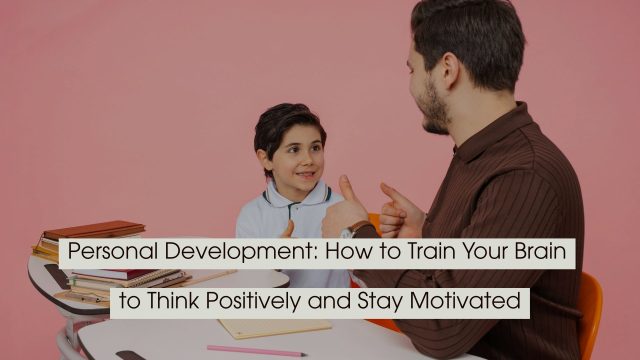
Why Positive Thinking Matters for Personal Development
Positive thinking influences several aspects of personal growth, including motivation, confidence, and emotional resilience.
When individuals maintain constructive thought patterns, they are more likely to:
- Approach challenges with optimism
- Persist when facing obstacles
- Maintain focus on long-term goals
- Recover quickly from setbacks
Research summarized by the American Psychological Association shows that positive psychological states can improve problem-solving ability and emotional well-being.
Positive thinking does not eliminate challenges, but it changes how individuals respond to them.
Understanding Negative Thought Patterns
Before developing positive thinking, it is important to recognize negative mental habits.
Common negative thought patterns include:
- Catastrophizing: Expecting the worst possible outcome
- Self-doubt: Believing you are incapable of success
- Overgeneralization: Assuming one failure defines your future
These patterns often develop through past experiences or social conditioning.
By becoming aware of these thoughts, individuals can begin replacing them with more constructive perspectives.
Step 1: Practice Self-Awareness
Self-awareness is the foundation of mental training.
Pay attention to your internal dialogue throughout the day.
Ask yourself questions such as:
- What thoughts appear when I face challenges?
- Do I encourage myself or criticize myself?
- Are my thoughts realistic or overly negative?
Recognizing these patterns allows you to consciously adjust your thinking.
Step 2: Replace Negative Self-Talk
Negative self-talk can weaken motivation and confidence.
Replacing negative thoughts with constructive ones helps strengthen resilience.
For example:
Instead of thinking:
- “I’ll probably fail.”
Shift your thinking to:
- “This challenge will help me learn and improve.”
Psychologist Martin Seligman explains that optimistic thinking patterns can significantly improve motivation and psychological well-being.
Step 3: Focus on Gratitude
Gratitude helps shift attention away from problems and toward positive experiences.
Practicing gratitude regularly can improve mood and increase motivation.
Simple habits such as writing down three things you are grateful for each day can strengthen positive thinking patterns.
Over time, the brain becomes more likely to notice positive experiences.
Step 4: Set Meaningful Goals
Motivation increases when individuals pursue goals that align with their values and interests.
Clear goals provide direction and purpose.
Effective goal-setting strategies include:
- Breaking large goals into smaller steps
- Tracking progress regularly
- Celebrating small achievements
These practices reinforce motivation and encourage consistent effort.
Step 5: Visualize Positive Outcomes
Visualization is a mental technique used by athletes and high performers.
By imagining successful outcomes, individuals strengthen belief in their ability to achieve goals.
Visualization activates similar neural pathways to real experiences, helping the brain prepare for success.
Step 6: Build Positive Habits
Daily habits reinforce mental patterns.
Habits that support positive thinking include:
- Reading educational or inspirational material
- Practicing mindfulness or meditation
- Exercising regularly
- Spending time with supportive individuals
Consistent habits gradually reshape mental patterns.
Step 7: Surround Yourself With Positive Influences
Environment plays a significant role in shaping mindset.
People who surround themselves with encouraging individuals often experience greater motivation and confidence.
Positive influences may include:
- Mentors
- Supportive friends
- Personal development communities
These environments reinforce constructive thinking patterns.
The Connection Between Positivity and Motivation
Positive thinking strengthens motivation by increasing belief in future success.
When individuals expect positive outcomes, they are more likely to take action and persist through challenges.
Motivation often depends on the belief that effort will lead to improvement.
A positive mindset supports this belief and encourages continued effort.
Training Your Brain Takes Consistency
Training your brain to think positively does not happen overnight.
Like physical fitness, mental strength develops through consistent practice.
Each time you replace negative thoughts with constructive ones, you strengthen new neural pathways.
Over time, positive thinking becomes more natural and automatic.
Conclusion
Personal development is deeply connected to how individuals think and interpret their experiences.
Training your brain to think positively allows you to approach challenges with confidence, maintain motivation, and build emotional resilience.
Through practices such as self-awareness, gratitude, goal setting, and positive habits, individuals can reshape their mental patterns and develop a more empowering mindset.
Positive thinking is not about ignoring difficulties, it is about choosing perspectives that support growth and progress.
With consistent practice and intentional effort, anyone can train their brain to think more positively and stay motivated on their journey toward personal development and success.
Sources and Further Reading
- Martin Seligman – Research on optimism and positive psychology
- Michael Merzenich – Research on neuroplasticity
- American Psychological Association – Studies on motivation and mental health
- Seligman, M. (2011). Flourish
- Research on cognitive psychology and positive thinking
About the Author
David A. Caren is the creator of Emotional Optimization™ – helping high-performing professionals rewire emotional patterns for clarity, calm, and success.
Book a Free Consultation
Can you train your brain to think positively?
Yes. Through neuroplasticity, repeated mental habits can strengthen positive thinking patterns over time.
Why is positive thinking important for motivation?
Positive thinking increases confidence and belief in future success, which encourages consistent effort.
How can I stop negative thoughts?
Practicing self-awareness and replacing negative self-talk with constructive thoughts can help reduce negative thinking.
Does gratitude improve mental health?
Yes. Gratitude practices have been shown to improve mood, emotional well-being, and motivation.
How long does it take to develop positive thinking habits?
Positive thinking habits develop gradually through consistent practice and self-reflection.

Managing Emotional Triggers Effectively: How to Stay in Control When Emotions Run High
A tired woman working late at a desk rubs the bridge of her nose while sitting in front of a…


How to Stay Calm in Stressful Situations: Practical Strategies for Emotional Control and Mental Clarity
How to Stay Calm in Stressful Situations: Staying calm in stressful situations is a skill built through emotional awareness, self-control,…

Building Mental Toughness in Everyday Life: How to Stay Strong, Resilient, and Unshakable
Building Mental Toughness: Mental toughness is built through everyday habits like discipline, emotional control, and resilience. By embracing discomfort and…

How to Stay Calm Under Pressure: Proven Strategies for Emotional Control and Clear Thinking
How to Stay Calm Under Pressure: Staying calm under pressure is a skill that can be developed through emotional control,…
The Power of Emotional Self-Control: Master Your Reactions, Master Your Life
Power of Emotional Self-Control: Emotional self-control is the ability to manage your reactions and respond thoughtfully under pressure. By developing…

How to Control Your Emotions Under Pressure (Proven Strategies for Staying Calm and Focused)
How to Control Your Emotions: Controlling your emotions under pressure is a skill that can be developed. By practicing awareness,…