Table of Contents
- Feel Overwhelmed? Try This 30-Second Technique
- Why Stressful Situations Feel Overwhelming
- The Cost of Losing Calm
- What Staying Calm Really Means
- How to Stay Calm in Stressful Situations
- 1. Pause Before Reacting
- 2. Focus on Your Breathing
- 3. Focus on the Present Moment
- 4. Reframe Your Thoughts
- 5. Focus on What You Can Control
- 6. Separate Emotion From Action
- 7. Practice Emotional Awareness
- The Calm Response Loop
- Long-Term Habits That Help You Stay Calm
- Common Mistakes to Avoid
- Why Calmness Is Powerful
- Mental Strength and Stress
- Conclusion
- Sources and Further Reading
Stressful situations are part of life.
Unexpected problems, deadlines, conflict, uncertainty, or pressure can quickly overwhelm your mind and emotions.
In these moments, many people panic, react impulsively, or feel mentally frozen.
But staying calm is possible.
Calmness is not about avoiding stress, it’s about controlling your response to it.
Your ability to remain calm during stressful situations can shape your decisions, relationships, and long-term success.
Psychologist Daniel Goleman emphasizes that emotional self-regulation is essential for managing pressure effectively.
In this article, you’ll learn how to stay calm in stressful situations using practical, science-backed strategies.
Feel Overwhelmed? Try This 30-Second Technique
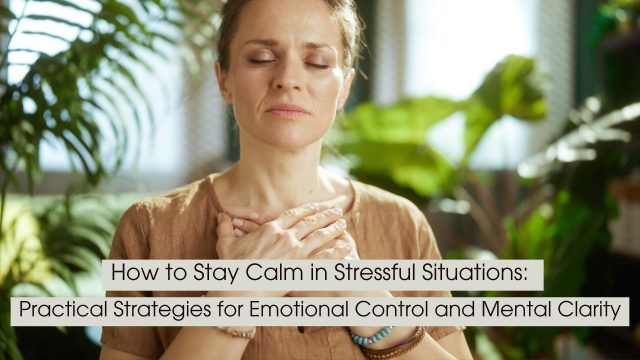
Why Stressful Situations Feel Overwhelming
When stress hits, your brain often shifts into survival mode.
This can trigger:
- Anxiety
- Racing thoughts
- Emotional reactions
- Poor decision-making
Psychologist Daniel Kahneman explains that stress often activates fast, emotional thinking before logic takes over.
This is why calmness requires intentional control.
The Cost of Losing Calm
When stress controls you, it can lead to:
- Overreactions
- Mistakes
- Poor communication
- Increased anxiety
Stress itself is not always the problem.
Your reaction to stress often determines the outcome.
What Staying Calm Really Means
Staying calm means:
- Recognizing stress
- Managing emotional responses
- Thinking clearly
- Responding intentionally
Calmness is a skill you can build.
How to Stay Calm in Stressful Situations
1. Pause Before Reacting
When stress rises, avoid immediate reactions.
Pause for a few seconds.
This creates space for logic.
2. Focus on Your Breathing
Controlled breathing can calm your nervous system quickly.
Try:
- Inhale slowly
- Exhale slowly
- Repeat
Breathing helps reduce emotional intensity.
3. Focus on the Present Moment
Stress often grows when your mind jumps ahead.
Ask yourself:
- What needs my attention right now?
Focusing on the present reduces overwhelm.
4. Reframe Your Thoughts
Shift from panic to perspective.
Instead of:
- “This is too much”
Think:
- “I can handle this one step at a time”
Your thoughts shape your emotions.
5. Focus on What You Can Control
You cannot control everything.
Focus on:
- Your actions
- Your attitude
- Your next step
Control reduces anxiety.
6. Separate Emotion From Action
Feeling stressed does not mean you need to act from stress.
Notice your emotions, but choose your response.
7. Practice Emotional Awareness
Recognize what you feel before it controls you.
Awareness strengthens calmness.
The Calm Response Loop
Stress → Awareness → Pause → Control → Clear Action
This process builds resilience.
Long-Term Habits That Help You Stay Calm
Practice Mindfulness
Mindfulness improves emotional awareness.
Strengthen Emotional Intelligence
Self-awareness and self-regulation improve calmness.
Prioritize Rest
Sleep and recovery improve emotional stability.
Exercise Regularly
Movement reduces stress and improves resilience.
Common Mistakes to Avoid
Reacting Too Quickly
Fast reactions often increase stress.
Catastrophizing
Assuming the worst intensifies anxiety.
Ignoring Physical Stress
Your body affects your mental state.
Trying to Control Everything
Focus on what is manageable.
Why Calmness Is Powerful
Staying calm helps you:
- Make better decisions
- Communicate effectively
- Reduce mistakes
- Strengthen resilience
Calmness creates clarity under pressure.
Mental Strength and Stress
Psychologist Roy F. Baumeister highlights that self-control improves through practice.
The more you train yourself to stay calm, the stronger your emotional resilience becomes.
Conclusion
Staying calm in stressful situations is not about eliminating pressure, it’s about mastering your response.
By pausing, breathing, and focusing on what you can control, you can handle stress with more clarity and confidence.
Personal development is not about avoiding difficult moments, it’s about becoming stronger within them.
Because when you stay calm, you think better, act wiser, and handle life more effectively.
Sources and Further Reading
- Daniel Goleman – Emotional intelligence
- Daniel Kahneman – Cognitive behavior
- Roy F. Baumeister – Self-control research
- Goleman, D. (1995). Emotional Intelligence
About the Author
David A. Caren is the creator of Emotional Optimization™ – helping high-performing professionals rewire emotional patterns for clarity, calm, and success.
Book a Free Consultation
How do I stay calm during stressful situations?
Pause, breathe deeply, and focus on what you can control.
Why do I panic under stress?
Stress often activates emotional survival responses.
Can calmness be learned?
Yes. It improves through awareness and practice.
Does breathing really help?
Yes. Controlled breathing reduces stress quickly.
Why is calmness important?
It improves decisions, resilience, and emotional control.

How to Transform Your Life One Day at a Time: Small Daily Changes That Lead to Extraordinary Results
Transform Your Life One Day at a Time: Transforming your life doesn’t happen overnight, it happens one day at a…


How to Develop Unbreakable Self-Discipline: The Ultimate Guide to Building Mental Strength and Consistency
Developing unbreakable self-discipline isn’t about relying on endless motivation or willpower. It’s about building consistent habits, keeping promises to yourself,…
How to Strengthen Your Willpower Every Day: Practical Strategies for Better Self-Control
Strengthening your willpower starts with small, intentional decisions. By reducing distractions, practicing delayed gratification, building supportive routines, and keeping promises…
Personal Development: The Growth Mindset Formula, How to Rewire Your Brain for Success
Personal development begins with one powerful belief: you can improve. The growth mindset formula teaches you how to rewire your…
Personal Development: Why Overthinking Is Holding You Back (And How to Stop)
Overthinking feels safe, but it quietly steals your momentum, confidence, and clarity. The more you analyze, the less you act….
How Stop Negative Self-Talk Permanently
Negative self-talk is not permanent, it is a learned pattern that can be rewired. Through awareness, cognitive restructuring, and self-compassion,…