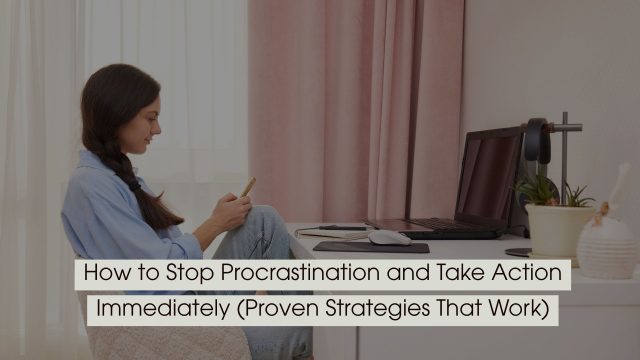
You know what you need to do.
But instead of starting, you delay. You scroll, you wait, you tell yourself, “I’ll do it later.”
That “later” often turns into days, or even months.
This is procrastination.
Procrastination is not just laziness. It’s a psychological pattern driven by emotions, fear, and habits.
The good news? You can break this cycle.
According to the American Psychological Association, procrastination is often linked to stress, avoidance, and emotional regulation, not lack of ability.
In this guide, you’ll learn how to stop procrastination and take action immediately, using practical and proven strategies.
Why you procrastinate even when it feels bad
Why You Procrastinate
Understanding the root cause helps you fix it.
Common reasons include:
Fear of Failure
You avoid tasks because you’re afraid of making mistakes.
Overwhelm
Large tasks feel too difficult, so you delay starting.
Lack of Motivation
If a task feels boring or unclear, you avoid it.
Perfectionism
You wait for the “perfect moment” or outcome.
Instant Gratification
Your brain prefers easy rewards like social media over difficult tasks.
Psychologist Timothy Pychyl explains that procrastination is often about avoiding discomfort, not avoiding work.
The Real Cost of Procrastination
Procrastination leads to:
- Missed opportunities
- Increased stress
- Lower productivity
- Reduced confidence
The longer you delay, the harder it becomes to start.
How to Stop Procrastination Immediately
1. Use the “5-Minute Rule”
Tell yourself: “I will work on this for just 5 minutes.”
Starting is the hardest part. Once you begin, momentum builds.
2. Break Tasks Into Smaller Steps
Large tasks feel overwhelming.
Break them down into simple actions:
- Instead of “write a report”
- Start with “write the first paragraph”
Small steps make action easier.
3. Remove Distractions
Create an environment that supports focus:
- Turn off notifications
- Put your phone away
- Work in a quiet space
Less distraction = faster action.
4. Take Imperfect Action
Waiting for perfection leads to delay.
Start before you feel ready.
Progress matters more than perfection.
5. Set Clear Deadlines
Deadlines create urgency.
Without them, tasks can be delayed indefinitely.
6. Use Time Blocking
Schedule specific times for tasks.
This creates structure and reduces decision fatigue.
7. Reward Yourself
Give yourself small rewards after completing tasks.
This reinforces positive behavior.
The Psychology of Taking Action
The brain prefers comfort and avoids difficulty.
Psychologist Daniel Kahneman explains that the brain favors easy, rewarding activities over effortful tasks.
To overcome this:
- Make tasks easier to start
- Reduce friction
- Increase rewards
This shifts behavior toward action.
Building an Action-Oriented Mindset
Focus on Starting, Not Finishing
Starting creates momentum.
Accept Discomfort
Growth requires effort and uncertainty.
Build Consistent Habits
Daily routines reduce reliance on motivation.
Track Progress
Seeing progress increases motivation and confidence.
Common Mistakes to Avoid
Waiting for Motivation
Motivation comes after action, not before.
Overthinking
Thinking too much delays action.
Doing Too Much at Once
Focus on one task at a time.
Ignoring Environment
A distracting environment makes action harder.
The Action Formula
Here’s a simple formula: Clarity + Small Steps + Immediate Action = Productivity
When tasks are clear and manageable, action becomes easier.
Conclusion
Procrastination is not about laziness, it’s about avoidance.
By understanding the psychology behind it and applying simple strategies, you can take control of your actions.
Start small. Remove distractions. Take imperfect action.
The key is not to wait, it’s to begin.
Because action creates momentum, and momentum creates results.
The faster you start, the faster you grow.
Sources and Further Reading
- Timothy Pychyl – Research on procrastination
- Daniel Kahneman – Cognitive behavior
- American Psychological Association – Studies on procrastination and behavior
- Kahneman, D. (2011). Thinking, Fast and Slow
About the Author
David A. Caren is the creator of Emotional Optimization™ – helping high-performing professionals rewire emotional patterns for clarity, calm, and success.
Book a Free Consultation
Why do I procrastinate?
Procrastination is often caused by fear, overwhelm, or avoidance of discomfort.
How can I stop procrastinating immediately?
Start with small steps, use the 5-minute rule, and remove distractions.
Is procrastination a bad habit?
Yes, but it can be changed with consistent effort.
Does motivation help stop procrastination?
Action creates motivation, not the other way around.
Can habits reduce procrastination?
Can habits reduce procrastination?

What Is Self-Discipline and Why It Matters: The Foundation of Success and Personal Growth
Self-discipline is the ability to stay committed to your goals, even when motivation fades. By developing consistent habits, strengthening self-control,…


How to Transform Your Life One Day at a Time: Small Daily Changes That Lead to Extraordinary Results
Transform Your Life One Day at a Time: Transforming your life doesn’t happen overnight, it happens one day at a…

How to Develop Unbreakable Self-Discipline: The Ultimate Guide to Building Mental Strength and Consistency
Developing unbreakable self-discipline isn’t about relying on endless motivation or willpower. It’s about building consistent habits, keeping promises to yourself,…
How to Strengthen Your Willpower Every Day: Practical Strategies for Better Self-Control
Strengthening your willpower starts with small, intentional decisions. By reducing distractions, practicing delayed gratification, building supportive routines, and keeping promises…
Personal Development: The Growth Mindset Formula, How to Rewire Your Brain for Success
Personal development begins with one powerful belief: you can improve. The growth mindset formula teaches you how to rewire your…
Personal Development: Why Overthinking Is Holding You Back (And How to Stop)
Overthinking feels safe, but it quietly steals your momentum, confidence, and clarity. The more you analyze, the less you act….