
Table of Contents
- Overthinking Won’t Solve Your Problems: Here’s Why
- What Is Overthinking?
- How Overthinking Drains Mental Energy
- The Psychological Path From Overthinking to Burnout
- Signs That Overthinking Is Leading to Burnout
- Why Overthinkers Are More Vulnerable to Burnout
- How Overthinking Prevents Recovery
- Strategies to Break the Overthinking–Burnout Cycle
- Building Healthier Thinking Habits
- Conclusion
- Sources and Further Reading
Many people assume burnout is caused only by long work hours or heavy responsibilities. While workload can contribute to burnout, one of the most overlooked causes is overthinking.
Overthinking occurs when the mind repeatedly analyzes problems, decisions, or past events without reaching a resolution. This constant mental activity can drain cognitive energy, increase stress levels, and prevent emotional recovery.
Over time, excessive thinking can lead to mental overload, which contributes directly to burnout.
Burnout is a state of emotional, physical, and mental exhaustion caused by prolonged stress. According to the World Health Organization, burnout involves emotional exhaustion, mental detachment from work or responsibilities, and reduced effectiveness.
Understanding the connection between overthinking and burnout can help individuals protect their mental energy and maintain healthier thinking patterns.
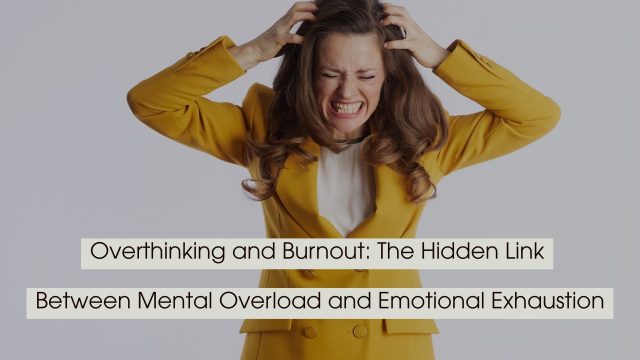
Overthinking Won’t Solve Your Problems: Here’s Why
What Is Overthinking?
Overthinking refers to excessive and repetitive thinking about problems, decisions, or past experiences. Instead of helping individuals solve problems, overthinking often keeps the mind stuck in cycles of worry and analysis.
Psychologist Susan Nolen-Hoeksema studied the concept of rumination, which describes the tendency to repeatedly focus on negative thoughts or concerns.
Rumination can increase stress and make it difficult for the brain to disengage from problems.
Common forms of overthinking include:
- Replaying past mistakes repeatedly
- Constantly analyzing decisions
- Worrying about future outcomes
- Imagining worst-case scenarios
While occasional reflection can be helpful, persistent overthinking places continuous pressure on the brain.
How Overthinking Drains Mental Energy
The brain consumes significant energy when processing thoughts and decisions. Continuous thinking without resolution forces the brain to remain in a state of constant activity.
This mental strain can lead to cognitive fatigue, which reduces mental clarity and emotional resilience.
Research summarized by the American Psychological Association shows that prolonged mental stress can impair concentration, memory, and decision-making.
When the brain never receives a break from thinking, exhaustion gradually develops.
The Psychological Path From Overthinking to Burnout
Overthinking often contributes to burnout through a predictable pattern.
- Excessive thinking about problems or decisions
- Increased anxiety and mental tension
- Difficulty relaxing or disengaging from work
- Chronic stress and mental fatigue
- Emotional exhaustion and burnout
Unlike physical workloads, mental workloads caused by overthinking may not be immediately visible. However, the brain experiences continuous pressure.
Signs That Overthinking Is Leading to Burnout
Many individuals do not recognize how overthinking contributes to burnout. Several warning signs may indicate that mental overload is becoming harmful.
Difficulty Relaxing
People who overthink often struggle to stop thinking about work or responsibilities, even during rest.
Persistent Mental Fatigue
The mind may feel constantly tired despite adequate sleep.
Reduced Concentration
Overthinking can make it difficult to focus on tasks because mental energy is already depleted.
Increased Anxiety
Constant analysis and worry can increase stress and emotional tension.
Sleep Disturbances
Many individuals who overthink experience difficulty falling asleep because their minds remain active.
These symptoms can gradually lead to emotional exhaustion if they persist over time.
Why Overthinkers Are More Vulnerable to Burnout
Certain personality traits make individuals more likely to overthink.
These traits include:
- Perfectionism
- High responsibility
- Fear of failure
- Strong desire for control
Psychologist Daniel Kahneman explains that the brain uses two systems for thinking: fast intuitive thinking and slow analytical thinking.
Overthinkers rely heavily on slow analytical thinking, which consumes more mental energy and increases cognitive fatigue.
Without balance, this thinking style can lead to exhaustion.
How Overthinking Prevents Recovery
One of the most damaging aspects of overthinking is that it prevents mental recovery.
Even when individuals stop working, their minds may continue processing problems, decisions, or worries.
This constant mental activity keeps stress hormones elevated and prevents the nervous system from relaxing.
Without mental recovery, burnout becomes increasingly likely.
Strategies to Break the Overthinking–Burnout Cycle
Reducing overthinking can help protect mental energy and prevent burnout.
Set Time Limits for Decision-Making
Establishing clear time limits for decisions can prevent excessive analysis.
Once a reasonable evaluation is complete, move forward with the best available option.
Practice Mindfulness
Mindfulness helps individuals focus on the present moment instead of repeatedly analyzing past or future events.
Meditation and breathing exercises can calm the mind and reduce mental overload.
Write Down Thoughts
Journaling can help externalize repetitive thoughts, allowing the brain to process them more efficiently.
Writing concerns down often reduces mental rumination.
Create Mental Boundaries
Separating work time from personal time allows the brain to rest.
Avoid thinking about work-related issues during designated rest periods whenever possible.
Focus on Action Instead of Analysis
Taking small actions toward solving problems can break the cycle of overthinking.
Action reduces uncertainty and restores a sense of control.
Building Healthier Thinking Habits
Breaking the habit of overthinking requires developing healthier mental patterns.
Helpful practices include:
- Accepting uncertainty
- Focusing on solutions rather than problems
- Limiting unnecessary analysis
- Prioritizing rest and mental recovery
These habits allow the brain to maintain balance between thinking and recovery.
Conclusion
Overthinking is one of the most overlooked contributors to burnout. While analyzing problems can sometimes be helpful, excessive thinking keeps the brain in a constant state of mental activity.
Over time, this mental overload drains cognitive energy, increases stress, and prevents emotional recovery.
Recognizing the connection between overthinking and burnout allows individuals to protect their mental well-being by developing healthier thinking habits.
By limiting excessive analysis, practicing mindfulness, and creating boundaries between work and rest, individuals can reduce mental fatigue and maintain sustainable productivity.
Burnout prevention is not only about reducing workload, it is also about protecting your mental energy from constant overthinking.
Sources and Further Reading
- Susan Nolen-Hoeksema – Research on rumination and mental health
- Daniel Kahneman – Decision-making psychology
- American Psychological Association – Research on cognitive stress
- World Health Organization – Burnout definition and workplace health research
- Kahneman, D. (2011). Thinking, Fast and Slow
About the Author
David A. Caren is the creator of Emotional Optimization™ – helping high-performing professionals rewire emotional patterns for clarity, calm, and success.
Book a Free Consultation
Can overthinking cause burnout?
Yes. Constant mental analysis and worry can drain cognitive energy and contribute to emotional exhaustion.
Why does overthinking make me feel tired?
Overthinking forces the brain to remain active for long periods, which leads to mental fatigue.
How can I stop overthinking?
Practicing mindfulness, setting time limits for decisions, and focusing on action rather than analysis can help reduce overthinking.
Is overthinking related to anxiety?
Yes. Overthinking is often associated with anxiety and rumination.
Can reducing overthinking improve productivity?
Yes. Reducing mental overload improves focus, clarity, and decision-making.

The Science of Habit Formation: How to Stay Consistent (Proven Strategies for Lasting Change)
Person wearing workout attire holding a measuring tape and an apple, symbolizing health, fitness, and consistency, with the text “The…


Atomic Habits Explained: Small Changes That Lead to Big Results (A Complete Guide to Lasting Change)
Atomic Habits shows that small, consistent actions can lead to significant long-term results. By focusing on simple habits and applying…
The Power of Consistency: Why Small Actions Matter More Than Big Efforts
Consistency is the key to long-term success. Small actions repeated daily may seem insignificant, but over time, they create powerful…

How to Build Good Habits and Break Bad Ones Permanently
Building good habits and breaking bad ones requires consistency, small actions, and the right environment. By understanding how habits work…
The Science of Habit Formation: How to Stay Consistent (Proven Strategies for Lasting Change)
Person wearing workout attire holding a measuring tape and an apple, symbolizing health, fitness, and consistency, with the text “The…

Self-Discipline Mastery: How to Stay Consistent Every Day (Proven Strategies for Long-Term Success)
Self-discipline mastery is about consistency, not motivation. By building systems, removing distractions, and taking daily action, you can stay consistent…