Table of Contents
- What Is Emotional Optimization?
- How to Be Less Emotionally Reactive: Black and White Thinking
- Why Starting Something New Triggers Anxiety and Emotional Overload
- Emotional Optimization Mindset: The Key Reframe
- Emotional Optimization Strategies When Starting Something New
- 1. Name the Emotion Instead of Fighting It
- 2. Calm Your Nervous System Before You Try to Think Clearly
- 3. Shrink the Task Into Micro-Steps
- 4. Replace Performance Goals With Process Goals
- 5. Normalize the Beginner Stage
- 6. Expect Emotional Dips (So You Don’t Quit Too Early)
- 7. Stop Comparing Your Chapter 1 to Someone Else’s Chapter 20
- 8. Build Self-Trust Through Small Promises
- 9. Reframe Mistakes as Part of Competence
- 10. Use Support Instead of Isolation
- What Emotional Optimization Looks Like in Real Life
- Final Thoughts: Starting Something New Is an Emotional Skill
- Sources & Further Reading
Starting something new is one of the most common triggers for anxiety, imposter syndrome, and emotional overwhelm.
Even when you’re excited, your brain may still respond with fear.
You might feel:
- nervous before your first day
- pressure to prove yourself immediately
- self-doubt about your skills
- fear of failure or judgment
- emotional exhaustion from overthinking
This is normal.
New beginnings often challenge your identity and your nervous system at the same time. You’re stepping into unfamiliar territory, and your brain interprets unfamiliarity as uncertainty—and uncertainty often feels like danger.
That’s why emotional optimization matters.
Emotional optimization helps you regulate the emotional stress of new experiences so you can keep going, stay consistent, and build confidence through action.
What Is Emotional Optimization?
Emotional optimization is the practice of managing emotions intentionally so they support your growth instead of blocking it.
When starting something new, emotional optimization helps you:
- calm anxiety and nervous system activation
- stop emotional spirals and overthinking
- handle mistakes without shame
- build emotional resilience
- strengthen self-trust
- take action even when you feel uncertain
It is not emotional suppression.
Emotional optimization is about feeling your emotions without letting them control your decisions.
How to Be Less Emotionally Reactive: Black and White Thinking
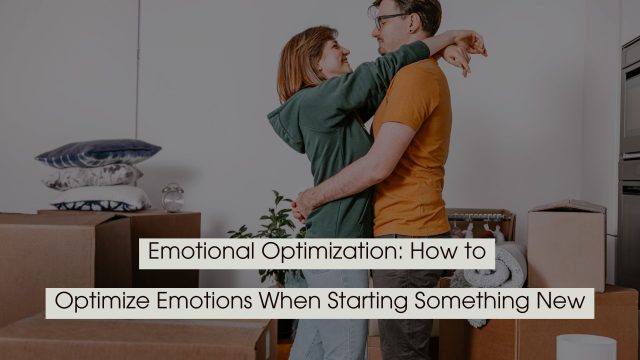
Why Starting Something New Triggers Anxiety and Emotional Overload
New experiences create emotional intensity because your brain is wired to prioritize safety.
Here are the most common psychological reasons starting something new feels overwhelming:
1. Uncertainty activates your stress response
Your brain prefers predictability. When something is new, you don’t know what will happen—so your mind starts preparing for worst-case scenarios.
2. You don’t have proof yet
Confidence often comes from experience. When you’re new, you haven’t built evidence that you can succeed, so your brain fills the gap with doubt.
3. You feel exposed
New beginnings often involve visibility, being watched, evaluated, or compared. That can trigger fear of embarrassment or rejection.
4. You’re temporarily leaving your identity comfort zone
When you start something new, you’re no longer the “experienced one.” You’re a beginner again, and that can feel emotionally uncomfortable.
5. Your standards are too high
Many people expect themselves to perform at an advanced level immediately, which creates pressure and emotional burnout.
Emotional Optimization Mindset: The Key Reframe
Before you apply any strategy, you need this emotional optimization truth:
Discomfort is not a sign you’re failing. It’s a sign you’re expanding.
Starting something new is supposed to feel unfamiliar.
Your goal is not to eliminate discomfort.
Your goal is to stay grounded through it.
That’s emotional optimization.
Emotional Optimization Strategies When Starting Something New
Below are practical, realistic strategies you can use immediately.
1. Name the Emotion Instead of Fighting It
One of the fastest emotional optimization tools is emotional labeling.
Instead of saying:
- “I’m fine.”
- “I shouldn’t feel this way.”
Try:
- “I’m noticing anxiety.”
- “I’m feeling self-doubt.”
- “I’m overwhelmed because this is unfamiliar.”
When you name the emotion, your brain shifts from panic to awareness.
This reduces emotional intensity and gives you control.
2. Calm Your Nervous System Before You Try to Think Clearly
Many people try to “logic” their way out of anxiety.
But when your nervous system is activated, your brain becomes less rational.
Emotional optimization starts with regulation.
Quick breathing reset (2 minutes)
- Inhale slowly for 4 seconds
- Hold for 2 seconds
- Exhale for 6 seconds
- Repeat for 5–6 cycles
Longer exhales signal safety and reduce anxiety quickly.
3. Shrink the Task Into Micro-Steps
Starting something new feels overwhelming because your brain sees it as one huge mountain.
Emotional optimization reduces overwhelm by making the task smaller.
Instead of:
- “Start my new job perfectly”
Try:
- “Learn one thing today.”
- “Introduce myself to one person.”
- “Ask one question.”
- “Finish one small task.”
Micro-steps create progress without emotional overload.
4. Replace Performance Goals With Process Goals
When you’re new, performance goals create pressure.
Examples of performance goals:
- “I need to impress everyone.”
- “I need to be the best.”
- “I need to succeed immediately.”
These goals trigger anxiety and imposter syndrome.
Process goals are emotionally optimized:
- “I will show up consistently.”
- “I will learn from mistakes.”
- “I will improve weekly.”
Process goals build confidence over time.
5. Normalize the Beginner Stage
Many people struggle emotionally because they expect themselves to be advanced right away.
But beginners:
- feel awkward
- make mistakes
- need guidance
- learn fast
That’s not failure. That’s growth.
Emotional optimization includes this mindset shift:
You are not behind. You are new.
When you accept the beginner stage, you reduce shame and increase resilience.
6. Expect Emotional Dips (So You Don’t Quit Too Early)
New beginnings often follow a predictable emotional pattern:
- excitement
- anxiety
- self-doubt
- overwhelm
- urge to quit
- resilience (if you keep going)
Many people quit at step 4 because they assume: “If it feels this hard, it must not be right.”
But difficulty is not always a sign of misalignment.
Sometimes it’s just the emotional discomfort of growth.
Emotional optimization means planning for dips and staying consistent anyway.
7. Stop Comparing Your Chapter 1 to Someone Else’s Chapter 20
Comparison is one of the fastest ways to sabotage a new beginning.
When you start something new, you may compare yourself to:
- coworkers with years of experience
- entrepreneurs with established businesses
- people who look confident online
- friends who seem “ahead”
But you’re comparing your beginner stage to someone else’s mastery stage.
Emotional optimization means shifting the comparison:
Compare yourself to who you were last week, not to someone else.
This protects your confidence and supports long-term growth.
8. Build Self-Trust Through Small Promises
Self-trust is the foundation of emotional stability.
When you don’t trust yourself, starting something new feels terrifying because you believe: “I can’t handle what happens.”
Self-trust grows when you follow through on small commitments:
- “I’ll practice for 10 minutes.”
- “I’ll show up even if I feel nervous.”
- “I’ll keep going even if I’m imperfect.”
Every promise kept becomes evidence.
And evidence builds confidence.
9. Reframe Mistakes as Part of Competence
Many people fear mistakes because they think mistakes mean incompetence.
But in reality:
Mistakes are part of learning.
Mistakes mean you’re in the process of gaining skill.
Emotional optimization helps you respond to mistakes with:
- curiosity instead of shame
- responsibility instead of self-hate
- growth instead of quitting
A powerful reframe: “I’m learning, not failing.”
10. Use Support Instead of Isolation
Starting something new can feel lonely, especially if you believe you must appear confident.
But emotional optimization includes connection.
Support can come from:
- mentors
- friends
- coaching
- therapy
- peer groups
- community spaces
When you talk about your fears, they lose power.
Imposter syndrome and anxiety grow in silence.
What Emotional Optimization Looks Like in Real Life
Here’s what emotionally optimized growth looks like:
- You feel nervous but show up anyway
- You make mistakes but don’t spiral
- You take feedback without collapsing
- You stop needing perfection to feel worthy
- You build confidence through consistency
- You recover faster after hard days
- You keep going even when motivation fades
That’s emotional resilience.
That’s emotional optimization.
Final Thoughts: Starting Something New Is an Emotional Skill
Starting something new is not just about learning skills.
It’s about learning how to handle discomfort, uncertainty, and vulnerability without quitting.
Emotional optimization gives you the tools to:
- stay calm
- stay grounded
- stay consistent
- build confidence
- trust yourself
You don’t need to feel ready.
You need to start and keep going.
Sources & Further Reading
Here are trusted resources and research-based materials connected to emotional regulation, anxiety, and growth:
- American Psychological Association (APA) – Stress, anxiety, and coping
- National Institute of Mental Health (NIMH) – Anxiety and emotional health
- Mayo Clinic – Stress response and emotional regulation strategies
- Harvard Health Publishing – Nervous system regulation and mental wellness
- Gross, J. J. (1998). The emerging field of emotion regulation: An integrative review. Review of General Psychology
- Dweck, C. (2006). Mindset: The New Psychology of Success
- Neff, K. (2011). Self-Compassion: The Proven Power of Being Kind to Yourself
- McGonigal, K. (2015). The Upside of Stress
About the Author
David A. Caren is the creator of Emotional Optimization™ – helping high-performing professionals rewire emotional patterns for clarity, calm, and success.
Book a Free Consultation
Why do I feel anxious when starting something new even if I want it?
Because your brain sees uncertainty as a threat. Even positive change can activate your stress response because it’s unfamiliar.
How do I stop overthinking when I’m new at something?
Overthinking is often fear in disguise. The best way to reduce it is to take small actions that create real evidence and progress.
What’s the fastest emotional optimization technique for anxiety?
Slow breathing with longer exhales is one of the fastest tools. It calms the nervous system and reduces emotional intensity quickly.
How do I build confidence when I feel like a beginner?
Confidence comes from repetition. Focus on process goals, keep small promises to yourself, and allow mistakes as part of growth.
How long does it take to feel comfortable in something new?
It depends, but many people feel more grounded within 2–4 weeks of consistent exposure and practice. Comfort grows with experience.
What Is Self-Discipline and Why It Matters: The Foundation of Success and Personal Growth
Self-discipline is the ability to stay committed to your goals, even when motivation fades. By developing consistent habits, strengthening self-control,…


How to Transform Your Life One Day at a Time: Small Daily Changes That Lead to Extraordinary Results
Transform Your Life One Day at a Time: Transforming your life doesn’t happen overnight, it happens one day at a…

How to Develop Unbreakable Self-Discipline: The Ultimate Guide to Building Mental Strength and Consistency
Developing unbreakable self-discipline isn’t about relying on endless motivation or willpower. It’s about building consistent habits, keeping promises to yourself,…
How to Strengthen Your Willpower Every Day: Practical Strategies for Better Self-Control
Strengthening your willpower starts with small, intentional decisions. By reducing distractions, practicing delayed gratification, building supportive routines, and keeping promises…
Personal Development: The Growth Mindset Formula, How to Rewire Your Brain for Success
Personal development begins with one powerful belief: you can improve. The growth mindset formula teaches you how to rewire your…
Personal Development: Why Overthinking Is Holding You Back (And How to Stop)
Overthinking feels safe, but it quietly steals your momentum, confidence, and clarity. The more you analyze, the less you act….