Table of Contents
- What Is Emotional Optimization?
- How to Stay Positive on a Bad Day | Robin Sharma
- Why You Don’t Recover Quickly After a Bad Day (Even When You Want To)
- Step 1: Stop Trying to “Fix” Your Mood Immediately
- Step 2: Do a Quick Nervous System Reset
- Step 3: Name the Emotion (Don’t Just Say “I’m Fine”)
- Step 4: Release the Day (Instead of Replaying It)
- Step 5: Use the “Comfort Before Productivity” Rule
- Step 6: Choose a Healthy Recovery Ritual (Not a Coping Escape)
- Step 7: Rebuild Your Self-Respect After a Hard Day
- Step 8: Create a “Bad Day Recovery Plan” (So You Don’t Spiral)
- Step 9: Protect Tomorrow From Today
- Step 10: Know When You Need More Support
- Emotional Optimization Checklist: Recovering After a Bad Day
- Sources & Further Reading
A bad day can feel like more than a bad day.
It can feel like:
- proof you’re failing
- a sign you’re not good enough
- confirmation that life is too heavy
- an emotional hangover you can’t shake
Even when nothing “big” happened, your brain can hold onto stress like it’s danger.
That’s why recovery matters.
Emotional optimization helps you move through the day without carrying it into tomorrow.
What Is Emotional Optimization?
Emotional optimization is the practice of regulating your emotions intentionally so you can:
- recover faster from stress
- reduce emotional spirals
- protect your energy
- improve resilience
- restore your mood without unhealthy coping
It’s not about forcing positivity.
It’s about helping your nervous system and mindset return to balance.
How to Stay Positive on a Bad Day | Robin Sharma
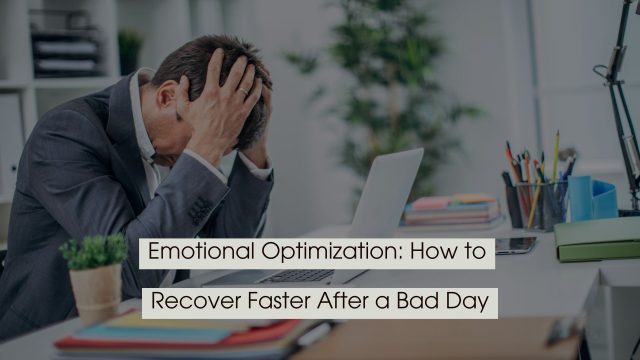
Why You Don’t Recover Quickly After a Bad Day (Even When You Want To)
Many people think they’re “overreacting” when they can’t bounce back.
But emotional recovery is hard because your brain may still be in survival mode.
Common reasons you stay stuck:
- emotional suppression (you never processed it)
- overstimulation (too much input, not enough rest)
- rumination (replaying the day over and over)
- lack of closure (unfinished conflict or disappointment)
- low physical energy (sleep deprivation, hunger, burnout)
Bad days often leave your body tense and your mind overloaded.
So emotional optimization starts with one truth:
You can’t think your way out of what your nervous system is holding.
Step 1: Stop Trying to “Fix” Your Mood Immediately
One of the biggest mistakes people make is trying to “snap out of it.”
This usually leads to:
- guilt
- frustration
- self-judgment
- more emotional pressure
Instead, try this emotionally optimized mindset:
“I don’t need to be happy right now. I just need to recover.”
That shift alone reduces emotional resistance.
Step 2: Do a Quick Nervous System Reset
If your body is tense, your mind won’t calm down.
Try this 2-minute reset:
- Sit down and unclench your jaw
- Drop your shoulders
- Inhale slowly for 4 seconds
- Exhale for 6–8 seconds
- Repeat for 6–8 breaths
Longer exhales signal safety to the brain.
This is one of the fastest ways to reduce emotional intensity after a stressful day.
Step 3: Name the Emotion (Don’t Just Say “I’m Fine”)
Emotional optimization requires emotional clarity.
Instead of:
- “I’m okay.”
- “I’m just tired.”
- “I don’t know.”
Try identifying the real feeling:
Common bad-day emotions:
- disappointment
- embarrassment
- overwhelm
- rejection
- loneliness
- frustration
- shame
- grief
- anxiety
- resentment
A simple sentence like this helps:
“Today I feel ___ because ___.”
When emotions are named, they become easier to process.
Step 4: Release the Day (Instead of Replaying It)
Bad days often turn into mental loops.
You replay:
- what you said
- what you should’ve done
- what went wrong
- what people might think
This is rumination, and it keeps the nervous system activated.
Try the “mental closure” method:
Ask yourself:
- What was the hardest moment today?
- What do I need to let go of?
- What can wait until tomorrow?
Then write a short closing statement:
“This day is complete. I don’t need to solve it tonight.”
It sounds simple, but it trains your brain to stop carrying emotional weight into your evening.
Step 5: Use the “Comfort Before Productivity” Rule
When you’ve had a bad day, your brain often tries to “fix” it by overworking.
That leads to:
- doom scrolling
- stress cleaning
- emotional eating
- forcing yourself to “get ahead”
- staying up late to feel in control
Instead, emotional optimization means:
Comfort first. Then clarity. Then productivity.
You don’t earn rest.
You recover so you can function.
Step 6: Choose a Healthy Recovery Ritual (Not a Coping Escape)
There’s a difference between recovery and avoidance.
Avoidance coping looks like:
- binge eating
- alcohol
- emotional spending
- scrolling for hours
- isolating completely
Recovery rituals look like:
- shower + skincare
- a walk outside
- stretching
- journaling
- tea and quiet music
- calling someone safe
- watching something comforting (in moderation)
The goal is to soothe your system, not numb it.
Step 7: Rebuild Your Self-Respect After a Hard Day
Bad days often damage confidence.
Especially if you:
- made a mistake
- didn’t perform well
- got criticized
- felt emotionally weak
Emotional optimization includes restoring your inner relationship.
Ask yourself:
- What did I survive today?
- What did I do well, even if it was small?
- What do I need to forgive myself for?
Self-respect is emotional fuel.
And it’s one of the fastest ways to recover.
Step 8: Create a “Bad Day Recovery Plan” (So You Don’t Spiral)
The best emotional regulation is prepared emotional regulation.
Here’s a simple plan you can reuse:
Your 5-Step Bad Day Reset:
- Breathe and ground (2 minutes)
- Eat something nourishing
- Move your body gently (walk/stretch)
- Do one comforting ritual
- Go to bed earlier than usual
This routine tells your brain:
“We’re safe. We’re recovering.”
Step 9: Protect Tomorrow From Today
One bad day can easily ruin the next one if you:
- sleep late
- stay emotionally activated
- wake up anxious
- carry resentment
- start the day already exhausted
Emotional optimization tip:
Before bed, choose one small thing that makes tomorrow easier.
Examples:
- set clothes out
- write tomorrow’s top 3 tasks
- tidy your desk for 2 minutes
- prep breakfast
- charge your phone away from your bed
Small preparation reduces morning stress dramatically.
Step 10: Know When You Need More Support
Sometimes a “bad day” is actually:
- burnout
- chronic anxiety
- depression
- emotional exhaustion
- unresolved grief
- trauma triggers
If bad days feel constant, heavy, or hard to recover from, you may need deeper support.
That’s not failure.
That’s self-awareness.
Therapy, coaching, and mental health support are powerful emotional optimization tools.
Emotional Optimization Checklist: Recovering After a Bad Day
Use this quick checklist anytime you feel emotionally drained:
- Regulate your body first
- Name the emotion clearly
- Release rumination
- Choose comfort over self-criticism
- Do one small recovery ritual
- Rebuild self-respect
- Protect tomorrow
- Sleep early if possible
Sources & Further Reading
Here are reputable resources for deeper learning:
- American Psychological Association (APA) – Stress recovery, resilience, and emotional health
- National Institute of Mental Health (NIMH) – Anxiety, mood, and emotional regulation
- Harvard Health Publishing – Mind-body connection, stress response, emotional recovery
- Mindful.org – Mindfulness practices for difficult emotions
- Greater Good Science Center (UC Berkeley) – Self-compassion, resilience, emotional well-being
About the Author
David A. Caren is the creator of Emotional Optimization™ – helping high-performing professionals rewire emotional patterns for clarity, calm, and success.
Book a Free Consultation
Why do I feel emotionally drained even when nothing “major” happened?
Because stress builds through small moments, micro disappointments, pressure, overstimulation, and emotional labor. Your nervous system doesn’t need a big event to feel overwhelmed.
What’s the fastest way to recover emotionally?
Start with your body. Slow breathing, hydration, food, and gentle movement often reduce emotional intensity faster than trying to “think positive.”
How do I stop replaying a bad day at night?
Use closure techniques: write down the hardest moment, what you learned, and what can wait until tomorrow. Then tell yourself: “This day is complete.”
Is it okay to rest after a bad day even if I didn’t finish everything?
Yes. Rest is not a reward, it’s recovery. You’ll perform better tomorrow when your nervous system is calm.
When should I worry that my bad days are more than just stress?
If you feel stuck for weeks, lose motivation, struggle to sleep regularly, or feel hopeless, it may be more than a bad day. Consider speaking with a mental health professional for support.
How to Stop Procrastination and Take Action Immediately (Proven Strategies That Work)
Procrastination is driven by avoidance and fear, not laziness. By breaking tasks into small steps, taking immediate action, and removing…

What Is Self-Discipline and Why It Matters: The Foundation of Success and Personal Growth
Self-discipline is the ability to stay committed to your goals, even when motivation fades. By developing consistent habits, strengthening self-control,…

How to Transform Your Life One Day at a Time: Small Daily Changes That Lead to Extraordinary Results
Transform Your Life One Day at a Time: Transforming your life doesn’t happen overnight, it happens one day at a…

How to Develop Unbreakable Self-Discipline: The Ultimate Guide to Building Mental Strength and Consistency
Developing unbreakable self-discipline isn’t about relying on endless motivation or willpower. It’s about building consistent habits, keeping promises to yourself,…
How to Strengthen Your Willpower Every Day: Practical Strategies for Better Self-Control
Strengthening your willpower starts with small, intentional decisions. By reducing distractions, practicing delayed gratification, building supportive routines, and keeping promises…
Personal Development: The Growth Mindset Formula, How to Rewire Your Brain for Success
Personal development begins with one powerful belief: you can improve. The growth mindset formula teaches you how to rewire your…