Table of Contents
- How the comfort zone is ruining your life
- What Is the Comfort Zone?
- Why the Comfort Zone Feels Safe
- The Hidden Dangers of the Comfort Zone
- The Psychology Behind Breaking Free
- The Growth Zone vs Comfort Zone
- How to Break Out of the Comfort Zone
- The Role of Mindset
- Real Growth Requires Discomfort
- Conclusion
- Sources and Further Reading
Comfort feels safe. It provides stability, predictability, and a sense of control. But what if that same comfort is silently holding you back?
The comfort zone is one of the most dangerous traps in personal development. It convinces you that staying where you are is safer than taking risks. It encourages routine over growth and security over progress.
While comfort is not inherently bad, staying in it for too long can prevent you from reaching your full potential.
True growth begins when you step into uncertainty.
Psychologist Carol Dweck emphasizes that growth happens when individuals embrace challenges and view discomfort as part of learning.
Understanding the dangers of the comfort zone is the first step toward breaking free and unlocking new opportunities.
How the comfort zone is ruining your life
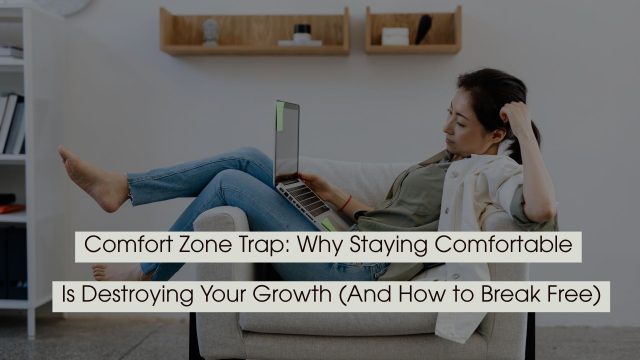
What Is the Comfort Zone?
The comfort zone is a psychological state where activities feel familiar and low-risk.
Within this zone, individuals experience:
- Minimal stress
- Predictable outcomes
- Routine behavior
- Limited challenges
While this environment feels safe, it also limits learning and development.
Why the Comfort Zone Feels Safe
The brain is naturally wired to avoid risk and uncertainty.
The amygdala, responsible for processing fear, triggers responses that encourage safety and stability.
This biological response helps protect us from danger, but it can also prevent us from pursuing growth opportunities.
As a result, individuals often choose familiarity over progress.
The Hidden Dangers of the Comfort Zone
1. Stagnation and Lack of Growth
Growth requires new experiences, challenges, and learning.
Staying in your comfort zone prevents you from developing new skills and expanding your potential.
2. Missed Opportunities
Opportunities often involve uncertainty.
Avoiding discomfort can lead to missed chances for career advancement, relationships, and personal development.
3. Increased Fear Over Time
The longer you stay in your comfort zone, the more intimidating change becomes.
Fear grows when it is not challenged.
4. Reduced Confidence
Confidence is built through action and experience.
Avoiding challenges prevents individuals from proving to themselves that they can succeed.
5. Limited Creativity and Innovation
Creativity thrives in new and unfamiliar environments.
Routine thinking limits innovation and problem-solving ability.
The Psychology Behind Breaking Free
Stepping outside the comfort zone involves managing fear and uncertainty.
Psychologist Albert Bandura introduced the concept of self-efficacy, which refers to belief in one’s ability to succeed.
Taking small actions outside your comfort zone increases self-efficacy and builds confidence over time.
The Growth Zone vs Comfort Zone
Beyond the comfort zone lies the growth zone.
In this zone, individuals experience:
- Learning and skill development
- Increased confidence
- New opportunities
- Personal and professional growth
Although it involves discomfort, the growth zone is where transformation happens.
How to Break Out of the Comfort Zone
1. Start With Small Risks
You do not need to make drastic changes.
Small steps such as trying new activities or speaking up in meetings can build confidence.
2. Reframe Fear as Growth
Instead of seeing fear as a barrier, view it as a signal that you are growing.
Discomfort often indicates progress.
3. Set Challenging but Realistic Goals
Goals that push you slightly beyond your current abilities encourage growth without overwhelming you.
4. Take Consistent Action
Action reduces fear.
Each step outside your comfort zone makes the next one easier.
5. Accept Failure as Part of the Process
Failure is not the opposite of success—it is part of it.
Learning from mistakes accelerates growth.
The Role of Mindset
Mindset determines how individuals respond to challenges.
A growth mindset encourages individuals to:
- Embrace challenges
- Learn from failure
- Persist through difficulties
Research summarized by the American Psychological Association shows that individuals who embrace challenges are more likely to achieve long-term success.
Real Growth Requires Discomfort
Every major achievement involves stepping into the unknown.
Whether it is starting a new career, building a business, or developing new skills, growth requires leaving the comfort zone.
Comfort may feel safe, but it often comes at the cost of progress.
Conclusion
The comfort zone is not a place of growth, it is a place of stagnation.
While it offers safety and stability, it also limits potential, reduces opportunities, and prevents personal development.
Breaking free from the comfort zone requires courage, action, and a willingness to embrace discomfort.
By taking small steps, reframing fear, and developing a growth mindset, individuals can unlock new possibilities and achieve meaningful success.
Personal development begins where comfort ends.
Sources and Further Reading
- Carol Dweck – Growth mindset research
- Albert Bandura – Self-efficacy theory
- American Psychological Association – Research on behavior and growth
- Dweck, C. (2006). Mindset: The New Psychology of Success
- Bandura, A. (1997). Self-Efficacy
About the Author
David A. Caren is the creator of Emotional Optimization™ – helping high-performing professionals rewire emotional patterns for clarity, calm, and success.
Book a Free Consultation
What is a comfort zone?
A comfort zone is a state where individuals feel safe and experience minimal stress or risk.
Why is the comfort zone dangerous?
It limits growth, reduces opportunities, and prevents individuals from reaching their full potential.
How can I step out of my comfort zone?
Start with small challenges, take consistent action, and reframe fear as growth.
Does leaving the comfort zone improve confidence?
Yes. Facing challenges builds confidence and self-belief.
Is discomfort necessary for growth?
Yes. Growth often occurs when individuals face new challenges and experiences.
Burnout Recovery Blueprint: How to Reclaim Motivation and Focus After Burnout
Burnout can make even the simplest tasks feel overwhelming. Work that once felt exciting may suddenly feel draining, motivation disappears,…


Emotional Burnout: Signs, Causes, and How to Recover When Your Mind Feels Exhausted
Emotional burnout occurs when prolonged stress drains your mental and emotional energy. Recognizing the early signs—such as emotional exhaustion, irritability,…

What Successful People Do Differently Every Day (Daily Habits That Drive Success)
Successful people achieve more by focusing on consistent daily habits rather than relying on motivation. Through discipline, planning, and continuous…

How to Stop Procrastination and Take Action Immediately (Proven Strategies That Work)
Procrastination is driven by avoidance and fear, not laziness. By breaking tasks into small steps, taking immediate action, and removing…

Productivity Hacks: How to Get More Done in Less Time (Proven Strategies That Work)
Productivity hacks help you work smarter, not harder. By focusing on high-impact tasks, managing time effectively, and reducing distractions, you…

The Power of Positive Thinking: How a Success Mindset Shapes Your Life and Results
Positive thinking plays a crucial role in shaping success. By developing a mindset focused on growth, solutions, and resilience, individuals…