May 25, 2026

The Hidden Productivity Killers: Habits That Are Secretly Destroying Your Productivity (And How to Fix Them)

by David's Team in Personal Development0 Comments

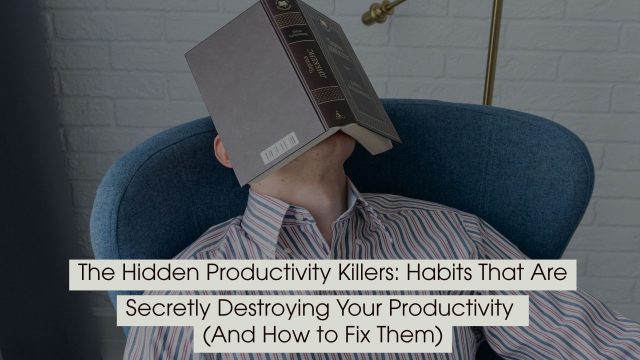
Person slouched in a chair with a book covering their face, symbolizing fatigue and unproductive habits, with the text “The Hidden Productivity Killers: Habits That Are Secretly Destroying Your Productivity (And How to Fix Them)” displayed across the image.

You sit down to work, determined to be productive.

But somehow, hours pass, and you’ve barely made progress.

You check your phone. You switch tasks. You delay important work. By the end of the day, you feel busy… but not productive.

The truth is, productivity is not just about what you do, it’s about the habits you repeat daily.

Many of the biggest productivity killers are not obvious. They are hidden in your routines, quietly draining your focus, time, and energy.

Psychologist Roy F. Baumeister explains that self-control plays a major role in managing behavior and productivity.

To improve productivity, you must first identify and eliminate the habits that are holding you back.

Why Tiny Habits Matter More Than Big Goals (The Secret to Real Change)
Person slouched in a chair with a book covering their face, symbolizing fatigue and unproductive habits, with the text “The Hidden Productivity Killers: Habits That Are Secretly Destroying Your Productivity (And How to Fix Them)” displayed across the image.

Why Hidden Habits Matter

Small habits may seem insignificant, but they accumulate over time.

Negative habits can:

  • Reduce focus
  • Waste time
  • Increase stress
  • Lower efficiency

Because they are repeated daily, their impact becomes significant.

The Hidden Habits Destroying Your Productivity

1. Constantly Checking Your Phone

Frequent phone use interrupts focus and reduces efficiency.

Each notification forces your brain to switch attention, making it harder to return to deep work.

2. Multitasking

Multitasking feels productive, but it often reduces performance.

Switching between tasks increases cognitive load and decreases accuracy.

3. Starting the Day Without a Plan

Without clear direction, it is easy to waste time on low-priority tasks.

A lack of planning leads to reactive work instead of intentional action.

4. Procrastination

Delaying important tasks creates stress and reduces productivity.

Often, procrastination is driven by fear, overwhelm, or lack of clarity.

5. Overconsumption of Information

Watching videos, reading articles, and learning new ideas can feel productive—but without action, it leads to stagnation.

Too much information can also cause analysis paralysis.

6. Perfectionism

Trying to make everything perfect can slow progress.

Perfectionism leads to delays and unnecessary pressure.

7. Poor Time Management

Without structure, time is easily wasted.

Spending too much time on low-value tasks reduces overall productivity.

8. Ignoring Breaks

Working continuously without rest can reduce focus and increase fatigue.

Breaks are necessary for maintaining mental performance.

The Psychology Behind These Habits

Many of these habits are driven by the brain’s desire for comfort and instant gratification.

Psychologist Daniel Kahneman explains that the brain often favors easy, rewarding activities over challenging tasks.

This is why:

  • Checking your phone feels easier than focusing
  • Watching content feels easier than creating
  • Avoiding tasks feels easier than starting

Understanding this helps you take control of your behavior.

How to Eliminate Productivity-Killing Habits

1. Create a Clear Daily Plan

Start your day with defined priorities.

Knowing what to focus on reduces decision fatigue.

2. Use Time Blocking

Schedule specific periods for focused work.

This reduces distractions and improves concentration.

3. Limit Distractions

Turn off notifications and create a distraction-free environment.

4. Focus on One Task at a Time

Single-tasking improves efficiency and quality of work.

5. Take Action Immediately

Avoid overthinking.

Starting quickly reduces procrastination.

6. Set Realistic Standards

Focus on progress rather than perfection.

7. Build Productive Habits

Replace negative habits with positive ones, such as:

  • Planning your day
  • Reviewing goals
  • Maintaining routines

The Role of Discipline

Discipline helps individuals maintain productive habits.

According to James Clear, habits shape behavior more than motivation.

Consistency is the key to long-term productivity.

Productivity Is About Systems

Productivity is not about working harder, it is about working smarter.

By creating systems and routines, individuals can maintain focus and efficiency.

Systems reduce reliance on motivation and improve consistency.

Conclusion

The biggest threats to productivity are often hidden in daily habits.

Checking your phone, multitasking, procrastinating, and overthinking may seem harmless, but they can significantly reduce your ability to focus and perform.

The key to improving productivity is awareness and action.

By identifying these habits and replacing them with intentional behaviors, you can take control of your time, improve focus, and achieve more meaningful results.

Productivity is not about doing more, it is about doing what matters most, consistently.

Sources and Further Reading

  • James Clear – Habit formation and productivity
  • Daniel Kahneman – Decision-making and cognitive behavior
  • Roy F. Baumeister – Self-control research
  • Clear, J. (2018). Atomic Habits
  • Kahneman, D. (2011). Thinking, Fast and Slow

About the Author

David A. Caren is the creator of Emotional Optimization – helping high-performing professionals rewire emotional patterns for clarity, calm, and success.

Book a Free Consultation

What are the biggest productivity killers?

Common productivity killers include distractions, multitasking, procrastination, and poor planning.

How can I improve my productivity?

Creating a plan, reducing distractions, and building consistent habits can improve productivity.

Is multitasking bad for productivity?

Yes. Multitasking often reduces efficiency and increases errors.

How do I stop procrastinating?

Break tasks into smaller steps and take immediate action.

Why do habits affect productivity?

Habits shape daily behavior, which determines long-term results.

Tap Into Your Emotional Superpowers:

Reclaim Your Mental & Emotional Resources To Do More, Be More, & LIVE More Fully

The Desire: Reclaim Your Joy, Purpose & Inner Peace with Emotional Optimization

In the hustle and bustle of today's world, do you feel like your emotions are on a rollercoaster with no brakes? Caught in a relentless storm of stress, anxiety, and uncertainty; it's all too easy to feel lost, disconnected from your true self, and powerless in steering the course of your own life.

In the bustling rhythm of modern life, where achievements are often measured in milestones and material success, it's easy to overlook the silent whispers of our inner selves. Like a ship navigating a vast, unpredictable ocean, we often find ourselves lost in the storms of overwhelm, stress, anxiety, and unfulfilled desires. This is the journey of every single soul searching for a ray of light in the darkness - a calm, peaceful, fulfilled life with emotional serenity, inner confidence and strength. Emotional Optimization is a way to navigate your inner world, to release the energy you've been wasting on old triggers and buttons, and to reclaim your mental and emotional resources so you can do more in life, create a bigger impact on the world, and live life more fully on your terms as you continue your journey to emotional mastery.

The Challenge: Emotional Triggers & Unresolved Traumas

Pause for a moment and imagine the heavy toll those unchecked emotions are having on your life. Relationships strained to their breaking points, opportunities slipping like sand through your fingers, and a constant, gnawing sense of not living up to your full potential. This isn't just about facing daily hurdles; it's about the very essence of your happiness and fulfillment being eroded away, day after draining day, WASTING your precious life REACTING to unresolved emotional triggers and old traumas.

Imagine walking through a labyrinth, where each turn represents a challenge, a moment of doubt, or a trigger of unresolved emotion. This is the odyssey of the modern high achiever. Despite the outward success, there always seems to be an underlying struggle - a battle with emotions that feel like uncharted waters. In an age where the pursuit of happiness often leads to more questions than answers, many find themselves adrift, caught in a cycle of emotional highs and lows, constantly looking for a safe place where they can achieve balance, peace, and genuine fulfillment.


The Solution: Emotional Optimization

This is where Emotional Optimization comes in. David's highly personalized coaching program is designed to equip you with the tools and strategies you need to understand, manage, and transform your emotions. By mastering emotional intelligence, you unlock the door to improved communication, stronger relationships, and heightened self-awareness. It's time to reclaim all the mental and emotional resources you've been wasting in the background on the subconscious emotional triggers from past traumas and unresolved emotions. You deserve to live FREE from the emotional baggage and burdens of your past. It's time to step into peace, confidence, and clarity, so you can be more present, have deeper relationships, and feel more fulfilled in life.

Benefits:

  • Enhanced Emotional Intelligence: Elevate your ability to understand, process, use, & manage your emotions in positive ways to relieve stress, communicate effectively, empathize with others, overcome challenges, & make choices that align with your deepest values & aspirations.
  • Improved Relationships: Transform your personal and professional relationships through self-reflection, better communication, empathy, and emotional understanding.
  • Increased Emotional Resilience: Build a robust emotional foundation that enables you to navigate life's ups & downs with grace & poise, turning potential setbacks into opportunities for growth. Arm yourself with resilience that turns life's fiercest storms into moments of strength & empowerment.
  • Personal and Professional Growth: Unlock your full potential by harnessing the power of emotional optimization to achieve your goals, boost productivity, and amplify a sense of accomplishment, satisfaction, and fulfillment in all areas of life.

About The Author

David's Team

Let's Connect!

Leave a comment

Your email address will not be published. Required fields are marked

{"email":"Email address invalid","url":"Website address invalid","required":"Required field missing"}
Hiker standing on a mountain summit with arms raised in victory, symbolizing achievement and overcoming challenges, with the text “Why You’re Not Reaching Your Goals: The Real Reason (And How to Finally Fix It)” displayed across the image.

Why You’re Not Reaching Your Goals: The Real Reason (And How to Finally Fix It)

The real reason you’re not reaching your goals is not lack of motivation, it’s lack of systems and consistency. By building daily habits and focusing on small actions, you can create lasting progress and achieve long-term success.

Read More
Woman with a surprised expression touching her forehead against a pink background, symbolizing realization of a mistake, with the text “The #1 Mistake That’s Slowing Your Personal Growth” displayed across the image.

The #1 Mistake That’s Slowing Your Personal Growth

The biggest mistake slowing personal growth is overthinking without action. By taking imperfect steps, setting deadlines, and focusing on progress, individuals can break free from inaction and accelerate their self-improvement journey.

Read More
Woman lounging comfortably on a couch while using a laptop, symbolizing complacency and the comfort zone, with the text “Comfort Zone Trap: Why Staying Comfortable Is Destroying Your Growth (And How to Break Free)” displayed across the image.

Comfort Zone Trap: Why Staying Comfortable Is Destroying Your Growth (And How to Break Free)

The comfort zone may feel safe, but it can limit growth and prevent success. By stepping outside familiar routines and embracing challenges, individuals can unlock new opportunities and achieve meaningful personal development.

Read More
A woman practicing meditation outdoors by a calm body of water under a clear sky, representing emotional balance and self-control, with the text “Personal Development: The Power of Emotional Self-Control for Personal Growth” displayed across the image.

Personal Development: The Power of Emotional Self-Control for Personal Growth

Emotional self-control is essential for personal growth and success. By learning to manage emotions and respond thoughtfully, individuals can improve decision-making, reduce stress, and build stronger relationships.

Read More
Diverse group of professionals standing confidently together in an office, symbolizing teamwork and emotional intelligence, with the text “Personal Development: Emotional Intelligence, The Secret Skill Behind Personal Growth and Success” displayed across the image.

Personal Development: Emotional Intelligence, The Secret Skill Behind Personal Growth and Success

Emotional intelligence is a key driver of personal development and success. By improving self-awareness, emotional control, and social skills, individuals can make better decisions, build stronger relationships, and achieve long-term growth.

Read More
Person standing beneath a loading bar labeled from 0% to 100% with the words “Update… Please Wait,” symbolizing gradual progress and growth, with the text “Personal Development: Atomic Habits for Personal Growth, Small Changes That Transform Your Life” displayed across the image.

Personal Development: Atomic Habits for Personal Growth, Small Changes That Transform Your Life

Personal development is often associated with big goals and major life changes. However, lasting transformation rarely happens overnight. Instead, it is built through small, consistent actions repeated daily. This idea is at the core of the concept of atomic habits, tiny changes that, when practiced consistently, lead to remarkable results over time. Author James Clear

Read More