Table of Contents
- What is imposter syndrome and how can you combat it? – Elizabeth Cox
- What Is Imposter Syndrome?
- The Identity Gap: Who You Think You Are vs. Who You Really Are
- Why Imposter Syndrome Is So Common
- How Imposter Syndrome Affects Your Life
- How to Reclaim Your True Identity
- The Shift That Changes Everything
- Final Thoughts
- Sources & Further Reading
- About the Author
- Book a Free Consultation
Imposter syndrome isn’t just about self-doubt, it’s deeply tied to how you see yourself. Many people who experience imposter syndrome aren’t lacking skill or intelligence; they’re struggling with a misaligned identity.
You may appear confident, successful, or capable on the outside, yet internally feel like you’re pretending. That disconnect between who you think you are and who you truly are is where imposter syndrome thrives.
Understanding this identity gap is the key to breaking free from self-sabotage and reclaiming confidence.
What is imposter syndrome and how can you combat it? – Elizabeth Cox
What Is Imposter Syndrome?
Imposter syndrome is a psychological pattern where individuals:
- Doubt their accomplishments
- Feel undeserving of success
- Fear being exposed as a “fraud”
- Attribute success to luck rather than skill
Despite evidence of competence, people with imposter syndrome believe they don’t truly belong where they are.
Common Signs of Imposter Syndrome:
- Overworking to prove worth
- Fear of failure or success
- Comparing yourself to others
- Dismissing praise
- Chronic self-doubt
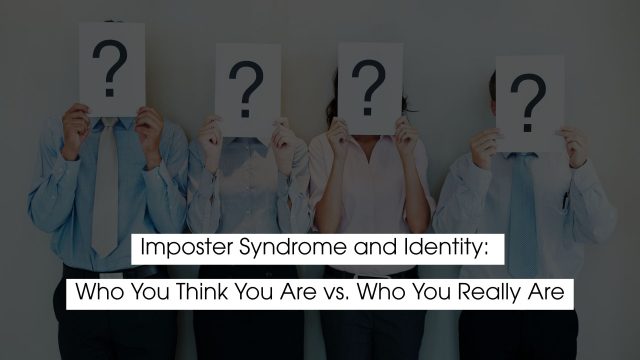
The Identity Gap: Who You Think You Are vs. Who You Really Are
At the core of imposter syndrome is a misaligned identity.
1. Who You Think You Are
This version is shaped by:
- Past failures or criticism
- Childhood conditioning
- Comparison culture
- Perfectionism
- Fear-based beliefs
This identity often says:
- “I’m not good enough.”
- “I don’t belong here.”
- “I’m only successful because of luck.”
2. Who You Really Are
Your true identity is based on:
- Skills you’ve developed
- Challenges you’ve overcome
- Growth you’ve earned
- Values you live by
This version knows:
- You’ve worked for your success
- You’re capable of learning and growing
- You don’t need to be perfect to be worthy
Imposter syndrome thrives when you believe the first version over the second.
Why Imposter Syndrome Is So Common
1. High Achievers Are More Prone to It
People who care deeply about growth often set high standards, making them more aware of what they don’t know.
2. Social Comparison Distorts Reality
Seeing others’ highlight reels online reinforces the belief that everyone else is more confident or capable.
3. Identity Is Often Built on External Validation
When your worth is tied to results, praise, or performance, confidence becomes fragile.
4. Fear of Failure Feels Like a Threat to Identity
Failure doesn’t just feel disappointing, it feels like proof that your doubts were right.
How Imposter Syndrome Affects Your Life
Unchecked imposter syndrome can lead to:
- Burnout from overworking
- Avoiding opportunities
- Chronic anxiety
- Procrastination
- People-pleasing
- Stagnation in career or relationships
Over time, it disconnects you from your authentic self and limits your potential.
How to Reclaim Your True Identity
1. Separate Feelings from Facts
Feeling unqualified doesn’t mean you are.
Start collecting evidence of competence, such as:
- Achievements
- Feedback
- Skills learned
- Challenges overcome
Review it regularly.
2. Reframe the Inner Narrative
Replace:
- “I don’t belong here”
With: - “I’m still growing, and that’s okay.”
Language shapes identity. Choose words that support growth, not fear.
3. Redefine What “Enough” Means
You don’t need to know everything to be valid.
Growth happens through experience, not before it.
4. Practice Self-Compassion
Talk to yourself the way you would to a close friend.
Compassion builds confidence far more effectively than criticism.
5. Align With Your Values, Not Perfection
When your actions align with your values, confidence becomes internal, not dependent on validation.
Ask:
- Am I acting with integrity?
- Am I learning?
- Am I growing?
If yes, you’re on the right path.
The Shift That Changes Everything
The moment imposter syndrome loosens its grip is when you realize:
👉 You are not an imposter. You are a person in progress.
Confidence isn’t something you earn after proving yourself.
It’s something you build by accepting who you already are, and who you’re becoming.
Final Thoughts
Imposter syndrome isn’t a flaw, it’s a signal that you’re growing beyond an old identity.
When you stop measuring yourself against fear-based beliefs and start honoring your real experience, confidence becomes natural, not forced.
You don’t need to become someone else.
You just need to recognize who you already are.
Sources & Further Reading
Books
- Clance, P. R., & Imes, S. A. (1978) – The Impostor Phenomenon in High Achieving Women
Foundational research that introduced the concept of imposter syndrome. - Brown, B. (2010). The Gifts of Imperfection
Explores vulnerability, self-worth, and overcoming shame-based identity patterns. - Dweck, C. (2006). Mindset: The New Psychology of Success
Explains how fixed vs. growth mindsets influence confidence and self-belief. - Neff, K. (2011). Self-Compassion: The Proven Power of Being Kind to Yourself
A powerful guide to overcoming self-criticism and building emotional resilience. - Goleman, D. (1995). Emotional Intelligence
A classic text on how emotional awareness shapes success and self-perception.
Research & Articles
- American Psychological Association (APA)
Imposter Syndrome: What It Is and How to Overcome It
https://www.apa.org - Harvard Business Review –
Stop Telling Women They Have Imposter Syndrome
Explores how identity and environment influence self-doubt. - Psychology Today
Articles on self-identity, imposter syndrome, and cognitive reframing
https://www.psychologytoday.com
Podcasts & Talks
- Brené Brown – Dare to Lead Podcast
Discussions on identity, courage, and self-trust. - The Tim Ferriss Show – Episodes on Imposter Syndrome
Real-life discussions with high performers who experience self-doubt.
About the Author
David A. Caren is the creator of Emotional Optimization™ – helping high-performing professionals rewire emotional patterns for clarity, calm, and success.
Book a Free Consultation
What is imposter syndrome?
Imposter syndrome is a psychological pattern where individuals doubt their abilities and fear being exposed as a fraud, despite clear evidence of competence or success. It often shows up as self-doubt, perfectionism, or fear of failure.
How does imposter syndrome affect personal identity?
Imposter syndrome creates a disconnect between who you u003cemu003ethinku003c/emu003e you are and who you u003cemu003eactuallyu003c/emu003e are. It can cause people to minimize their achievements, overwork to “prove” themselves, or adopt identities based on external validation rather than self-trust.
Is imposter syndrome a mental illness?
No. Imposter syndrome is not a mental health disorder. It’s a psychological pattern linked to self-perception, confidence, and identity development. However, prolonged imposter feelings can contribute to anxiety, burnout, and low self-esteem.
What’s the connection between imposter syndrome and fear of failure?
Fear of failure often fuels imposter syndrome. When you tie your worth to performance, mistakes feel like proof that you don’t belong. Learning to see failure as feedback helps break this cycle.
Emotional Intelligence and Anxiety: How Awareness Reduces Stress
Emotional intelligence plays a powerful role in reducing anxiety by increasing emotional awareness and self-regulation. When you learn to recognize…

What Successful People Do Differently Every Day (Daily Habits That Drive Success)
Successful people achieve more by focusing on consistent daily habits rather than relying on motivation. Through discipline, planning, and continuous…
How to Stop Procrastination and Take Action Immediately (Proven Strategies That Work)
Procrastination is driven by avoidance and fear, not laziness. By breaking tasks into small steps, taking immediate action, and removing…
What Is Self-Discipline and Why It Matters: The Foundation of Success and Personal Growth
Self-discipline is the ability to stay committed to your goals, even when motivation fades. By developing consistent habits, strengthening self-control,…

How to Transform Your Life One Day at a Time: Small Daily Changes That Lead to Extraordinary Results
Transform Your Life One Day at a Time: Transforming your life doesn’t happen overnight, it happens one day at a…

How to Develop Unbreakable Self-Discipline: The Ultimate Guide to Building Mental Strength and Consistency
Developing unbreakable self-discipline isn’t about relying on endless motivation or willpower. It’s about building consistent habits, keeping promises to yourself,…