Table of Contents
- What Is Imposter Syndrome?
- Why Imposter Syndrome Gets Worse When Starting Something New
- Signs You’re Experiencing Imposter Syndrome When Starting Something New
- The Truth About Starting Something New
- How to Keep Going When Imposter Syndrome Hits
- 1. Normalize the Feeling Instead of Fighting It
- 2. Stop Waiting to Feel Ready
- 3. Focus on Progress, Not Performance
- 4. Break the Goal Into Smaller “Proof” Moments
- 5. Replace Comparison With Curiosity
- 6. Create a “Reality File” for Your Brain
- 7. Accept That You Will Feel Awkward at First
- 8. Talk to Yourself Like You Would a Friend
- 9. Find Support (Because You’re Not Meant to Do This Alone)
- 10. Keep Going Even If You Feel Like an Imposter
- Why Imposter Syndrome Can Actually Be a Good Sign
- A Simple Mindset Shift That Helps Immediately
- Final Thoughts: You’re Not an Imposter, You’re a Beginner
- Sources & Further Reading
- About the Author
- Book a Free Consultation
Starting something new can be exciting… until imposter syndrome shows up.
You finally decide to launch a business, apply for a new role, start a new hobby, or begin a personal growth journey—and suddenly your brain hits you with:
- “Who do you think you are?”
- “You’re not ready.”
- “Everyone else knows what they’re doing.”
- “You’re going to fail and embarrass yourself.”
If that sounds familiar, you’re not alone.
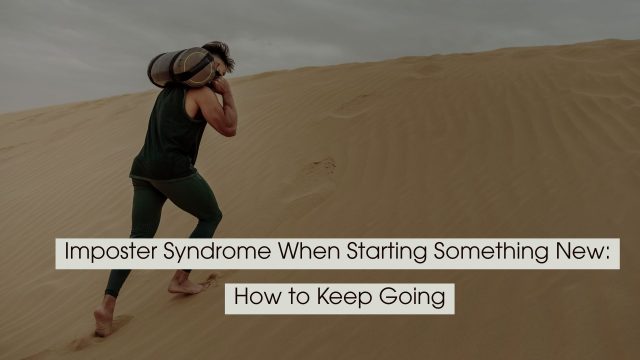
Imposter syndrome is one of the most common emotional challenges people face when they step outside their comfort zone—especially during new beginnings. The good news? It doesn’t mean you’re not capable. It means you’re growing.
This article will break down why imposter syndrome happens when you start something new, what it really means, and the best ways to keep going even when your confidence feels shaky.
What Is Imposter Syndrome?
Imposter syndrome is the feeling that you’re not as competent as others believe you are—and that sooner or later, people will “find out” you’re not qualified, smart, talented, or experienced enough.
Even if you have proof of success, you may still feel like:
- You got lucky
- You don’t deserve the opportunity
- You’re not “good enough”
- You’re pretending to know what you’re doing
It’s important to understand this:
Imposter syndrome is not a sign of incompetence.
It’s often a sign that you care, you have high standards, and you’re entering unfamiliar territory.
Why Imposter Syndrome Gets Worse When Starting Something New
Imposter syndrome tends to spike when you’re in a transition phase.
That’s because starting something new comes with:
1. A New Identity
When you begin something new, you’re not just learning a skill—you’re stepping into a new version of yourself.
For example:
- Becoming a leader
- Becoming an entrepreneur
- Becoming a coach
- Becoming a student again
- Becoming someone who takes their goals seriously
That identity shift can feel uncomfortable because your brain is wired to prefer the familiar.
2. A Lack of Evidence
Confidence is often built through repetition.
When you’re new, you don’t yet have enough experience to say:
“I’ve done this before and I can handle it.”
So your brain tries to protect you by creating doubt.
3. Fear of Being Judged
New beginnings often come with visibility.
You may worry about:
- People watching you
- People criticizing you
- People comparing you
- People thinking you’re not good enough
Even if no one is actually judging you, imposter syndrome convinces you they are.
4. Comparison to Experts
When you’re starting something new, you’re likely learning from people who are years ahead of you.
So you compare:
your beginning vs. their middle
And that comparison makes you feel like you’re behind—even though you’re exactly where you’re supposed to be.
Signs You’re Experiencing Imposter Syndrome When Starting Something New
Here are some common signs:
- You feel like you don’t deserve the opportunity
- You overthink every decision
- You procrastinate because you fear failure
- You keep researching instead of taking action
- You feel anxious about being seen
- You doubt your progress even when you’re improving
- You downplay your achievements
- You feel like everyone else is more prepared
If you relate to these, you’re experiencing a very normal growth pattern.
The Truth About Starting Something New
Here’s a reality check most people need:
You are not supposed to feel confident at the beginning.
Confidence doesn’t come first.
It comes after:
- action
- repetition
- failure
- learning
- improvement
The beginning feels uncomfortable because it’s unfamiliar—not because you’re incapable.
How to Keep Going When Imposter Syndrome Hits
Let’s get into practical strategies that help you move forward even when your confidence is low.
1. Normalize the Feeling Instead of Fighting It
The biggest mistake people make is thinking:
“If I feel like an imposter, that must mean I shouldn’t be doing this.”
But the truth is:
Feeling like an imposter is part of growth.
Instead of fighting the feeling, try saying:
- “This is what growth feels like.”
- “This is discomfort, not danger.”
- “I can feel uncertain and still move forward.”
When you normalize it, the fear loses power.
2. Stop Waiting to Feel Ready
One of the biggest traps of imposter syndrome is “readiness.”
You tell yourself:
- “I’ll start when I’m more confident.”
- “I’ll apply when I’m more experienced.”
- “I’ll post when I’m better.”
But readiness is not a requirement.
Action creates readiness.
Most successful people didn’t feel ready.
They moved anyway.
3. Focus on Progress, Not Performance
Imposter syndrome often comes from trying to be perfect immediately.
But when you’re new, your only job is to learn.
Ask yourself:
- “What can I improve today?”
- “What’s one step I can take?”
- “What’s one thing I can practice?”
When you shift your mindset from performance to progress, you give yourself room to grow.
4. Break the Goal Into Smaller “Proof” Moments
Confidence is built through evidence.
So instead of trying to prove yourself in one huge leap, create small wins.
Examples:
- Write one paragraph instead of finishing the whole article
- Post one video instead of building a full brand
- Apply to one job instead of trying to “get hired immediately”
- Launch a simple version instead of waiting for perfection
Each small win builds internal proof:
“I can do this.”
5. Replace Comparison With Curiosity
Comparison fuels imposter syndrome.
Instead of comparing yourself to others, try asking:
- “What can I learn from them?”
- “What’s one skill I can practice this week?”
- “What step did they take when they were new?”
This turns comparison into growth instead of self-doubt.
6. Create a “Reality File” for Your Brain
Imposter syndrome thrives on selective memory.
It makes you forget your progress and focus only on your flaws.
Create a simple “reality file” that includes:
- positive feedback you’ve received
- wins (even small ones)
- screenshots of compliments
- things you’ve learned
- milestones you’ve reached
When self-doubt hits, you can return to facts.
7. Accept That You Will Feel Awkward at First
Most people quit early because they hate the beginner stage.
But the beginner stage is where every expert started.
It’s normal to feel:
- awkward
- slow
- uncertain
- clumsy
- inexperienced
That does not mean you’re failing.
It means you’re learning.
8. Talk to Yourself Like You Would a Friend
Imposter syndrome often comes with harsh self-talk:
- “You’re stupid.”
- “You’re not good enough.”
- “You’re wasting your time.”
Imagine saying that to a friend who is trying something new.
You wouldn’t.
So instead, practice self-talk like:
- “You’re learning. It’s okay.”
- “You don’t have to be perfect.”
- “You’re brave for trying.”
- “Keep going. You’ll get better.”
9. Find Support (Because You’re Not Meant to Do This Alone)
Starting something new is emotionally demanding.
Support can make the difference between quitting and continuing.
You can get support through:
- a coach
- a mentor
- a community
- a trusted friend
- online groups
Sometimes, just hearing “me too” is enough to break the shame cycle.
10. Keep Going Even If You Feel Like an Imposter
This is the most important point:
You don’t need to feel confident to keep going.
You need commitment.
Confidence is built through:
- showing up
- practicing
- learning
- failing
- trying again
The people who succeed aren’t the ones who never feel doubt.
They’re the ones who continue anyway.
Why Imposter Syndrome Can Actually Be a Good Sign
Here’s the twist:
Imposter syndrome often shows up when you’re doing something meaningful.
It’s common in:
- high achievers
- ambitious people
- creative entrepreneurs
- leaders
- people who care deeply about doing well
It means you’re not stuck.
It means you’re stretching.
A Simple Mindset Shift That Helps Immediately
Instead of asking:
“What if I fail?”
Ask:
“What if I grow?”
Because the truth is, even if you struggle:
- you will learn
- you will improve
- you will become stronger
- you will become more capable
And that’s the real win.
Final Thoughts: You’re Not an Imposter, You’re a Beginner
Imposter syndrome when starting something new is normal.
It doesn’t mean you’re not good enough.
It means you’re entering a new level of growth, learning, and identity.
If you can keep going through the uncomfortable beginning, you’ll eventually reach a stage where what once felt terrifying becomes familiar.
So if you’re starting something new and your brain is screaming doubt…
Take a breath.
Keep going.
You’re not behind.
You’re becoming.
Sources & Further Reading
Books & Authors
- Clance, P. R. & Imes, S. A. (1978). The Impostor Phenomenon in High Achieving Women: Dynamics and Therapeutic Intervention.
— The foundational research that introduced the term imposter syndrome. - Brown, B. Daring Greatly and Rising Strong
— Insightful work on vulnerability, courage, and overcoming self-doubt in new challenges. - Neff, K. Self-Compassion: The Proven Power of Being Kind to Yourself
— Excellent for understanding how self-compassion supports confidence and resilience. - Dweck, C. S. Mindset: The New Psychology of Success
— Explores how growth versus fixed mindset affects learning, confidence, and imposter feelings. - Clear, J. Atomic Habits
— Practical frameworks for building consistent systems and confidence through small wins.
About the Author
David A. Caren is the creator of Emotional Optimization™ – helping high-performing professionals rewire emotional patterns for clarity, calm, and success.
Book a Free Consultation
Is it normal to feel imposter syndrome when starting something new?
Yes. It’s extremely common. Starting something new naturally puts you in a learning phase, and your brain may interpret that discomfort as “proof” you don’t belong—even when you do.
How do I know if it’s imposter syndrome or I’m actually not ready?
Imposter syndrome usually shows up as self-doubt despite evidence of progress or capability.
If you’re learning, improving, and showing up consistently, you’re ready—you’re just growing.
Why does imposter syndrome feel worse in the beginning?
Because you don’t have proof yet. Early stages come with uncertainty, mistakes, and comparison. As you gain experience, confidence usually catches up.
Can imposter syndrome stop me from succeeding?
Yes, if it causes you to quit too early. But it doesn’t mean you’re incapable. The key is learning to continue even while you feel uncertain.
What’s the best way to push through imposter syndrome?
The best strategy is consistent action, not waiting for confidence.
Small wins, repetition, and learning over time are what build real self-trust.

How to Transform Your Life One Day at a Time: Small Daily Changes That Lead to Extraordinary Results
Transform Your Life One Day at a Time: Transforming your life doesn’t happen overnight, it happens one day at a…


How to Develop Unbreakable Self-Discipline: The Ultimate Guide to Building Mental Strength and Consistency
Developing unbreakable self-discipline isn’t about relying on endless motivation or willpower. It’s about building consistent habits, keeping promises to yourself,…
How to Strengthen Your Willpower Every Day: Practical Strategies for Better Self-Control
Strengthening your willpower starts with small, intentional decisions. By reducing distractions, practicing delayed gratification, building supportive routines, and keeping promises…

Personal Development: The Growth Mindset Formula, How to Rewire Your Brain for Success
Personal development begins with one powerful belief: you can improve. The growth mindset formula teaches you how to rewire your…
Personal Development: Why Overthinking Is Holding You Back (And How to Stop)
Overthinking feels safe, but it quietly steals your momentum, confidence, and clarity. The more you analyze, the less you act….
How Stop Negative Self-Talk Permanently
Negative self-talk is not permanent, it is a learned pattern that can be rewired. Through awareness, cognitive restructuring, and self-compassion,…