Table of Contents
- What is imposter syndrome and how can you combat it? – Elizabeth Cox
- What Is Imposter Syndrome?
- How Social Media Amplifies Imposter Syndrome
- Signs You’re Experiencing Imposter Syndrome Because of Social Media
- The Psychology Behind Social Media, Driven Imposter Syndrome
- How to Reduce Imposter Syndrome in the Age of Social Media
- When to Seek Support
- Conclusion: You’re Not Behind, You’re Human
- Sources & Further Reading
- About the Author
- Book a Free Consultation
Social media has transformed how we connect, learn, and share our lives, but it has also intensified a silent struggle many people face: imposter syndrome. In an online world filled with curated success stories, highlight reels, and constant comparison, it’s easier than ever to feel like you’re falling behind or that your achievements aren’t “enough.”
Imposter syndrome in the age of social media doesn’t just affect high achievers or professionals, it impacts creatives, entrepreneurs, students, leaders, and everyday users scrolling through feeds that make success look effortless. Understanding how social media fuels imposter syndrome is the first step toward reclaiming confidence, self-trust, and emotional balance.
What is imposter syndrome and how can you combat it? – Elizabeth Cox
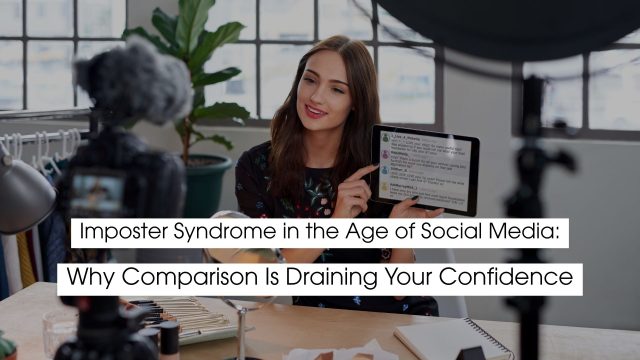
What Is Imposter Syndrome?
Imposter syndrome is the persistent belief that your success is undeserved and that you’re somehow fooling others into thinking you’re more capable than you really are. Even with evidence of competence, people experiencing imposter syndrome often attribute success to luck, timing, or external help rather than their own abilities.
Common imposter thoughts include:
- “Everyone else is more qualified than me.”
- “I don’t deserve this opportunity.”
- “Soon, people will realize I’m not as good as they think.”
While imposter syndrome has existed long before social media, digital platforms have amplified its reach and intensity.
How Social Media Amplifies Imposter Syndrome
1. Constant Comparison Culture
Social media platforms are designed to showcase milestones, achievements, and polished moments. When you compare your behind-the-scenes reality to someone else’s highlight reel, it creates a distorted sense of inadequacy.
You rarely see:
- Failed attempts
- Self-doubt
- Financial struggles
- Emotional burnout
Yet your brain still treats what you see as the full story.
2. Unrealistic Success Timelines
Social media often compresses years of effort into a single post. Overnight success stories make it seem like progress should be fast and linear, leading you to question your pace and worth.
This creates pressure to:
- Achieve faster
- Be more visible
- Perform constantly
When progress doesn’t match what you see online, imposter syndrome deepens.
3. Validation-Based Confidence
Likes, comments, views, and followers subtly become measures of self-worth. When engagement drops, or doesn’t meet expectations, it can trigger self-doubt and feelings of not being “good enough.”
Confidence becomes conditional instead of internal.
4. Fear of Being Exposed Online
Sharing your work publicly can intensify imposter syndrome. The fear of judgment, criticism, or being “called out” makes many people hold back, over-edit themselves, or avoid opportunities altogether.
This fear often sounds like:
- “Who am I to talk about this?”
- “Others know more than I do.”
- “What if I get it wrong?”
Signs You’re Experiencing Imposter Syndrome Because of Social Media
- Feeling anxious after scrolling
- Downplaying your achievements
- Avoiding posting or sharing ideas
- Comparing your journey to others daily
- Feeling behind despite progress
- Constantly seeking external validation
- Doubting your expertise or voice
These reactions don’t mean you’re failing, they mean your nervous system is reacting to constant comparison and pressure.
The Psychology Behind Social Media, Driven Imposter Syndrome
Your brain is wired for social comparison, it helps you learn and belong. But social media hijacks this system by exposing you to thousands of people at once, often without context.
Your nervous system interprets perceived “status gaps” as threats, triggering stress responses like anxiety, self-doubt, and overthinking. Over time, this creates emotional exhaustion and chronic imposter feelings.
How to Reduce Imposter Syndrome in the Age of Social Media
Reframe What You’re Seeing
Remind yourself that social media is a curated narrative, not reality. Every post represents a fraction of someone’s life—not their struggles, doubts, or failures.
Ask yourself:
- “What am I not seeing here?”
- “What effort likely came before this?”
Shift from Comparison to Self-Reference
Measure progress against your past self, not someone else’s timeline. Growth looks different for everyone, and your path doesn’t need to mirror anyone else’s to be valid.
Build Internal Validation
Practice acknowledging your efforts and progress without needing online feedback. Confidence grows when it’s rooted in self-trust rather than metrics.
Build Internal Validation
Practice acknowledging your efforts and progress without needing online feedback. Confidence grows when it’s rooted in self-trust rather than metrics.
Share Imperfectly
Waiting until you feel “ready” often keeps you stuck. Confidence comes from action, not perfection. Sharing imperfectly builds resilience and authenticity.
Share Imperfectly
Waiting until you feel “ready” often keeps you stuck. Confidence comes from action, not perfection. Sharing imperfectly builds resilience and authenticity.
When to Seek Support
If imposter syndrome fueled by social media is affecting your mental health, confidence, or daily functioning, talking to a coach, therapist, or mentor can help you reframe beliefs and build emotional resilience.
Conclusion: You’re Not Behind, You’re Human
Imposter syndrome in the age of social media is not a personal failure, it’s a predictable response to constant comparison and unrealistic expectations. You don’t need to be louder, faster, or more visible to be worthy.
You need self-awareness.
You need compassion.
You need to remember that your journey is valid, even when it doesn’t look like anyone else’s.
Sources & Further Reading
- American Psychological Association – Imposter Phenomenon
https://www.apa.org/monitor/2013/02/ce-corner
An overview of imposter syndrome, including how it affects high achievers and contributes to anxiety and self-doubt. - Harvard Business Review – Overcoming Imposter Syndrome
https://hbr.org/2021/02/stop-telling-women-they-have-imposter-syndrome
Explores the psychological roots of imposter syndrome and how modern environments, including digital culture—intensify it. - Psychology Today – Social Comparison and Mental Health
https://www.psychologytoday.com/us/basics/social-comparison
Breaks down how comparison impacts self-esteem, confidence, and emotional well-being, especially in online spaces. - Greater Good Science Center – Social Media and Well-Being
https://greatergood.berkeley.edu
Research-backed articles on how social media affects emotions, self-worth, and mental health. - National Institute of Mental Health – Anxiety Disorders
https://www.nimh.nih.gov/health/topics/anxiety-disorders
Provides insight into anxiety responses often linked to imposter syndrome and chronic comparison. - Brené Brown – Vulnerability, Shame, and Self-Worth
https://brenebrown.com
Resources on shame resilience and how comparison culture erodes confidence. - Journal of Behavioral Science – The Impostor Phenomenon
https://journals.sagepub.com
Academic research on the origins, patterns, and psychological effects of imposter syndrome. - MindTools – Understanding Imposter Syndrome
https://www.mindtools.com
Practical explanations and tools for recognizing and managing imposter thoughts.
About the Author
David A. Caren is the creator of Emotional Optimization™ – helping high-performing professionals rewire emotional patterns for clarity, calm, and success.
Book a Free Consultation
What is imposter syndrome in the age of social media?
Imposter syndrome in the age of social media refers to the heightened feelings of self-doubt, inadequacy, and fear of being exposed that arise from constant online comparison, curated success stories, and validation-driven platforms.
How does social media increase imposter syndrome?
Social media increases imposter syndrome by showcasing highlight reels, unrealistic success timelines, and constant metrics like likes and followers. This creates distorted comparisons that make people question their worth and abilities.
Why do I feel worse after scrolling on social media?
Scrolling often triggers comparison and activates the brain’s threat response, leading to anxiety, self-doubt, and emotional exhaustion. Seeing others’ success without context can make your own progress feel insufficient.
Who is most affected by imposter syndrome online?
Entrepreneurs, creatives, leaders, students, and professionals are especially vulnerable, particularly those who share their work publicly or rely on visibility, feedback, or performance metrics for validation.
Is imposter syndrome a sign of incompetence?
No. Imposter syndrome often affects capable, high-achieving individuals. It usually indicates growth, learning, or stepping into new roles—not a lack of ability.

How to Transform Your Life One Day at a Time: Small Daily Changes That Lead to Extraordinary Results
Transform Your Life One Day at a Time: Transforming your life doesn’t happen overnight, it happens one day at a…


How to Develop Unbreakable Self-Discipline: The Ultimate Guide to Building Mental Strength and Consistency
Developing unbreakable self-discipline isn’t about relying on endless motivation or willpower. It’s about building consistent habits, keeping promises to yourself,…
How to Strengthen Your Willpower Every Day: Practical Strategies for Better Self-Control
Strengthening your willpower starts with small, intentional decisions. By reducing distractions, practicing delayed gratification, building supportive routines, and keeping promises…
Personal Development: The Growth Mindset Formula, How to Rewire Your Brain for Success
Personal development begins with one powerful belief: you can improve. The growth mindset formula teaches you how to rewire your…
Personal Development: Why Overthinking Is Holding You Back (And How to Stop)
Overthinking feels safe, but it quietly steals your momentum, confidence, and clarity. The more you analyze, the less you act….
How Stop Negative Self-Talk Permanently
Negative self-talk is not permanent, it is a learned pattern that can be rewired. Through awareness, cognitive restructuring, and self-compassion,…