Table of Contents
- Why High Achievers Still Feel “Not Enough”
- What Is Personal Development Coaching?
- How Personal Development Coaching Helps High Achievers
- Common Challenges Coaching Addresses for High Achievers
- The Coaching Process: What to Expect
- Who Personal Development Coaching Is Best For
- Is Personal Development Coaching Worth It for High Achievers?
- Final Thoughts: You Are More Than What You Achieve
- Sources & Further Reading
- About the Author
- Book a Free Consultation
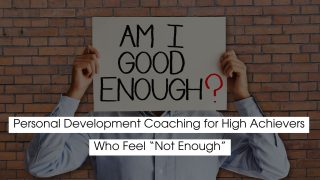
High achievers are often admired for their discipline, ambition, and success. Yet behind the accolades and accomplishments, many quietly struggle with a persistent feeling of being “not enough.” No matter how much they achieve, it never feels sufficient. Personal development coaching offers a powerful path to break this cycle, helping high achievers reconnect with self-worth, redefine success, and experience fulfillment without burnout.
Why High Achievers Still Feel “Not Enough”
On the surface, high achievers appear confident and capable. Internally, however, many experience chronic self-doubt, pressure to perform, and fear of failure. This inner tension often stems from:
- Identity tied to achievement – Self-worth becomes dependent on results, titles, or external validation.
- Perfectionism – Success is never celebrated because the next goal is always looming.
- Comparison culture – Constantly measuring progress against others creates a sense of falling behind.
- Early conditioning – Praise tied to performance during childhood can wire achievement as the only source of approval.
Over time, these patterns lead to emotional exhaustion, imposter syndrome, and a constant drive that feels impossible to turn off.
What Is Personal Development Coaching?
Personal development coaching is a structured, forward-focused process that helps individuals build self-awareness, shift limiting beliefs, and align their actions with deeper values. Unlike therapy, which often explores past trauma, coaching emphasizes growth, clarity, and sustainable change in the present and future.
For high achievers, coaching isn’t about pushing harder, it’s about redefining what success means and how it feels.
How Personal Development Coaching Helps High Achievers
1. Separating Self-Worth From Performance
A personal development coach helps you recognize that achievement is something you do, not who you are. Through mindset work and reflection, high achievers learn to detach their identity from constant output and results.
2. Rewriting the “Not Enough” Narrative
The belief of “I’m not enough” is often subconscious. Coaching brings these hidden narratives to the surface and replaces them with healthier, evidence-based perspectives that support confidence and self-trust.
3. Redefining Success on Your Terms
Instead of chasing externally defined milestones, coaching helps clarify what fulfillment, balance, and purpose actually mean to you. This shift allows achievement to feel satisfying rather than draining.
4. Reducing Burnout Without Losing Ambition
Personal development coaching doesn’t eliminate ambition, it refines it. High achievers learn how to pursue goals with clarity, emotional regulation, and boundaries that protect mental and emotional health.
5. Building Internal Validation
One of the most powerful outcomes of coaching is learning how to validate yourself. When self-approval replaces external validation, confidence becomes stable and resilient.
Common Challenges Coaching Addresses for High Achievers
- Chronic overthinking and self-criticism
- Fear of slowing down or “falling behind”
- Difficulty enjoying success
- Imposter syndrome despite competence
- Emotional disconnection and burnout
- Struggles with work-life balance
Personal development coaching provides tools and frameworks to navigate these challenges with awareness instead of avoidance.
The Coaching Process: What to Expect
While every coach has a unique approach, most personal development coaching journeys include:
- Self-awareness work – Identifying beliefs, patterns, and emotional triggers
- Mindset shifts – Reframing success, failure, and self-worth
- Goal realignment – Creating goals that align with values, not pressure
- Emotional regulation tools – Managing stress, perfectionism, and inner criticism
- Sustainable habits – Building routines that support long-term well-being
The result is growth that feels grounded, not exhausting.
Who Personal Development Coaching Is Best For
This type of coaching is especially powerful for:
- Entrepreneurs and business owners
- Corporate leaders and executives
- Creatives and high-performing professionals
- Coaches, consultants, and service providers
- Anyone who is outwardly successful but inwardly unfulfilled
If you’re achieving more but feeling less satisfied, coaching can help close that gap.
Is Personal Development Coaching Worth It for High Achievers?
For many high achievers, personal development coaching becomes a turning point. It creates space to succeed without self-abandonment, proving that fulfillment doesn’t require constant pressure or self-criticism.
When achievement is guided by clarity and self-trust instead of fear and inadequacy, success finally feels sustainable.
Final Thoughts: You Are More Than What You Achieve
Feeling “not enough” is not a personal failure—it’s often the result of deeply ingrained achievement-based conditioning. Personal development coaching helps high achievers reconnect with intrinsic worth, regulate ambition, and experience success with peace instead of pressure.
You don’t need to do more to be worthy. Sometimes, the most powerful growth begins by learning how to be enough, right now.
Sources & Further Reading
- Brown, B. (2010). The Gifts of Imperfection. Hazelden Publishing.
— Explores worthiness, self-acceptance, and releasing achievement-based identity. - Dweck, C. S. (2006). Mindset: The New Psychology of Success. Random House.
— Foundational research on fixed vs. growth mindsets and how achievement can shape self-worth. - Neff, K. (2011). Self-Compassion: The Proven Power of Being Kind to Yourself. William Morrow.
— Research-backed insights on replacing self-criticism with sustainable self-belief. - International Coaching Federation (ICF).
What Is Coaching?
— Industry standards and evidence-based explanations of personal development coaching.
https://coachingfederation.org - Harvard Business Review.
Stop Telling Yourself You’re Not Good Enough
— Articles on high achievement, imposter syndrome, and performance-driven identity.
https://hbr.org - American Psychological Association (APA).
Perfectionism and Mental Health
— Research on how perfectionism contributes to burnout and chronic self-doubt.
https://www.apa.org - Kegan, R., & Lahey, L. L. (2009). Immunity to Change. Harvard Business Press.
— Examines subconscious commitments that keep high achievers stuck despite success. - Maslach, C., & Leiter, M. P. (2016).
Burnout in the Workplace.
— Foundational research on burnout, achievement pressure, and emotional exhaustion.
About the Author
David A. Caren is the creator of Emotional Optimization™ – helping high-performing professionals rewire emotional patterns for clarity, calm, and success.
Book a Free Consultation
What is personal development coaching for high achievers?
Personal development coaching for high achievers focuses on identity, mindset, and emotional patterns—not just goals. It helps driven individuals who appear successful on the outside but feel unfulfilled, pressured, or “not enough” internally reconnect with self-worth that isn’t tied to performance.
Why do high achievers often feel “not enough”?
Many high achievers grow up equating success with value. Over time, this creates an internal belief that worth must be earned through constant achievement. Even major accomplishments can feel empty because the underlying self-doubt remains unresolved.
How is coaching different from therapy?
Therapy often focuses on healing past trauma or mental health conditions. Personal development coaching is future-focused and action-oriented, helping clients reframe limiting beliefs, strengthen self-trust, and build aligned habits. Coaching does not diagnose or treat mental health disorders.
Can coaching help with imposter syndrome?
Yes. Coaching helps identify the root causes of imposter syndrome, challenge perfectionist thinking, and replace self-criticism with grounded confidence. Many high achievers experience imposter syndrome despite external success, and coaching addresses this at an identity level.
How long does it take to see results from coaching?
Some clients experience mindset shifts within weeks, while deeper identity work may take several months. Results depend on the client’s openness, consistency, and goals. Sustainable change focuses on long-term emotional resilience, not quick fixes.

How to Transform Your Life One Day at a Time: Small Daily Changes That Lead to Extraordinary Results
Transform Your Life One Day at a Time: Transforming your life doesn’t happen overnight, it happens one day at a…


How to Develop Unbreakable Self-Discipline: The Ultimate Guide to Building Mental Strength and Consistency
Developing unbreakable self-discipline isn’t about relying on endless motivation or willpower. It’s about building consistent habits, keeping promises to yourself,…
How to Strengthen Your Willpower Every Day: Practical Strategies for Better Self-Control
Strengthening your willpower starts with small, intentional decisions. By reducing distractions, practicing delayed gratification, building supportive routines, and keeping promises…
Personal Development: The Growth Mindset Formula, How to Rewire Your Brain for Success
Personal development begins with one powerful belief: you can improve. The growth mindset formula teaches you how to rewire your…
Personal Development: Why Overthinking Is Holding You Back (And How to Stop)
Overthinking feels safe, but it quietly steals your momentum, confidence, and clarity. The more you analyze, the less you act….
How Stop Negative Self-Talk Permanently
Negative self-talk is not permanent, it is a learned pattern that can be rewired. Through awareness, cognitive restructuring, and self-compassion,…