
Table of Contents
- How Digital Overload is Destroying Your Mental Health (And How to Fix It)
- What Is Digital Overload?
- How Technology Increases Burnout Risk
- The Psychological Effects of Digital Overload
- Signs That Digital Overload Is Causing Burnout
- How to Reduce Digital Overload
- Building Healthy Digital Habits
- Conclusion
- Sources and Further Reading
Technology has transformed the way people work, communicate, and live. Smartphones, laptops, and digital platforms allow instant communication, remote collaboration, and access to information at any time.
While these tools have improved productivity and convenience, they have also created a new challenge: digital overload.
Digital overload occurs when individuals are exposed to excessive digital information, notifications, and online communication. Over time, this constant stimulation can overwhelm the brain, increase stress levels, and contribute to burnout.
Burnout is a state of emotional, mental, and physical exhaustion caused by prolonged stress. According to the World Health Organization, burnout is characterized by emotional exhaustion, mental detachment from work, and reduced professional effectiveness.
Understanding how digital overload contributes to burnout can help individuals develop healthier technology habits and protect their mental well-being.
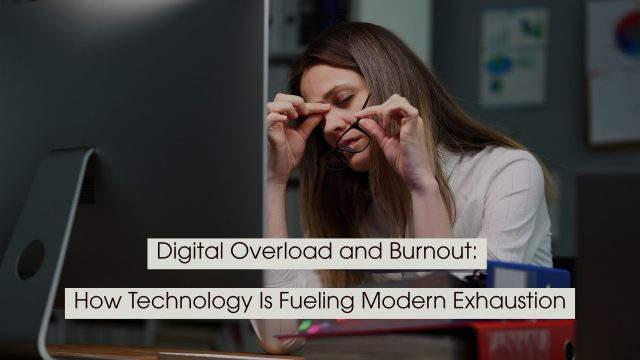
How Digital Overload is Destroying Your Mental Health (And How to Fix It)
What Is Digital Overload?
Digital overload refers to the overwhelming amount of digital information and communication that individuals must process daily.
Examples include:
- Constant email notifications
- Messaging apps and work chats
- Social media updates
- Online meetings and video calls
- Continuous exposure to news and digital content
These digital demands can require the brain to process large amounts of information without adequate recovery time.
Research summarized by the American Psychological Association shows that excessive digital engagement can increase stress, reduce attention span, and contribute to mental fatigue.
How Technology Increases Burnout Risk
Constant Connectivity
Modern technology makes it possible to stay connected to work at all times.
Many professionals check emails late at night, respond to messages during personal time, and feel pressure to remain available throughout the day.
This constant connectivity prevents the brain from fully disconnecting from work-related stress.
Information Overload
The internet provides access to massive amounts of information.
While this can be beneficial, constantly processing news, emails, reports, and social media updates can overwhelm cognitive resources.
The brain must continuously filter and prioritize incoming information.
Notification Fatigue
Smartphones and digital platforms frequently send alerts and notifications.
These interruptions disrupt concentration and force the brain to switch attention between tasks.
Frequent task switching increases mental fatigue and reduces productivity.
Screen Fatigue
Spending long hours in front of screens can strain both the eyes and the brain.
Extended screen time is associated with:
- Reduced concentration
- Mental exhaustion
- Sleep disturbances
Digital environments often require intense focus, which can accelerate burnout.
Blurred Work-Life Boundaries
Digital tools make it easy to work from anywhere at any time.
While flexibility can be beneficial, it can also eliminate the natural boundaries between work and personal life.
Without clear separation, stress can accumulate throughout the day.
The Psychological Effects of Digital Overload
Digital overload affects several aspects of mental health.
Reduced Attention Span
Constant digital stimulation trains the brain to switch attention quickly.
Over time, this can reduce the ability to maintain deep focus on complex tasks.
Increased Anxiety
Continuous exposure to information, news, and social media comparisons can increase stress and anxiety.
Emotional Exhaustion
Constant digital communication can create emotional pressure, especially in work environments that require rapid responses.
These psychological effects contribute directly to burnout.
Signs That Digital Overload Is Causing Burnout
Many individuals may not realize that digital habits are contributing to burnout.
Common warning signs include:
- Difficulty concentrating
- Feeling overwhelmed by notifications
- Mental fatigue after screen use
- Irritability and frustration
- Difficulty disconnecting from work
Recognizing these signs can help individuals take action before burnout becomes severe.
How to Reduce Digital Overload
Reducing digital overload can significantly improve mental well-being and prevent burnout.
Set Digital Boundaries
Establish clear limits for checking emails and responding to messages.
Avoid digital communication during designated rest periods.
Disable Nonessential Notifications
Reducing unnecessary alerts helps protect concentration and mental energy.
Schedule Screen-Free Time
Taking regular breaks from screens allows the brain to recover from digital stimulation.
Activities such as walking, reading, or spending time outdoors can provide mental relaxation.
Practice Deep Work
Deep work involves focusing on a single task without interruptions.
This approach improves productivity and reduces cognitive overload.
Protect Sleep From Screen Exposure
Reducing screen time before bedtime can improve sleep quality and mental recovery.
Adequate sleep helps regulate stress and reduce burnout risk.
Building Healthy Digital Habits
Technology will continue to play a major role in modern life, but healthier habits can reduce its negative impact.
Healthy digital habits include:
- Using technology intentionally
- Limiting unnecessary screen time
- Prioritizing offline activities
- Maintaining boundaries between work and personal life
These practices help maintain balance in a digitally connected world.
Conclusion
Digital technology has created many opportunities for communication and productivity, but it has also introduced new forms of stress.
Constant notifications, information overload, and blurred work-life boundaries can overwhelm the brain and contribute to burnout.
Understanding the connection between digital overload and burnout allows individuals to develop healthier technology habits.
By setting digital boundaries, reducing notifications, and prioritizing recovery time, individuals can protect their mental energy while still benefiting from modern technology.
Sustainable productivity in the digital age requires balancing connectivity with intentional disconnection.
Sources and Further Reading
- American Psychological Association – Research on digital stress and mental health
- World Health Organization – Burnout definition and workplace health studies
- Research on digital fatigue and cognitive overload
- Studies on screen time and mental well-being
- Research on workplace stress and technology use
About the Author
David A. Caren is the creator of Emotional Optimization™ – helping high-performing professionals rewire emotional patterns for clarity, calm, and success.
Book a Free Consultation
What is digital overload?
Digital overload occurs when individuals experience excessive exposure to digital information, communication, and screen time.
Can digital overload cause burnout?
Yes. Constant digital stimulation and communication can increase stress and contribute to emotional exhaustion.
How can I reduce digital overload?
Setting boundaries, disabling unnecessary notifications, scheduling screen-free time, and practicing deep work can help.
Does screen time affect mental health?
Excessive screen time can contribute to stress, reduced concentration, and sleep disturbances.
Can digital detox help prevent burnout?
Yes. Periodically disconnecting from digital devices can improve mental clarity and reduce stress.

Emotional Intelligence and Anxiety: How Awareness Reduces Stress
Emotional intelligence plays a powerful role in reducing anxiety by increasing emotional awareness and self-regulation. When you learn to recognize…


What Successful People Do Differently Every Day (Daily Habits That Drive Success)
Successful people achieve more by focusing on consistent daily habits rather than relying on motivation. Through discipline, planning, and continuous…

How to Stop Procrastination and Take Action Immediately (Proven Strategies That Work)
Procrastination is driven by avoidance and fear, not laziness. By breaking tasks into small steps, taking immediate action, and removing…

What Is Self-Discipline and Why It Matters: The Foundation of Success and Personal Growth
Self-discipline is the ability to stay committed to your goals, even when motivation fades. By developing consistent habits, strengthening self-control,…

How to Transform Your Life One Day at a Time: Small Daily Changes That Lead to Extraordinary Results
Transform Your Life One Day at a Time: Transforming your life doesn’t happen overnight, it happens one day at a…

How to Develop Unbreakable Self-Discipline: The Ultimate Guide to Building Mental Strength and Consistency
Developing unbreakable self-discipline isn’t about relying on endless motivation or willpower. It’s about building consistent habits, keeping promises to yourself,…