Table of Contents
- What is Emotional Intelligence?
- What Is Emotional Optimization?
- Common Life Transitions That Trigger Emotional Overload
- Why Transitions Trigger Anxiety, Stress, and Emotional Instability
- Emotional Optimization Strategies for Life Transitions
- 1. Normalize Emotional Messiness During Change
- 2. Regulate Your Nervous System First
- 3. Create Structure When Life Feels Unstable
- 4. Grieve What You’re Leaving Behind
- 5. Stop Overthinking the Entire Future
- 6. Separate Fear From Intuition
- 7. Build Self-Trust Through Follow-Through
- 8. Use Support Instead of Isolation
- 9. Avoid Major Emotional Decisions During High Stress
- 10. Redefine “Stability” as Adaptability
- What Emotional Optimization Looks Like During a Transition
- Final Thoughts: Life Transitions Are a Growth Portal
- Sources & Further Reading
- About the Author
- Book a Free Consultation
- Why do life transitions cause anxiety even when the change is positive?
- How do I stop overthinking during a life transition?
- What’s the best emotional optimization tool when I feel overwhelmed?
- Is it normal to feel grief during a life transition?
- When should I seek professional support during a life transition?
Life transitions are rarely just “changes.”
They’re identity shifts.
Even when the transition is positive, like a new job, marriage, moving to a better home, or achieving a long-term goal, it can still trigger stress, fear, and emotional instability.
That’s because transitions create uncertainty.
They disrupt routines, challenge your sense of safety, and force your brain to adjust to a new reality. This is why people often feel overwhelmed during change, even when they’re excited about it.
If you’ve been struggling emotionally during a life transition, you’re not weak, you’re human.
And the good news is: you can learn to handle transitions better.
That’s where emotional optimization becomes one of the most powerful tools for personal growth.
What is Emotional Intelligence?
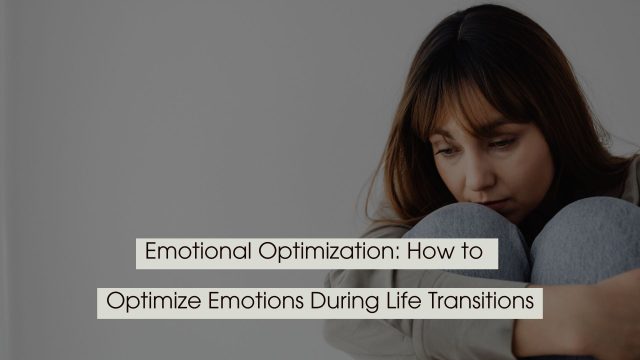
What Is Emotional Optimization?
Emotional optimization is the practice of managing emotions intentionally so they support your well-being instead of controlling your behavior.
During life transitions, emotional optimization helps you:
- regulate anxiety and stress
- process grief and uncertainty
- avoid emotional burnout
- make decisions with clarity
- stay grounded through change
- rebuild confidence and self-trust
It doesn’t mean you never feel emotional.
It means you learn how to move through emotions in a healthy way, rather than getting stuck in them.
Common Life Transitions That Trigger Emotional Overload
Life transitions come in many forms, including:
- changing jobs or careers
- starting or ending a relationship
- getting married or divorced
- becoming a parent
- moving to a new city
- graduating or finishing school
- starting a business
- losing a loved one
- health changes
- financial changes
- entering a new stage of adulthood
Some transitions are chosen.
Others are unexpected.
But both types can create emotional instability.
Why Transitions Trigger Anxiety, Stress, and Emotional Instability
Life transitions are emotionally intense because they activate three psychological pressure points:
1. Uncertainty
Your brain prefers predictability. When life changes, your mind starts scanning for threats and worst-case scenarios.
2. Identity change
Even if you’re becoming a better version of yourself, part of your old identity is being left behind.
This can feel like grief.
3. Loss of control
Transitions often come with unknown outcomes. That loss of certainty can make you feel emotionally unsafe.
This is why life transitions can trigger:
- anxiety
- overthinking
- mood swings
- fear of the future
- irritability
- emotional exhaustion
- sadness or grief
- feelings of being lost
Emotional Optimization Strategies for Life Transitions
Below are practical, realistic strategies to help you optimize your emotions during major life changes.
1. Normalize Emotional Messiness During Change
One of the biggest mistakes people make during life transitions is expecting themselves to feel stable immediately.
But transitions are naturally messy.
You may feel:
- excited and scared
- hopeful and sad
- confident and doubtful
- relieved and guilty
This is normal.
Emotional optimization starts with self-acceptance:
You are allowed to feel multiple emotions at once.
This reduces shame and prevents emotional suppression.
2. Regulate Your Nervous System First
Transitions often keep the body in stress mode.
If your nervous system stays activated, your thoughts become more anxious, and your emotions become harder to manage.
Emotional optimization starts with calming the body.
Simple nervous system tools:
- slow breathing with longer exhales
- walking outdoors
- stretching shoulders and jaw
- reducing caffeine
- improving sleep consistency
- grounding exercises
Your body needs safety before your mind can feel peace.
3. Create Structure When Life Feels Unstable
Life transitions disrupt routines, which can increase anxiety.
A powerful emotional optimization strategy is building structure, especially when everything feels uncertain.
Structure can include:
- consistent wake-up time
- morning routine
- simple meal schedule
- daily movement
- a short evening reset ritual
Even small routines create emotional stability.
4. Grieve What You’re Leaving Behind
Even positive transitions come with loss.
You may be leaving behind:
- familiar environments
- relationships
- old versions of yourself
- routines
- identity roles
Emotional optimization requires acknowledging the grief instead of pretending it doesn’t exist.
Grief doesn’t mean the transition is wrong.
It means something meaningful is changing.
5. Stop Overthinking the Entire Future
One of the biggest emotional drains during transitions is trying to mentally solve everything at once.
Your brain may ask:
- “What if this doesn’t work out?”
- “What if I regret this?”
- “What if I fail?”
Emotional optimization helps you shift from future panic to present focus.
A powerful question:
“What is the next small step I can take today?”
Small steps reduce emotional overload and restore control.
6. Separate Fear From Intuition
Transitions often trigger fear, and many people confuse fear with intuition.
- Fear is loud, urgent, and catastrophic.
- Intuition is calm, clear, and steady.
Emotional optimization helps you pause and ask:
Is this a real warning, or just discomfort from change?
This helps you make decisions from wisdom, not anxiety.
7. Build Self-Trust Through Follow-Through
Transitions often shake confidence because you’re in unfamiliar territory.
The fastest way to rebuild emotional stability is self-trust.
Self-trust grows when you:
- keep small promises to yourself
- follow through on routines
- take action even when uncertain
- learn from mistakes without self-hate
Every time you show up for yourself, your nervous system learns:
“I can handle this.”
8. Use Support Instead of Isolation
Transitions can feel lonely, especially when you believe you must handle everything alone.
But emotional optimization includes connection.
Support can come from:
- friends
- mentors
- therapy
- coaching
- support groups
- family (if safe)
Talking reduces emotional pressure and helps you process change faster.
9. Avoid Major Emotional Decisions During High Stress
Transitions often create emotional instability.
When you’re emotionally flooded, you’re more likely to:
- quit too soon
- self-sabotage
- react impulsively
- make fear-based decisions
Emotional optimization means slowing down and giving yourself space.
A helpful rule:
Don’t make permanent decisions in temporary emotional states.
10. Redefine “Stability” as Adaptability
Many people think emotional stability means never feeling uncertain.
But real stability is adaptability.
Emotional optimization helps you build:
- resilience
- emotional recovery
- confidence in uncertainty
- flexibility under pressure
That’s what makes transitions easier over time.
What Emotional Optimization Looks Like During a Transition
When you optimize your emotions during life transitions, you may notice:
- less panic about the future
- fewer emotional spirals
- stronger boundaries
- better sleep and focus
- more self-compassion
- increased confidence
- quicker emotional recovery after hard days
You don’t become emotionless.
You become emotionally grounded.
Final Thoughts: Life Transitions Are a Growth Portal
Life transitions can feel uncomfortable, but they often lead to the deepest personal growth.
You’re not “falling apart.”
You’re adjusting.
Emotional optimization helps you move through change with:
- clarity
- self-trust
- resilience
- inner peace
You don’t have to control every outcome.
You just need to stay connected to yourself while life evolves.
Sources & Further Reading
Here are reputable resources connected to emotional regulation, stress, resilience, and coping with change:
- American Psychological Association (APA) – Stress and coping during major life changes
- National Institute of Mental Health (NIMH) – Anxiety, stress response, emotional health
- Mayo Clinic – Stress management and mental wellness
- Harvard Health Publishing – Mind-body connection and emotional resilience
- Greater Good Science Center (UC Berkeley) – Resilience, self-compassion, emotional well-being
- Gross, J. J. (1998). Emotion regulation research (Review of General Psychology)
- Neff, K. (2011). Self-Compassion: The Proven Power of Being Kind to Yourself
- Dweck, C. (2006). Mindset: The New Psychology of Success
- McGonigal, K. (2015). The Upside of Stress
About the Author
David A. Caren is the creator of Emotional Optimization™ – helping high-performing professionals rewire emotional patterns for clarity, calm, and success.
Book a Free Consultation
Why do life transitions cause anxiety even when the change is positive?
Because your brain responds to uncertainty. Even positive change disrupts routines and creates unknown outcomes, which can trigger stress and anxiety.
How do I stop overthinking during a life transition?
Focus on the next small step instead of trying to solve the entire future. Overthinking is often fear, not clarity.
What’s the best emotional optimization tool when I feel overwhelmed?
Regulating your nervous system first, especially through slow breathing, movement, and grounding—is one of the fastest ways to reduce overwhelm.
Is it normal to feel grief during a life transition?
Yes. Transitions often involve loss, even when they bring growth. Grief is a natural response to leaving behind what was familiar.
When should I seek professional support during a life transition?
If the transition affects your sleep, mental health, relationships, or ability to function daily, therapy or counseling can provide strong support and emotional tools.
How to Stop Procrastination and Take Action Immediately (Proven Strategies That Work)
Procrastination is driven by avoidance and fear, not laziness. By breaking tasks into small steps, taking immediate action, and removing…

What Is Self-Discipline and Why It Matters: The Foundation of Success and Personal Growth
Self-discipline is the ability to stay committed to your goals, even when motivation fades. By developing consistent habits, strengthening self-control,…

How to Transform Your Life One Day at a Time: Small Daily Changes That Lead to Extraordinary Results
Transform Your Life One Day at a Time: Transforming your life doesn’t happen overnight, it happens one day at a…

How to Develop Unbreakable Self-Discipline: The Ultimate Guide to Building Mental Strength and Consistency
Developing unbreakable self-discipline isn’t about relying on endless motivation or willpower. It’s about building consistent habits, keeping promises to yourself,…
How to Strengthen Your Willpower Every Day: Practical Strategies for Better Self-Control
Strengthening your willpower starts with small, intentional decisions. By reducing distractions, practicing delayed gratification, building supportive routines, and keeping promises…
Personal Development: The Growth Mindset Formula, How to Rewire Your Brain for Success
Personal development begins with one powerful belief: you can improve. The growth mindset formula teaches you how to rewire your…