Table of Contents
- What is Emotional Intelligence?
- What Is Emotional Optimization?
- Common Life Transitions That Trigger Emotional Overload
- Why Life Transitions Trigger Anxiety, Stress, and Mood Swings
- Emotional Optimization Strategies for Life Transitions
- 1. Normalize Emotional Messiness During Change
- 2. Regulate Your Nervous System Before You Try to Fix Your Life
- 3. Create Structure When Everything Feels Unstable
- 4. Process the Grief of What You’re Leaving Behind
- 5. Stop Trying to Solve the Entire Future
- 6. Separate Fear From Intuition
- 7. Strengthen Self-Trust Through Small Follow-Through
- 8. Use Support Instead of Isolation
- 9. Avoid Major Emotional Decisions While You’re Overwhelmed
- 10. Redefine Stability as Adaptability
- What Emotional Optimization Looks Like During a Transition
- Final Thoughts: Life Transitions Are a Portal for Growth
- Sources & Further Reading
- About the Author
- Book a Free Consultation
- Why do life transitions cause anxiety even when the change is positive?
- How do I stop overthinking during a life transition?
- What’s the best emotional optimization tool when I feel overwhelmed?
- Is it normal to feel grief during a life transition?
- When should I seek professional support during a life transition?
Life transitions are some of the most emotionally intense experiences we go through.
Even when the transition is something you wanted, like a new job, moving to a new city, starting a relationship, or reaching a big milestone, you may still feel stressed, anxious, or emotionally overwhelmed.
That’s because transitions aren’t just changes in your schedule.
They’re changes in your identity.
During a transition, you’re leaving behind a familiar version of life and stepping into uncertainty. Your brain naturally tries to protect you from uncertainty, which is why your emotions can feel stronger than usual.
If you’ve been struggling during a life transition, you’re not weak.
You’re adjusting.
And emotional optimization can help.
What is Emotional Intelligence?
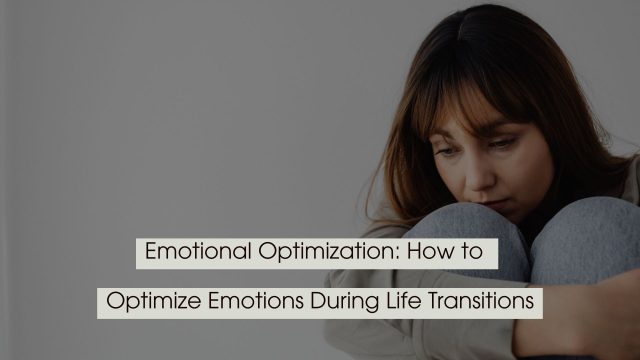
What Is Emotional Optimization?
Emotional optimization is the practice of managing your emotions intentionally so they support your mental health, decisions, and long-term well-being.
Instead of reacting automatically, emotional optimization helps you:
- recognize emotional triggers early
- calm your nervous system
- reduce anxiety and emotional overwhelm
- process grief and uncertainty
- stay focused and emotionally grounded
- build resilience and self-trust
It doesn’t mean you never feel emotional.
It means you learn how to move through emotions without getting stuck in them.
Common Life Transitions That Trigger Emotional Overload
Life transitions can be big or small, but they often trigger the same emotional responses.
Some of the most common life transitions include:
- starting a new job or changing careers
- moving to a new home or city
- becoming a parent
- getting married, divorced, or ending a relationship
- graduating or finishing school
- starting a business
- losing a loved one
- dealing with health changes
- financial shifts or lifestyle changes
- entering a new stage of adulthood
Some transitions are planned.
Others are unexpected.
But both can be emotionally exhausting.
Why Life Transitions Trigger Anxiety, Stress, and Mood Swings
There are several psychological reasons life transitions feel so difficult.
1. Uncertainty activates the stress response
Your brain craves predictability. When life becomes unfamiliar, your nervous system becomes more alert and stress increases.
2. You lose emotional “structure”
Even if your old routine wasn’t perfect, it was familiar. When a transition disrupts your routine, your brain may feel unsafe.
3. Identity shifts are uncomfortable
Transitions force you to become someone new.
A new role, new environment, or new stage of life can trigger imposter syndrome and self-doubt.
4. Transitions often include hidden grief
Even positive changes include loss, loss of familiarity, comfort, old identity, or past relationships.
5. Pressure to “handle it well” adds emotional strain
Many people feel they must stay strong, stay productive, and stay positive, when they’re actually overwhelmed.
This emotional pressure increases stress and makes recovery harder.
Emotional Optimization Strategies for Life Transitions
Below are practical strategies to help you manage emotional overload during change.
1. Normalize Emotional Messiness During Change
One of the most emotionally damaging beliefs is: “I should be handling this better.”
But transitions naturally create emotional complexity.
You might feel excited and anxious at the same time.
You might feel relieved and guilty.
You might feel hopeful and scared.
Emotional optimization starts with acceptance:
You’re allowed to feel multiple emotions at once.
When you stop judging your emotions, they become easier to process.
2. Regulate Your Nervous System Before You Try to Fix Your Life
Life transitions can keep your nervous system stuck in fight-or-flight.
When your nervous system is stressed, your thoughts become:
- more negative
- more catastrophic
- more anxious
- more reactive
That’s why emotional optimization begins with the body.
Simple nervous system regulation tools include:
- slow breathing with longer exhales
- walking outdoors
- stretching and releasing tension
- consistent hydration and meals
- reducing caffeine
- sleeping on a schedule
When your body feels safer, your mind becomes clearer.
3. Create Structure When Everything Feels Unstable
Transitions often remove routines.
And without routine, anxiety increases.
Emotional optimization includes rebuilding simple structure, such as:
- a morning routine (even 10 minutes)
- a consistent wake-up time
- a short daily walk
- a regular bedtime
- a daily planning habit
Structure creates emotional safety.
Even if your life is changing, your nervous system needs predictable anchors.
4. Process the Grief of What You’re Leaving Behind
Even if you’re moving toward something better, you’re still leaving something behind.
You may be grieving:
- your old comfort zone
- familiar people
- your old identity
- a version of life that felt safe
- routines that grounded you
Emotional optimization means letting grief exist without shame.
Grief doesn’t mean the transition is wrong.
It means the change matters.
5. Stop Trying to Solve the Entire Future
One of the biggest emotional drains during life transitions is future overload.
Your mind may try to solve everything at once:
- “What if I regret this?”
- “What if I fail?”
- “What if I can’t handle it?”
- “What if everything goes wrong?”
Emotional optimization teaches you to reduce overwhelm by focusing on the next step.
A powerful question is:
“What is the next small step I can take today?”
Small steps reduce emotional chaos and restore control.
6. Separate Fear From Intuition
During transitions, fear often becomes loud.
And many people mistake fear for intuition.
Here’s the difference:
- Fear feels urgent, panicked, and catastrophic.
- Intuition feels calm, clear, and steady.
Emotional optimization helps you pause and ask:
Is this a true warning, or is it discomfort from uncertainty?
This prevents fear-based decision-making.
7. Strengthen Self-Trust Through Small Follow-Through
Transitions shake confidence because you’re in unfamiliar territory.
The best way to rebuild emotional stability is to rebuild self-trust.
Self-trust grows when you:
- keep small promises to yourself
- follow through on routines
- take action even when uncertain
- show yourself consistency
Every time you follow through, you teach your brain:
“I can handle change.”
8. Use Support Instead of Isolation
Many people isolate during transitions because they don’t want to be a burden.
But emotional optimization includes connection.
Support can come from:
- friends
- family (if emotionally safe)
- mentors
- therapy
- coaching
- community groups
Transitions become lighter when you don’t carry them alone.
9. Avoid Major Emotional Decisions While You’re Overwhelmed
Transitions often create emotional flooding.
When you’re emotionally flooded, you’re more likely to:
- self-sabotage
- quit too early
- make impulsive decisions
- react instead of respond
A helpful emotional optimization rule:
Don’t make permanent decisions in temporary emotional states.
Give yourself space to regulate first.
10. Redefine Stability as Adaptability
Many people believe stability means never feeling uncertain.
But true emotional stability is adaptability.
Emotional optimization helps you build:
- emotional resilience
- recovery after hard days
- flexibility under pressure
- confidence in uncertainty
That’s what makes transitions easier over time.
What Emotional Optimization Looks Like During a Transition
When you apply emotional optimization consistently, you may notice:
- less panic about the future
- fewer emotional spirals
- improved sleep and focus
- more self-compassion
- stronger boundaries
- better decision-making
- increased confidence
- faster emotional recovery
You don’t become emotionless.
You become grounded.
Final Thoughts: Life Transitions Are a Portal for Growth
Life transitions can feel uncomfortable, but they often lead to deep transformation.
You’re not falling apart.
You’re evolving.
Emotional optimization helps you move through life transitions with:
- clarity
- resilience
- self-trust
- emotional balance
You don’t have to control everything.
You just have to stay connected to yourself while life changes.
Sources & Further Reading
Here are reputable resources connected to emotional regulation, resilience, and coping with change:
- American Psychological Association (APA) – Stress, coping, and emotional well-being
- National Institute of Mental Health (NIMH) – Anxiety and mental health resources
- Mayo Clinic – Stress management and emotional regulation tools
- Harvard Health Publishing – Mind-body connection and resilience
- Greater Good Science Center (UC Berkeley) – Self-compassion and resilience research
- Gross, J. J. (1998). Emotion regulation research (Review of General Psychology)
- Neff, K. (2011). Self-Compassion: The Proven Power of Being Kind to Yourself
- Dweck, C. (2006). Mindset: The New Psychology of Success
- McGonigal, K. (2015). The Upside of Stress
About the Author
David A. Caren is the creator of Emotional Optimization™ – helping high-performing professionals rewire emotional patterns for clarity, calm, and success.
Book a Free Consultation
Why do life transitions cause anxiety even when the change is positive?
Because your brain responds to uncertainty. Even good changes disrupt routines and create unknown outcomes, which can trigger stress and anxiety.
How do I stop overthinking during a life transition?
Focus on the next small step instead of trying to solve the entire future. Overthinking is often fear, not clarity.
What’s the best emotional optimization tool when I feel overwhelmed?
Regulating your nervous system first, especially through slow breathing, movement, and grounding—is one of the fastest ways to reduce overwhelm.
Is it normal to feel grief during a life transition?
Yes. Transitions often involve loss, even when they bring growth. Grief is a natural response to leaving behind what was familiar.
When should I seek professional support during a life transition?
If the transition affects your sleep, mental health, relationships, or ability to function daily, therapy or counseling can provide strong support and emotional tools.

What Successful People Do Differently Every Day (Daily Habits That Drive Success)
Successful people achieve more by focusing on consistent daily habits rather than relying on motivation. Through discipline, planning, and continuous…

How to Stop Procrastination and Take Action Immediately (Proven Strategies That Work)
Procrastination is driven by avoidance and fear, not laziness. By breaking tasks into small steps, taking immediate action, and removing…
What Is Self-Discipline and Why It Matters: The Foundation of Success and Personal Growth
Self-discipline is the ability to stay committed to your goals, even when motivation fades. By developing consistent habits, strengthening self-control,…

How to Transform Your Life One Day at a Time: Small Daily Changes That Lead to Extraordinary Results
Transform Your Life One Day at a Time: Transforming your life doesn’t happen overnight, it happens one day at a…

How to Develop Unbreakable Self-Discipline: The Ultimate Guide to Building Mental Strength and Consistency
Developing unbreakable self-discipline isn’t about relying on endless motivation or willpower. It’s about building consistent habits, keeping promises to yourself,…
How to Strengthen Your Willpower Every Day: Practical Strategies for Better Self-Control
Strengthening your willpower starts with small, intentional decisions. By reducing distractions, practicing delayed gratification, building supportive routines, and keeping promises…