Table of Contents
- What Is Emotional Intelligence? | Business: Explained
- What Is Emotional Optimization?
- Why Emotional Control Requires Daily Habits
- Emotional Optimization Daily Habits That Strengthen Emotional Control
- 1. Start Your Day With Emotional Grounding
- 2. Practice Emotional Labeling
- 3. Use Regulated Breathing Daily
- 4. Reduce Emotional Reactivity With Micro-Pauses
- 5. Move Your Body to Process Emotional Stress
- 6. Build Emotional Control Through Better Sleep Habits
- 7. Practice Daily Self-Talk That Builds Emotional Stability
- 8. Set Emotional Boundaries Daily
- 9. Reduce Overthinking With Daily Mental Decluttering
- 10. End the Day With Emotional Closure
- How Long Does It Take to Strengthen Emotional Control?
- Sources & Further Reading
Most people think emotional control means staying calm all the time.
But real emotional control isn’t about never feeling angry, anxious, overwhelmed, or stressed.
It’s about how quickly you notice your emotions, how well you regulate them, and how effectively you recover when life gets hard.
Emotional control is not a personality trait.
It’s a skill.
And like any skill, it becomes stronger through consistent practice.
That’s where emotional optimization comes in.
Emotional optimization is the process of strengthening emotional regulation through daily habits that support your nervous system, mindset, and emotional resilience.
When you build emotional control daily, you stop being ruled by your moods, and you start responding to life with confidence, stability, and clarity.
What Is Emotional Intelligence? | Business: Explained
What Is Emotional Optimization?
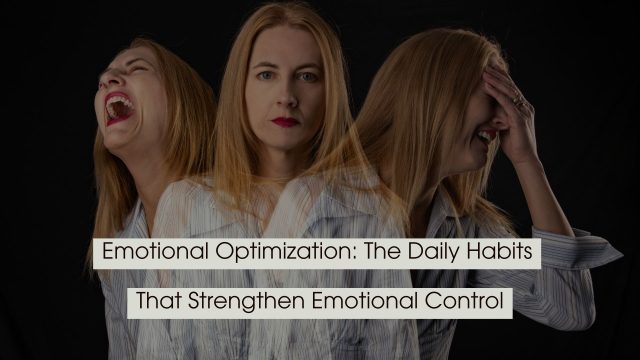
Emotional optimization is the intentional practice of improving how you experience and manage emotions so they support your life instead of controlling it.
Emotional optimization helps you:
- regulate stress and anxiety
- reduce emotional reactivity
- improve emotional resilience
- respond instead of react
- strengthen emotional intelligence
- recover faster after hard days
- prevent burnout and emotional overload
Emotional optimization isn’t about suppressing feelings.
It’s about building emotional stability through habits that train your mind and body to return to calm.
Why Emotional Control Requires Daily Habits
Emotional control is influenced by:
- your nervous system
- your sleep quality
- your stress level
- your self-talk
- your boundaries
- your routines
- your environment
- your emotional awareness
That means emotional control isn’t something you “turn on” only when life gets difficult.
It’s something you build daily.
Just like physical fitness, emotional strength grows through repetition.
Emotional Optimization Daily Habits That Strengthen Emotional Control
Below are the most effective emotional optimization habits you can practice every day. These are realistic, sustainable, and backed by emotional regulation psychology.
1. Start Your Day With Emotional Grounding
The way you start your morning affects your emotional regulation for the entire day.
If you start the day in chaos, scrolling, rushing, multitasking, you prime your nervous system for stress.
Emotional optimization begins with grounding.
Even 2–5 minutes of calm can make a major difference.
A simple grounding practice includes:
- sitting quietly
- breathing slowly
- relaxing your shoulders
- setting one intention
- reminding yourself: “I don’t need to rush my nervous system.”
This trains your brain to begin the day from stability instead of survival.
2. Practice Emotional Labeling
One of the strongest emotional optimization habits is naming what you feel.
When you label emotions clearly, you reduce emotional confusion and increase control.
Instead of:
- “I’m fine.”
- “I’m stressed.”
Try:
- “I’m feeling overwhelmed.”
- “I’m feeling anxious about being judged.”
- “I’m feeling disappointed.”
- “I’m feeling resentful because I feel unsupported.”
Emotional labeling helps your brain process emotions faster and reduces impulsive reactions.
It also strengthens self-awareness, which is the foundation of emotional control.
3. Use Regulated Breathing Daily
Breathing is one of the fastest tools for emotional regulation.
That’s because breathing directly influences the nervous system.
When you breathe slowly, especially with longer exhales, your body receives a signal of safety.
This reduces:
- anxiety
- tension
- irritability
- emotional flooding
A simple emotional optimization breathing habit:
- inhale for 4 seconds
- exhale for 6 seconds
- repeat for 2 minutes
Doing this once a day builds emotional stability over time, not just in emergencies.
4. Reduce Emotional Reactivity With Micro-Pauses
Most emotional reactions happen because there is no pause.
You feel triggered and respond instantly.
Emotional optimization builds the habit of pausing.
A micro-pause can be:
- a deep breath
- a moment of silence
- a quick grounding check
- stepping away for 10 seconds
That pause gives your brain time to choose a response instead of reacting automatically.
Over time, this strengthens emotional control in relationships, work, and daily stress.
5. Move Your Body to Process Emotional Stress
Stress and emotion live in the body.
If you don’t move, emotional tension builds.
You don’t need intense workouts.
Even gentle movement supports emotional optimization because it helps regulate stress hormones and release physical tension.
Daily movement can include:
- a 10-minute walk
- stretching
- yoga
- dancing
- light strength training
- cleaning while listening to music
Movement improves emotional recovery and reduces anxiety naturally.
6. Build Emotional Control Through Better Sleep Habits
Sleep is one of the most overlooked emotional optimization tools.
When you’re sleep-deprived, your brain becomes more reactive.
You may notice:
- increased irritability
- emotional sensitivity
- anxiety
- poor focus
- low patience
- impulsive reactions
Even small sleep improvements strengthen emotional control dramatically.
Emotional optimization sleep habits include:
- consistent bedtime
- limiting screens before sleep
- reducing caffeine late in the day
- creating a calming nighttime routine
When your brain is rested, emotional regulation becomes easier.
7. Practice Daily Self-Talk That Builds Emotional Stability
The way you speak to yourself affects your emotional state.
Negative self-talk increases:
- anxiety
- shame
- stress
- emotional overload
Emotionally optimized self-talk sounds like:
- “This is hard, but I can handle it.”
- “I’m learning.”
- “I don’t need to be perfect.”
- “I can slow down.”
- “I’m safe right now.”
Self-talk is not just mindset, it’s nervous system training.
The kinder your internal voice, the calmer your emotional baseline becomes.
8. Set Emotional Boundaries Daily
Many people lose emotional control because they absorb too much.
They take on:
- other people’s moods
- emotional labor
- toxic conversations
- constant demands
- guilt-driven obligations
Emotional optimization requires boundaries.
Daily emotional boundaries can look like:
- saying no without over-explaining
- limiting time with draining people
- turning off notifications
- protecting your alone time
- leaving conversations that escalate
Boundaries are not selfish.
They protect emotional regulation.
9. Reduce Overthinking With Daily Mental Decluttering
Overthinking is one of the biggest emotional control killers.
It creates:
- anxiety spirals
- mental fatigue
- indecision
- emotional exhaustion
A powerful emotional optimization habit is mental decluttering.
This can include:
- journaling for 5 minutes
- writing tomorrow’s priorities
- brain-dumping worries
- listing what you can control
- choosing one next step
Mental clarity reduces emotional overload.
10. End the Day With Emotional Closure
Many people carry the day into the night.
They go to bed with:
- unresolved stress
- rumination
- guilt
- unfinished emotional conversations
Emotional optimization includes emotional closure.
A simple closure practice:
- What was the hardest part of today?
- What did I handle well?
- What can I release now?
- What do I need tomorrow?
This trains your brain to stop holding emotional tension overnight.
And it improves sleep, mood, and resilience.
How Long Does It Take to Strengthen Emotional Control?
Emotional control improves quickly when you practice consistently.
Many people notice small changes within a week, such as:
- fewer emotional outbursts
- better mood stability
- less overthinking
- quicker recovery after stress
Long-term emotional optimization typically builds over weeks and months.
The key is not perfection.
The key is repetition.
Final Thoughts: Emotional Control Is Built, Not Born
You don’t need to become a different person to have emotional control.
You just need to train your nervous system and mindset through daily habits.
Emotional optimization works because it strengthens emotional regulation in real life—not just in theory.
When you commit to daily emotional habits, you begin to:
- feel calmer under pressure
- respond instead of react
- handle stress with confidence
- protect your peace
- recover faster after hard days
- build long-term emotional resilience
And that is real emotional control.
Sources & Further Reading
Here are reputable sources for emotional regulation, stress response, and emotional resilience:
- American Psychological Association (APA) – Stress, emotional health, and coping
- National Institute of Mental Health (NIMH) – Anxiety and emotional regulation
- Harvard Health Publishing – Sleep, stress, and mental wellness
- Greater Good Science Center (UC Berkeley) – Emotional resilience and self-compassion research
- Mindful.org – Mindfulness and emotional regulation practices
- Gross, J. J. (1998). The emerging field of emotion regulation: An integrative review. Review of General Psychology
- Neff, K. (2011). Self-Compassion: The Proven Power of Being Kind to Yourself
- Goleman, D. (1995). Emotional Intelligence
- Kabat-Zinn, J. (1990). Full Catastrophe Living
About the Author
David A. Caren is the creator of Emotional Optimization™ – helping high-performing professionals rewire emotional patterns for clarity, calm, and success.
Book a Free Consultation
What is emotional optimization in daily life?
Emotional optimization means using daily habits to manage emotions more effectively, so you feel calmer, recover faster, and respond to stress with more control.
Can emotional optimization reduce anxiety and stress?
Yes. Emotional optimization reduces anxiety by regulating the nervous system, improving self-awareness, and strengthening emotional resilience through daily practice.
How do I stop being emotionally reactive?
Start with micro-pauses, regulated breathing, and emotional labeling. Reactivity decreases when you train your nervous system to slow down before responding.
What habit improves emotional control the fastest?
Regulated breathing is one of the fastest. It calms the body quickly and improves emotional clarity in just a few minutes.
How long does it take to build emotional control?
Many people notice improvements within a week. Strong emotional control develops over weeks and months through consistent daily habits.
Decision Fatigue and Burnout: The Silent Path to Mental Exhaustion
Decision fatigue is a hidden contributor to burnout. When individuals make too many decisions without rest, mental energy declines, leading…

Emotional Intelligence: The Hidden Skill That Drives Personal Growth
Drives Personal Growth: Emotional intelligence is the hidden skill behind personal growth. By improving self-awareness, emotional control, and empathy, you…
Perfectionism and Burnout: How Perfectionism Leads to Chronic Stress and Emotional Exhaustion
Perfectionism can quietly lead to burnout by creating constant pressure, self-criticism, and unrealistic expectations. Understanding the link between perfectionism and…
Overthinking and Burnout: The Hidden Link Between Mental Overload and Emotional Exhaustion
Overthinking can silently lead to burnout by keeping the brain in a constant state of mental activity. Understanding the link…
Chronic Stress and Burnout: How Long-Term Stress Turns Into Emotional Exhaustion
Chronic stress can gradually evolve into burnout when the brain and body remain under constant pressure without adequate recovery. Recognizing…
Workplace Burnout: Why Modern Jobs Are Mentally Draining
Workplace burnout is becoming increasingly common as modern jobs demand constant productivity and connectivity. Understanding the causes of burnout can…