Two professionals sit across from each other at a table with laptops, engaged in a calm discussion, representing thoughtful communication, emotional control, and intentional decision-making, with the text “How to Respond Instead of React: Master Emotional Control and Make Better Decisions” displayed across the image.

In difficult moments, your first instinct is often to react.

Someone criticizes you.
A stressful problem appears.
An unexpected setback hits.

And suddenly, emotions take over.

Anger, defensiveness, panic, or frustration can trigger automatic reactions that you later regret.

But here’s the key: Your power is not in controlling every situation, it’s in controlling your response.

Reacting is automatic.

Responding is intentional.

Learning the difference can transform your relationships, decisions, and personal growth.

Psychologist Daniel Goleman explains that self-regulation is one of the most important parts of emotional intelligence.

In this article, you’ll learn how to respond instead of react, and why it can change your life.

The Difference Between Reaction & Response
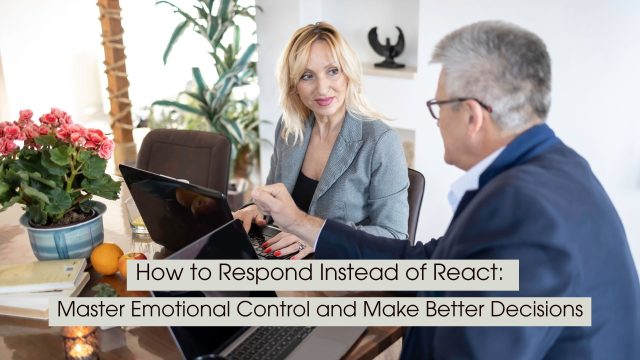
Two professionals sit across from each other at a table with laptops, engaged in a calm discussion, representing thoughtful communication, emotional control, and intentional decision-making, with the text “How to Respond Instead of React: Master Emotional Control and Make Better Decisions” displayed across the image.

Reaction vs Response: What’s the Difference?

Reaction

A reaction is:

  • Immediate
  • Emotional
  • Impulsive
  • Often regret-driven

Response

A response is:

  • Thoughtful
  • Controlled
  • Intentional
  • Aligned with your values

Reaction is driven by emotion. Response is guided by awareness.

Why We React Emotionally

Your brain is wired for survival.

When something feels threatening, criticism, conflict, stress, your emotional brain often activates before logic.

Psychologist Daniel Kahneman explains that fast emotional thinking often happens before rational analysis.

This can lead to:

  • Overreactions
  • Defensive behavior
  • Poor communication
  • Regret

The Cost of Constant Reacting

When you react impulsively, you may:

  • Damage relationships
  • Increase conflict
  • Make poor decisions
  • Lose emotional control

Reacting can solve short-term emotion, but often creates long-term problems.

How to Respond Instead of React

1. Pause Before Doing Anything

The pause is powerful.

Even a few seconds can interrupt impulsive behavior.

Ask yourself:

  • What am I feeling right now?
  • What outcome do I want?

Pause creates space.

2. Identify the Emotion

Name what you’re experiencing:

  • Anger
  • Fear
  • Embarrassment
  • Stress

Research shows naming emotions can reduce their intensity.

3. Breathe Before You Speak

Breathing calms your nervous system.

Slow breathing helps shift from emotional intensity to mental clarity.

4. Separate Feelings From Facts

Ask:

  • What actually happened?
  • What assumptions am I making?

This helps prevent emotional distortion.

5. Choose Your Desired Outcome

Before reacting, ask: “What response will actually help here?”

Focus on results, not impulse.

6. Practice Emotional Detachment

This does not mean suppressing emotions.

It means observing them without immediately obeying them.

7. Strengthen Self-Awareness Daily

The more aware you are of your patterns, the easier it becomes to manage them.

Long-Term Habits That Improve Your Response

Practice Mindfulness

Mindfulness improves awareness before action.

Improve Emotional Intelligence

Self-awareness + self-regulation = stronger responses.

Reflect on Past Reactions

Ask:

  • What triggered me?
  • What could I do differently next time?

Reflection creates growth.

Build Stress Tolerance

High stress increases reactivity.

Managing overall stress improves emotional control.

Common Mistakes to Avoid

Suppressing Emotions

Ignoring emotions can intensify them later.

Expecting Instant Mastery

Emotional control is a skill built through repetition.

Blaming Others for Your Reactions

Your emotions are valid—but your response is your responsibility.

Reacting to Every Trigger

Not everything deserves your emotional energy.

Why Responding Is Powerful

When you learn to respond instead of react, you can:

  • Protect relationships
  • Reduce regret
  • Make better decisions
  • Strengthen confidence
  • Increase emotional resilience

You become more intentional, and more powerful.

Emotional Intelligence and Personal Growth

According to Daniel Goleman, emotional self-regulation is essential for leadership, maturity, and personal success.

Responding thoughtfully is a sign of strength—not weakness.

Conclusion

Reacting is easy.

Responding is powerful.

By learning to pause, regulate emotions, and choose intentional actions, you can improve every area of your life.

Personal development is not about never feeling emotional.

It’s about learning to use your emotions wisely.

Because when you master your response, you master your life.

Sources and Further Reading

  • Daniel Goleman – Emotional intelligence
  • Daniel Kahneman – Cognitive psychology
  • Goleman, D. (1995). Emotional Intelligence
  • Kahneman, D. (2011). Thinking, Fast and Slow

About the Author

David A. Caren is the creator of Emotional Optimization – helping high-performing professionals rewire emotional patterns for clarity, calm, and success.

Book a Free Consultation

What does it mean to respond instead of react?

It means choosing thoughtful action instead of impulsive emotional behavior.

Why do I react emotionally?

Your brain often responds quickly to perceived threats or stress.

Can emotional reactions be controlled?

Yes. Through awareness, practice, and self-regulation.

How do I pause before reacting?

Use breathing, awareness, and intentional questioning.

Is reacting always bad?

Not always, but repeated impulsive reactions can create problems.
Tap Into Your Emotional Superpowers:

Reclaim Your Mental & Emotional Resources To Do More, Be More, & LIVE More Fully

The Desire: Reclaim Your Joy, Purpose & Inner Peace with Emotional Optimization

In the hustle and bustle of today's world, do you feel like your emotions are on a rollercoaster with no brakes? Caught in a relentless storm of stress, anxiety, and uncertainty; it's all too easy to feel lost, disconnected from your true self, and powerless in steering the course of your own life.

In the bustling rhythm of modern life, where achievements are often measured in milestones and material success, it's easy to overlook the silent whispers of our inner selves. Like a ship navigating a vast, unpredictable ocean, we often find ourselves lost in the storms of overwhelm, stress, anxiety, and unfulfilled desires. This is the journey of every single soul searching for a ray of light in the darkness - a calm, peaceful, fulfilled life with emotional serenity, inner confidence and strength. Emotional Optimization is a way to navigate your inner world, to release the energy you've been wasting on old triggers and buttons, and to reclaim your mental and emotional resources so you can do more in life, create a bigger impact on the world, and live life more fully on your terms as you continue your journey to emotional mastery.

The Challenge: Emotional Triggers & Unresolved Traumas

Pause for a moment and imagine the heavy toll those unchecked emotions are having on your life. Relationships strained to their breaking points, opportunities slipping like sand through your fingers, and a constant, gnawing sense of not living up to your full potential. This isn't just about facing daily hurdles; it's about the very essence of your happiness and fulfillment being eroded away, day after draining day, WASTING your precious life REACTING to unresolved emotional triggers and old traumas.

Imagine walking through a labyrinth, where each turn represents a challenge, a moment of doubt, or a trigger of unresolved emotion. This is the odyssey of the modern high achiever. Despite the outward success, there always seems to be an underlying struggle - a battle with emotions that feel like uncharted waters. In an age where the pursuit of happiness often leads to more questions than answers, many find themselves adrift, caught in a cycle of emotional highs and lows, constantly looking for a safe place where they can achieve balance, peace, and genuine fulfillment.


The Solution: Emotional Optimization

This is where Emotional Optimization comes in. David's highly personalized coaching program is designed to equip you with the tools and strategies you need to understand, manage, and transform your emotions. By mastering emotional intelligence, you unlock the door to improved communication, stronger relationships, and heightened self-awareness. It's time to reclaim all the mental and emotional resources you've been wasting in the background on the subconscious emotional triggers from past traumas and unresolved emotions. You deserve to live FREE from the emotional baggage and burdens of your past. It's time to step into peace, confidence, and clarity, so you can be more present, have deeper relationships, and feel more fulfilled in life.

Benefits:

  • Enhanced Emotional Intelligence: Elevate your ability to understand, process, use, & manage your emotions in positive ways to relieve stress, communicate effectively, empathize with others, overcome challenges, & make choices that align with your deepest values & aspirations.
  • Improved Relationships: Transform your personal and professional relationships through self-reflection, better communication, empathy, and emotional understanding.
  • Increased Emotional Resilience: Build a robust emotional foundation that enables you to navigate life's ups & downs with grace & poise, turning potential setbacks into opportunities for growth. Arm yourself with resilience that turns life's fiercest storms into moments of strength & empowerment.
  • Personal and Professional Growth: Unlock your full potential by harnessing the power of emotional optimization to achieve your goals, boost productivity, and amplify a sense of accomplishment, satisfaction, and fulfillment in all areas of life.

About The Author

David's Team

Let's Connect!

Leave a comment

Your email address will not be published. Required fields are marked

{"email":"Email address invalid","url":"Website address invalid","required":"Required field missing"}

Emotional Optimization During Conflict and Arguments: How to Stay Calm, Clear, and In Control

Conflict is one of the fastest ways to trigger emotional overwhelm. Even small disagreements can suddenly feel personal, threatening, or exhausting. That’s because arguments activate your nervous system, especially if you’ve experienced criticism, rejection, or emotionally unsafe environments in the past. Your brain may interpret conflict as danger, not conversation. The goal of emotional optimization

Read More

Emotional Optimization: How to Recover Faster After a Bad Day

A bad day can feel like more than a bad day. It can feel like: Even when nothing “big” happened, your brain can hold onto stress like it’s danger. That’s why recovery matters. Emotional optimization helps you move through the day without carrying it into tomorrow. What Is Emotional Optimization? Emotional optimization is the practice

Read More

Emotional Optimization: How to Optimize Emotions When Starting Something New

Starting something new is one of the most common triggers for anxiety, imposter syndrome, and emotional overwhelm. Even when you’re excited, your brain may still respond with fear. You might feel: This is normal. New beginnings often challenge your identity and your nervous system at the same time. You’re stepping into unfamiliar territory, and your

Read More

Emotional Optimization: How to Recover Faster After a Bad Day

A bad day can feel like more than a bad day. It can feel like: Even when nothing “big” happened, your brain can hold onto stress like it’s danger. That’s why recovery matters. Emotional optimization helps you move through the day without carrying it into tomorrow. What Is Emotional Optimization? Emotional optimization is the practice

Read More
Silhouette of a climber standing on a mountain peak holding a red flag at sunrise, symbolizing achievement and determination, with the text “How to Reprogram Your Mind for Success and Personal Growth” displayed across the image.

How to Reprogram Your Mind for Success and Personal Growth

Reprogramming your mind for success involves replacing limiting beliefs with empowering thoughts and habits. By developing a growth mindset and practicing intentional mental habits, individuals can unlock greater confidence, motivation, and personal growth.

Read More
Silhouette of a person jumping with arms outstretched against a warm sunset sky, symbolizing freedom, confidence, and personal growth. Overlaid text reads: ‘How a Personal Development Coach Helps You Build a Growth Mindset.’

How a Personal Development Coach Helps You Build a Growth Mindset

Personal development coach support empowers individuals to shift limiting beliefs, embrace challenges, and build a growth mindset by fostering self-awareness, resilience, and consistent personal growth habits.

Read More