Table of Contents
- Managing Stress & Anxiety During the Holidays | Mental Health Webinar
- What Causes Holiday Stress? A Psychological Breakdown
- 1. Unrealistic Expectations and Comparison Pressure
- 2. Emotional Triggers from Family Dynamics
- 3. Financial Pressure and Overspending Anxiety
- 4. Social Exhaustion and Overcommitment
- 5. Seasonal Affective Disorder (SAD) and Energy Decline
- 6. Memories, Grief, and Emotional Flashbacks
- Common Signs of Holiday Stress and Emotional Overload
- How to Reduce Holiday Stress and Emotional Overload
- 1. Lower the Bar: Release the Need for “Perfect”
- 2. Set Emotional Boundaries
- 3. Plan Financially and Spend Intentionally
- 4. Prioritize Rest and Personal Space
- 5. Limit Comparison & Social Media
- 6. Practice Mindfulness and Grounding Techniques
- 7. Seek Support When Needed
- Final Thoughts
- Sources & Further Reading
- About the Author
- Book a Free Consultation
The holiday season is often portrayed as joyful, magical, and full of connection but in reality, many people experience intense holiday stress, rising anxiety, and emotional overload beneath the surface. While sparkling lights, reunions, and celebrations create an atmosphere of excitement, they also come with expectations: to be happy, to socialize, to spend generously, to host perfectly, and to show up for everyone. These pressures build quickly, and even people who genuinely love the holidays can feel stretched thin. Understanding the psychology behind these emotional reactions is the first step to reducing holiday stress and protecting your mental health during a time that can feel both beautiful and overwhelming.
Much of the tension we experience during the holiday season comes from emotional triggers, social pressure, financial strain, family dynamics, and the disruption of normal routines. When you combine all of these factors with the expectation that the holidays “should” be perfect, it becomes clear why so many people struggle internally. This article breaks down the deeper psychological reasons people feel overwhelmed during the holidays and provides simple, practical ways to stay grounded, emotionally regulated, and mentally healthy so you can actually enjoy the season with more presence, balance, and ease.
Managing Stress & Anxiety During the Holidays | Mental Health Webinar
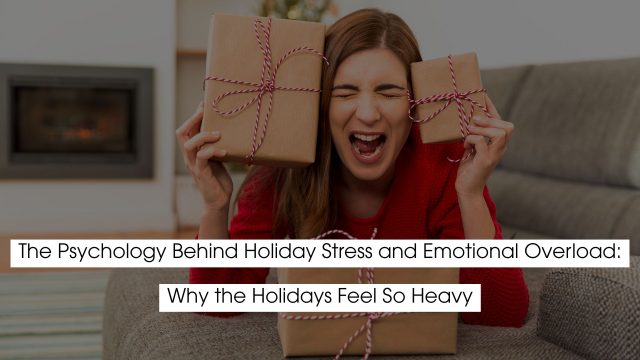
What Causes Holiday Stress? A Psychological Breakdown
Holiday stress doesn’t come out of nowhere, it’s triggered by a mix of emotional, social, and cognitive factors. Here are the biggest psychological contributors:
1. Unrealistic Expectations and Comparison Pressure
The holidays come with an invisible checklist:
Perfect gifts. Perfect gatherings. Perfect family moments.
Social media amplifies the pressure by showing only the highlights, causing us to compare our real lives to other people’s curated versions.
Psychology perspective:
This activates self-criticism, perfectionism, and cognitive distortion, especially the “should” mentality (e.g., “I should be happier,” “I should do more”).
2. Emotional Triggers from Family Dynamics
The holiday season often puts people back into old environments, old routines, and old roles. Even as adults, many revert to childhood emotional patterns around family.
Psychology perspective:
Family gatherings can activate the “fight, flight, freeze, fawn” stress response, especially if unresolved conflict or emotional tension exists.
You may feel:
- Irritable
- On edge
- Emotionally drained
- Hyperaware of judgment or criticism
3. Financial Pressure and Overspending Anxiety
Gift-giving, travel, and celebrations can strain finances, especially when paired with social pressure to give “enough.”
Psychology perspective:
Money anxiety triggers feelings of shame, scarcity, and guilt, which intensify when expectations aren’t met.
4. Social Exhaustion and Overcommitment
Even extroverts can experience social burnout during holiday season events, gatherings, reunions, and parties.
Psychology perspective:
Your mental bandwidth decreases.
Your emotional capacity gets overloaded.
Your nervous system becomes overstimulated.
This can lead to irritability, fatigue, and a sense of wanting to withdraw.
5. Seasonal Affective Disorder (SAD) and Energy Decline
Shorter days and reduced sunlight can trigger a biochemical drop in serotonin and circadian rhythm disruptions.
Psychology perspective:
You may feel more tired, low-energy, anxious, or depressed, making holiday stress feel heavier.
6. Memories, Grief, and Emotional Flashbacks
Holidays often bring nostalgia both positive and painful. Missing loved ones or remembering past holidays can stir deep emotions.
Psychology perspective:
Emotional flashbacks activate old grief, loneliness, or unresolved emotions, which intensify stress.
Common Signs of Holiday Stress and Emotional Overload
You may be experiencing holiday stress if you notice:
- Feeling overwhelmed or drained
- Increased anxiety before gatherings
- Changes in sleep or appetite
- Mood swings or irritability
- Feeling pressure to “perform” or pretend
- Avoiding social events
- Financial worry or guilt
- Emotional sensitivity or crying easily
These signs don’t mean something is wrong with you, they simply mean your mind is working overtime.
How to Reduce Holiday Stress and Emotional Overload
Here are practical and psychology-backed ways to protect your mental health:
1. Lower the Bar: Release the Need for “Perfect”
Replace perfection with presence.
Replace doing everything with doing what matters.
2. Set Emotional Boundaries
It’s okay to say:
- “I need a break.”
- “I can’t attend this year.”
- “I’m stepping outside to breathe.”
Boundaries protect peace, not pride.
3. Plan Financially and Spend Intentionally
Set a budget early and stick to it.
Focus on meaningful, not expensive.
4. Prioritize Rest and Personal Space
Add “quiet time” to your schedule the same way you add events.
A regulated nervous system makes everything feel lighter.
5. Limit Comparison & Social Media
You’re not seeing reality, you’re seeing highlights.
Unfollow or mute accounts that trigger pressure.
6. Practice Mindfulness and Grounding Techniques
Deep breathing
Journaling
Short walks
5-minute meditation
These small practices reset emotional overload.
7. Seek Support When Needed
If holiday stress affects your sleep, mood, or relationships, talking to a therapist or counselor can help you navigate emotional triggers and build healthier coping strategies.
Final Thoughts
Holiday stress is not a sign of weakness, it is a natural and human response to emotional triggers, pressure, and the many expectations placed on you during the holiday season. When you suddenly face financial decisions, family dynamics, social events, disrupted routines, and the pressure to create meaningful moments, your nervous system can easily shift into overwhelm. This reaction doesn’t mean you’re failing — it means your mind and body are working overtime to process demands that go far beyond your everyday stress load. By understanding the psychology behind holiday stress, you can become more aware of your emotional patterns, reduce anxiety, and set healthier boundaries that protect your mental well-being.
When you build self-awareness around what triggers your stress, whether it’s overspending, family conflict, people-pleasing, unrealistic expectations, or perfectionism, you gain the power to respond instead of react. This shift allows you to move through the holiday season with intention, clarity, and emotional balance. Instead of trying to meet every expectation or force holiday cheer, you can prioritize what truly matters and let go of what drains you. This mindset is what transforms the holiday season from an exhausting race to a calmer, more meaningful experience.
Sources & Further Reading
American Psychological Association. “Managing Holiday Stress.”
https://www.apa.org/topics/stress/holiday-stress
Mayo Clinic. “Stress, depression and the holidays: Tips for coping.”
https://www.mayoclinic.org/healthy-lifestyle/stress-management/in-depth/stress-holidays/art-20047544
Cleveland Clinic. “How to Handle Holiday Stress.”
https://health.clevelandclinic.org/how-to-handle-holiday-stress/
Mental Health America. “Holiday Depression and Stress.”
https://mhanational.org/holiday-depression-and-stress
National Institute of Mental Health (NIMH). “Seasonal Affective Disorder.”
https://www.nimh.nih.gov/health/publications/seasonal-affective-disorder
Managing Stress & Anxiety During the Holidays | Mental Health Webinar – A recent webinar that gives evidence-based tips to manage holiday stress and anxiety, especially during intense family and social seasons.
10 Intentional Ways to Reduce Holiday Stress A thoughtful video offering practical and actionable ways to cut down stress during the holiday season.
How to Manage Holiday Stress and Enjoy the Season Tips from a medical-health perspective on recognizing stress triggers during holidays in order to stay grounded.
Dealing With Stress Over the Holidays Advice from mental-health professionals on preserving your well-being during busy holiday periods.
About the Author
David A. Caren is the creator of Emotional Optimization™ – helping high-performing professionals rewire emotional patterns for clarity, calm, and success.
Book a Free Consultation
What is holiday stress and why does it happen?
Holiday stress is a mix of emotional, mental, and physical tension that many people experience during the holiday season. It happens due to pressure to socialize, spend money, meet expectations, manage family dynamics, and complete a long list of holiday responsibilities. Even positive events, like celebrations can trigger stress because they disrupt your routine, increase obligations, and heighten emotional expectations.
Why do I feel overwhelmed even when I enjoy the holidays?
You can love the holidays and still feel overwhelmed. Emotional overload often happens when your brain is processing too many demands at once, gifts, gatherings, financial pressure, work deadlines, or family expectations. This combination can activate your stress response, making you feel drained even if the events themselves are joyful.
How can I reduce holiday stress quickly?
To quickly reduce holiday stress, pause and take a few deep breaths, step away from overstimulating environments, or limit social interactions temporarily. Short walks, grounding techniques, and saying “no” to non-essential activities also help your nervous system reset. Small boundaries can make a big difference in managing anxiety during the holiday season.
Why do family gatherings trigger anxiety during the holidays?
Family gatherings may trigger anxiety because they can activate unresolved emotions, past conflicts, or complicated relationships. The holiday season also brings expectations of harmony and closeness, which can add pressure. When emotional history meets high expectations, stress levels naturally increase.
Is it normal to feel guilty for not enjoying the holidays?
Yes, it’s completely normal. Many people feel guilt when they don’t meet society’s image of a “perfect holiday season.” Emotional exhaustion, introversion, financial stress, or grief can all affect how you feel. Not enjoying every moment doesn’t make you ungrateful it makes you human.

Emotional Optimization as a Personal Development Tool: How to Create Sustainable Growth
Emotional optimization is a powerful personal development tool that helps you create sustainable growth by working with your emotions instead…

Emotional Intelligence and Anxiety: How Awareness Reduces Stress
Emotional intelligence plays a powerful role in reducing anxiety by increasing emotional awareness and self-regulation. When you learn to recognize…

What Successful People Do Differently Every Day (Daily Habits That Drive Success)
Successful people achieve more by focusing on consistent daily habits rather than relying on motivation. Through discipline, planning, and continuous…
How to Stop Procrastination and Take Action Immediately (Proven Strategies That Work)
Procrastination is driven by avoidance and fear, not laziness. By breaking tasks into small steps, taking immediate action, and removing…
What Is Self-Discipline and Why It Matters: The Foundation of Success and Personal Growth
Self-discipline is the ability to stay committed to your goals, even when motivation fades. By developing consistent habits, strengthening self-control,…

How to Transform Your Life One Day at a Time: Small Daily Changes That Lead to Extraordinary Results
Transform Your Life One Day at a Time: Transforming your life doesn’t happen overnight, it happens one day at a…