
Table of Contents
- What is Burnout?
- What Is Burnout?
- Why Recognizing Burnout Early Matters
- Key Signs of Burnout You Should Never Ignore
- 1. Constant Fatigue
- 2. Lack of Motivation
- 3. Difficulty Concentrating
- 4. Emotional Exhaustion
- 5. Detachment or Disconnection
- 6. Decreased Performance
- 7. Increased Irritability
- 8. Physical Symptoms
- 9. Loss of Enjoyment
- The Psychology Behind Burnout
- How Burnout Progresses
- Common Mistakes to Avoid
- What to Do If You Notice These Signs
- Preventing Burnout
- Conclusion
- Sources and Further Reading
Burnout doesn’t happen suddenly, it builds over time.
At first, it may feel like simple tiredness or stress. But if ignored, it can grow into chronic exhaustion, emotional detachment, and loss of motivation.
The problem is that many people don’t recognize burnout until it becomes severe.
The earlier you identify burnout, the easier it is to recover.
According to the World Health Organization, burnout is a syndrome resulting from chronic workplace stress that has not been successfully managed.
In this article, you’ll learn the key signs of burnout you should never ignore, and what they mean.
What is Burnout?
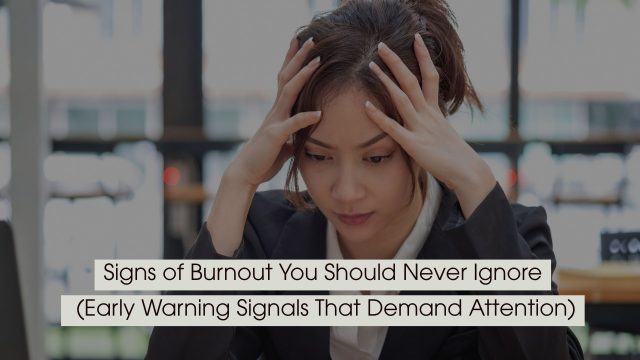
What Is Burnout?
Burnout is a state of:
- Physical exhaustion
- Emotional fatigue
- Mental overload
It often develops from prolonged stress, especially in work or high-pressure environments
Why Recognizing Burnout Early Matters
Ignoring burnout can lead to:
- Reduced productivity
- Mental health issues
- Physical health problems
- Loss of motivation
Early detection allows you to take action before it worsens.
Key Signs of Burnout You Should Never Ignore
1. Constant Fatigue
You feel tired all the time, even after rest.
This is more than normal tiredness. It’s a deep, persistent exhaustion
2. Lack of Motivation
Tasks that once felt meaningful now feel like a burden.
You struggle to find the energy or desire to get things done.
3. Difficulty Concentrating
Burnout affects your ability to focus.
You may:
- Forget things easily
- Struggle to complete tasks
- Feel mentally foggy
4. Emotional Exhaustion
You feel drained emotionally.
This can include:
- Irritability
- Anxiety
- Feeling overwhelmed
5. Detachment or Disconnection
You feel disconnected from your work or responsibilities.
Tasks may feel meaningless or unimportant.
6. Decreased Performance
Your productivity drops.
Even simple tasks may feel difficult to complete.
7. Increased Irritability
Small problems feel bigger than they should.
You may feel frustrated or impatient more often.
8. Physical Symptoms
Burnout can affect your body.
Common symptoms include:
- Headaches
- Muscle tension
- Sleep problems
9. Loss of Enjoyment
Things you once enjoyed no longer bring satisfaction.
This is a key sign of emotional burnout.
The Psychology Behind Burnout
Burnout is linked to prolonged stress and mental overload.
Psychologist Herbert Freudenberger was among the first to describe burnout as a condition caused by excessive demands and stress.
Over time, the brain becomes overwhelmed, leading to exhaustion and reduced performance.
How Burnout Progresses
Burnout often develops in stages:
- Stress – Increased pressure
- Fatigue – Persistent tiredness
- Exhaustion – Physical and emotional drain
- Disengagement – Loss of motivation
Recognizing early stages helps prevent severe burnout.
Common Mistakes to Avoid
Ignoring Early Signs
Early symptoms are often dismissed as normal stress.
Pushing Through Exhaustion
Continuing without rest can worsen burnout.
Lack of Boundaries
Overworking without limits increases stress.
Neglecting Self-Care
Recovery requires rest and balance.
What to Do If You Notice These Signs
Acknowledge the Problem
Awareness is the first step.
Reduce Stressors
Identify and manage sources of stress.
Prioritize Rest
Allow your body and mind to recover.
Set Boundaries
Protect your time and energy.
Seek Support
Talk to someone or seek professional help if needed.
Preventing Burnout
Maintain Balance
Avoid overworking consistently.
Manage Stress Regularly
Use healthy coping strategies.
Listen to Your Body
Pay attention to warning signs.
Build Sustainable Habits
Consistency should not come at the cost of your health.
Conclusion
Burnout is not just stress, it is a serious condition that affects your energy, motivation, and well-being.
By recognizing the signs early, you can take action before it becomes severe.
Personal development is not about pushing yourself endlessly, it’s about building a sustainable, balanced life.
Listen to your body. Protect your energy.
Because the sooner you recognize burnout, the easier it is to recover.
Sources and Further Reading
- World Health Organization – Burnout classification
- Herbert Freudenberger – Burnout research
- Freudenberger, H. (1974). Burnout studies
About the Author
David A. Caren is the creator of Emotional Optimization™ – helping high-performing professionals rewire emotional patterns for clarity, calm, and success.
Book a Free Consultation
What are the first signs of burnout?
Fatigue, lack of motivation, and difficulty concentrating.
Is burnout the same as stress?
No. Burnout is more severe and long-lasting.
Can burnout affect physical health?
Yes. It can cause headaches, fatigue, and sleep issues.
How do I recover from burnout?
Rest, reduce stress, and rebuild energy gradually.
Can burnout be prevented?
Yes, through balance, boundaries, and stress management.

What Successful People Do Differently Every Day (Daily Habits That Drive Success)
Successful people achieve more by focusing on consistent daily habits rather than relying on motivation. Through discipline, planning, and continuous…


How to Stop Procrastination and Take Action Immediately (Proven Strategies That Work)
Procrastination is driven by avoidance and fear, not laziness. By breaking tasks into small steps, taking immediate action, and removing…

What Is Self-Discipline and Why It Matters: The Foundation of Success and Personal Growth
Self-discipline is the ability to stay committed to your goals, even when motivation fades. By developing consistent habits, strengthening self-control,…

How to Transform Your Life One Day at a Time: Small Daily Changes That Lead to Extraordinary Results
Transform Your Life One Day at a Time: Transforming your life doesn’t happen overnight, it happens one day at a…

How to Develop Unbreakable Self-Discipline: The Ultimate Guide to Building Mental Strength and Consistency
Developing unbreakable self-discipline isn’t about relying on endless motivation or willpower. It’s about building consistent habits, keeping promises to yourself,…
How to Strengthen Your Willpower Every Day: Practical Strategies for Better Self-Control
Strengthening your willpower starts with small, intentional decisions. By reducing distractions, practicing delayed gratification, building supportive routines, and keeping promises…