Table of Contents
- Growth Mindset vs. Fixed Mindset
- Common Signs of a Fixed Mindset
- What Is a Growth Mindset?
- How a Fixed Mindset Holds You Back
- Why a Growth Mindset Supports Personal Development
- How to Shift from a Fixed Mindset to a Growth Mindset
- Which Mindset Is Holding You Back?
- Final Thoughts: Your Mindset Is a Choice
- Sources & Further Reading
- About the Author
- Book a Free Consultation
Your mindset shapes how you approach challenges, setbacks, success, and personal growth. If you’ve ever felt stuck, discouraged by failure, or afraid to try something new, the real issue may not be your skills or circumstances, it may be your mindset.
Understanding the difference between a growth mindset vs. a fixed mindset can be the key to unlocking your potential and breaking through self-imposed limitations. In this article, we’ll explore what these mindsets are, how they affect your personal development, and how to shift toward a growth mindset that supports long-term success.
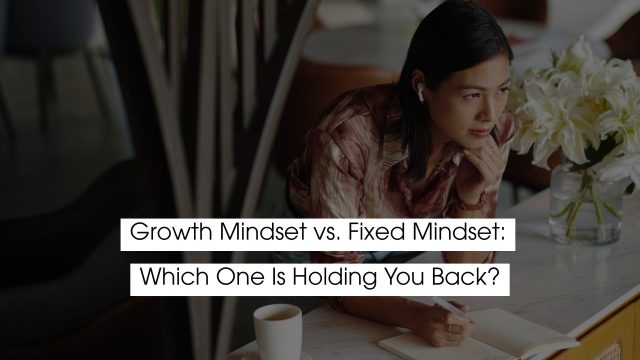
Growth Mindset vs. Fixed Mindset
What Is a Fixed Mindset?
A fixed mindset is the belief that your abilities, intelligence, and talents are static traits, you either have them or you don’t.
People with a fixed mindset often believe:
- “I’m just not good at this.”
- “If I fail, it means I’m not capable.”
- “Talent matters more than effort.”
- “If it doesn’t come naturally, it’s not for me.”
This way of thinking can quietly limit your personal development by making challenges feel threatening rather than opportunities for growth.
Common Signs of a Fixed Mindset
- Avoiding challenges to prevent failure
- Feeling discouraged or defensive when receiving feedback
- Comparing yourself constantly to others
- Giving up quickly when things feel difficult
- Feeling stuck in comfort zones
A fixed mindset doesn’t mean you lack potential, it means you haven’t been taught to see growth as something you can develop.
What Is a Growth Mindset?
A growth mindset is the belief that skills, intelligence, and abilities can be developed through effort, learning, and persistence.
People with a growth mindset believe:
- “I can improve with practice.”
- “Mistakes help me learn.”
- “Challenges help me grow.”
- “Effort leads to progress.”
This mindset creates resilience, curiosity, and confidence, essential traits for personal development, leadership, entrepreneurship, and emotional well-being.
Common Signs of a Growth Mindset
- Embracing challenges instead of avoiding them
- Viewing feedback as helpful rather than personal
- Persisting through setbacks
- Celebrating progress, not just results
- Focusing on learning over perfection
A growth mindset doesn’t ignore difficulty, it meets it with adaptability and self-trust.
How a Fixed Mindset Holds You Back
A fixed mindset often keeps people stuck in cycles of self-doubt, procrastination, and burnout. When you believe your abilities are limited, you may:
- Underestimate your potential
- Stay in situations that no longer serve you
- Avoid growth opportunities out of fear
- Struggle with confidence and self-trust
Over time, this mindset can quietly shape your identity, reinforcing beliefs that you are “not enough” or “not capable,” even when evidence suggests otherwise.
Why a Growth Mindset Supports Personal Development
A growth mindset fuels sustainable personal development because it shifts your focus from outcomes to process.
With a growth mindset, you:
- Take responsibility for your growth
- Learn emotional regulation and resilience
- Develop confidence through action
- Build self-trust by following through
- Adapt more easily to change
Instead of asking, “What if I fail?” you begin asking, “What can I learn from this?”
How to Shift from a Fixed Mindset to a Growth Mindset
Changing your mindset doesn’t happen overnight, but small, consistent shifts create lasting change.
1. Reframe Your Self-Talk
Replace:
- “I can’t do this”
With: - “I can’t do this yet.”
Language matters. Adding “yet” creates space for growth.
2. Normalize Mistakes
Mistakes are not proof of failure, they’re part of the learning process. Each mistake provides information, not judgment.
3. Focus on Effort, Not Perfection
Celebrate showing up, practicing, and trying, even when results aren’t immediate.
4. Seek Feedback, Not Validation
Feedback helps you grow. Validation keeps you comfortable. Choose growth.
5. Track Progress, Not Comparison
Compare yourself to who you were yesterday, not who someone else is today.
Which Mindset Is Holding You Back?
If you feel stuck, overwhelmed, or afraid to take the next step, it’s worth asking:
- Am I protecting my comfort or expanding my capacity?
- Am I avoiding failure or avoiding growth?
- Am I reacting from fear or curiosity?
Your answers may reveal whether a fixed mindset is quietly holding you back, or whether you’re ready to step into growth.
Final Thoughts: Your Mindset Is a Choice
The difference between a growth mindset vs. a fixed mindset isn’t intelligence, talent, or luck, it’s awareness.
When you understand how your mindset influences your behavior, you gain the power to change it. Personal development begins the moment you realize you are not stuck, you are evolving.
You don’t need to be perfect.
You need to be willing to grow.
Sources & Further Reading
- Goleman, Daniel. Emotional Intelligence: Why It Can Matter More Than IQ
https://www.danielgoleman.info/topics/emotional-intelligence/
A foundational work explaining emotional intelligence and its impact on personal development, relationships, and leadership. - American Psychological Association (APA). Emotional Regulation and Emotional Awareness
https://www.apa.org/topics/emotion
Research-based explanations of how emotions function and how emotional regulation supports mental health. - Greater Good Science Center – UC Berkeley. Emotional Intelligence & Well-Being
https://greatergood.berkeley.edu/topic/emotional-intelligence
Evidence-based articles on empathy, emotional awareness, and resilience. - Psychology Today. What Is Emotional Intelligence?
https://www.psychologytoday.com/us/basics/emotional-intelligence
Accessible insights into emotional intelligence skills and their psychological foundations. - Gross, J. J. Emotion Regulation: Conceptual and Empirical Foundations
https://www.ncbi.nlm.nih.gov/pmc/articles/PMC4402347/
Academic research on emotional regulation strategies that underpin emotional intelligence. - MindTools. Developing Emotional Intelligence
https://www.mindtools.com/behaviors/emotional-intelligence
Practical tools for building self-awareness, empathy, and emotional regulation. - National Institute of Mental Health (NIMH). Caring for Your Mental Health
https://www.nimh.nih.gov/health/topics/caring-for-your-mental-health
Guidance on emotional well-being, stress management, and resilience.
About the Author
David A. Caren is the creator of Emotional Optimization™ – helping high-performing professionals rewire emotional patterns for clarity, calm, and success.
Book a Free Consultation
What are emotional intelligence skills?
Emotional intelligence skills are abilities that help you recognize, understand, manage, and respond to emotions effectively. These skills include self-awareness, emotional regulation, empathy, self-compassion, and healthy communication.
Can emotional intelligence be practiced daily?
Yes. Emotional intelligence is built through small, consistent daily practices such as emotional check-ins, mindful pauses, reflective listening, and intentional self-talk.
How long does it take to develop emotional intelligence?
Some improvements can be noticed within weeks, but emotional intelligence develops over time. Consistency matters more than speed when practicing emotional awareness and regulation.
Why is emotional intelligence important in everyday life?
Emotional intelligence helps reduce stress, improve communication, strengthen relationships, and support better decision-making. It allows you to respond thoughtfully rather than react emotionally.
What is the easiest emotional intelligence skill to start with?
Self-awareness is often the easiest place to begin. Simply naming your emotions and noticing patterns throughout the day can significantly improve emotional regulation.

How to Transform Your Life One Day at a Time: Small Daily Changes That Lead to Extraordinary Results
Transform Your Life One Day at a Time: Transforming your life doesn’t happen overnight, it happens one day at a…


How to Develop Unbreakable Self-Discipline: The Ultimate Guide to Building Mental Strength and Consistency
Developing unbreakable self-discipline isn’t about relying on endless motivation or willpower. It’s about building consistent habits, keeping promises to yourself,…
How to Strengthen Your Willpower Every Day: Practical Strategies for Better Self-Control
Strengthening your willpower starts with small, intentional decisions. By reducing distractions, practicing delayed gratification, building supportive routines, and keeping promises…
Personal Development: The Growth Mindset Formula, How to Rewire Your Brain for Success
Personal development begins with one powerful belief: you can improve. The growth mindset formula teaches you how to rewire your…
Personal Development: Why Overthinking Is Holding You Back (And How to Stop)
Overthinking feels safe, but it quietly steals your momentum, confidence, and clarity. The more you analyze, the less you act….
How Stop Negative Self-Talk Permanently
Negative self-talk is not permanent, it is a learned pattern that can be rewired. Through awareness, cognitive restructuring, and self-compassion,…