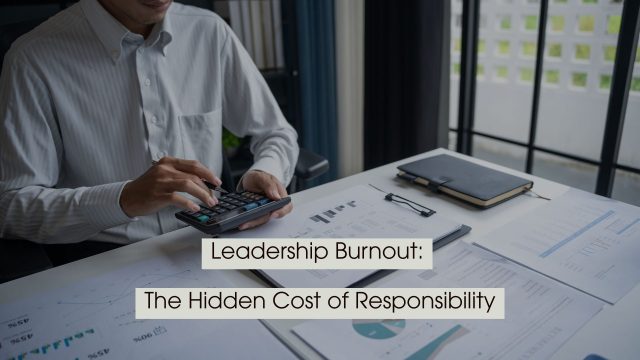
Leadership is often associated with success, influence, and authority. However, behind the prestige of leadership roles lies a significant challenge that many leaders quietly face: burnout.
Leaders carry the responsibility of guiding teams, making critical decisions, solving complex problems, and maintaining organizational performance. While these responsibilities can be rewarding, they also create immense psychological pressure.
Over time, this pressure can lead to leadership burnout, a condition where chronic stress results in emotional exhaustion, mental fatigue, and reduced effectiveness.
According to the World Health Organization, burnout is characterized by emotional exhaustion, detachment from work, and decreased professional performance.
Understanding the hidden cost of leadership responsibility is essential for maintaining sustainable leadership and protecting long-term well-being.
How to Recognize Burnout as a Leader
What Is Leadership Burnout?
Leadership burnout refers to emotional and mental exhaustion experienced by individuals in positions of authority and responsibility.
The concept of burnout was extensively researched by Christina Maslach, who identified three core components of burnout:
- Emotional exhaustion
- Cynicism or detachment from work
- Reduced professional effectiveness
For leaders, these symptoms can be particularly challenging because they are expected to remain confident, decisive, and supportive—even during difficult circumstances.
Why Leadership Roles Increase Burnout Risk
Leadership positions often involve unique stressors that increase the risk of burnout.
Constant Decision-Making
Leaders are responsible for making important decisions that affect teams, organizations, and long-term outcomes.
Continuous decision-making can lead to decision fatigue, which gradually drains cognitive energy.
Responsibility for Others
Leaders are not only responsible for their own work but also for the performance and well-being of their teams.
Managing employee concerns, resolving conflicts, and supporting team development can create significant emotional pressure.
High Expectations
Organizations often expect leaders to maintain high performance levels while navigating complex challenges.
This pressure to consistently deliver results can contribute to chronic stress.
Limited Time for Recovery
Many leaders work long hours and remain accessible outside normal working schedules.
Without adequate recovery time, mental fatigue accumulates.
Isolation at the Top
Leadership roles can sometimes feel isolating. Leaders may feel unable to share concerns openly with employees or peers.
This isolation can reduce emotional support and increase stress.
Signs of Leadership Burnout
Leadership burnout often develops gradually and may initially appear as ordinary work stress.
Common warning signs include:
Persistent Exhaustion
Leaders may feel mentally and emotionally drained even after rest.
Reduced Motivation
Tasks that once felt meaningful may begin to feel overwhelming or routine.
Difficulty Concentrating
Burnout can impair focus, decision-making, and problem-solving ability.
Emotional Detachment
Leaders experiencing burnout may feel disconnected from their teams or organizational goals.
Increased Irritability
Chronic stress can increase emotional reactivity and frustration.
Research summarized by the American Psychological Association shows that prolonged workplace stress can significantly affect emotional regulation and cognitive performance.
The Impact of Leadership Burnout on Organizations
Leadership burnout does not only affect individuals, it can also influence organizational performance.
When leaders experience burnout, organizations may see:
- Reduced team morale
- Decreased productivity
- Poor decision-making
- Increased employee turnover
Healthy leadership is essential for maintaining positive workplace culture and long-term organizational success.
How Leaders Can Prevent Burnout
Although leadership roles involve significant responsibility, several strategies can help reduce burnout risk.
Delegate Responsibilities
Effective leaders understand that they cannot manage every task alone.
Delegating responsibilities empowers team members and reduces excessive workload.
Establish Clear Boundaries
Setting limits on working hours and communication helps protect personal time and mental recovery.
Prioritize Recovery
Adequate sleep, exercise, and relaxation are essential for maintaining mental resilience.
Recovery is a critical part of sustainable leadership.
Build Support Networks
Connecting with mentors, peers, or leadership groups can provide valuable guidance and emotional support.
Develop Emotional Awareness
Leaders who regularly reflect on their stress levels and emotional well-being are better equipped to recognize burnout early.
Mindfulness and self-reflection can improve resilience.
Sustainable Leadership
Sustainable leadership focuses on maintaining long-term effectiveness without sacrificing personal well-being.
Healthy leaders balance ambition with recovery, responsibility with delegation, and productivity with self-care.
Organizations that encourage sustainable leadership practices often experience stronger team engagement and better overall performance.
Conclusion
Leadership is often viewed as a symbol of success and influence, but it also carries significant emotional and psychological demands.
The responsibility of guiding teams, making critical decisions, and maintaining organizational performance can gradually lead to burnout if recovery and support are overlooked.
Recognizing the signs of leadership burnout allows individuals to take proactive steps to protect their mental health and maintain effectiveness.
By prioritizing balance, delegation, and self-care, leaders can continue to inspire their teams while preserving their own well-being.
Sustainable leadership is not about working endlessly, it is about maintaining the energy, clarity, and resilience needed to lead effectively over time.
Sources and Further Reading
- Christina Maslach – Burnout research and Maslach Burnout Inventory
- World Health Organization – Burnout definition and workplace health research
- American Psychological Association – Studies on workplace stress and leadership well-being
- Maslach, C. & Leiter, M. (2016). Burnout
- Research on occupational stress and leadership psychology
About the Author
David A. Caren is the creator of Emotional Optimization™ – helping high-performing professionals rewire emotional patterns for clarity, calm, and success.
Book a Free Consultation
What is leadership burnout?
Leadership burnout is emotional and mental exhaustion caused by prolonged stress and responsibility in leadership roles.
Why are leaders more prone to burnout?
Leaders face constant decision-making, high expectations, and responsibility for team performance, which increases stress levels.
What are the early signs of leadership burnout?
Early signs include fatigue, reduced motivation, difficulty concentrating, and emotional detachment from work.
How can leaders prevent burnout?
Delegating responsibilities, setting boundaries, prioritizing rest, and maintaining support networks can help prevent burnout.
Can leadership burnout affect team performance?
Yes. Burnout can impair decision-making, reduce morale, and negatively impact team productivity.

How to Transform Your Life One Day at a Time: Small Daily Changes That Lead to Extraordinary Results
Transform Your Life One Day at a Time: Transforming your life doesn’t happen overnight, it happens one day at a…


How to Develop Unbreakable Self-Discipline: The Ultimate Guide to Building Mental Strength and Consistency
Developing unbreakable self-discipline isn’t about relying on endless motivation or willpower. It’s about building consistent habits, keeping promises to yourself,…
How to Strengthen Your Willpower Every Day: Practical Strategies for Better Self-Control
Strengthening your willpower starts with small, intentional decisions. By reducing distractions, practicing delayed gratification, building supportive routines, and keeping promises…

Personal Development: The Growth Mindset Formula, How to Rewire Your Brain for Success
Personal development begins with one powerful belief: you can improve. The growth mindset formula teaches you how to rewire your…

Personal Development: Why Overthinking Is Holding You Back (And How to Stop)
Overthinking feels safe, but it quietly steals your momentum, confidence, and clarity. The more you analyze, the less you act….

How Stop Negative Self-Talk Permanently
Negative self-talk is not permanent, it is a learned pattern that can be rewired. Through awareness, cognitive restructuring, and self-compassion,…